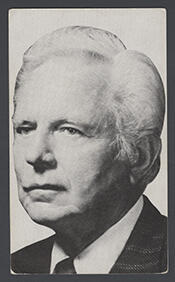
John D. Cummins (1791 – September 11, 1849) was an American lawyer and Democratic politician who represented Ohio’s 15th congressional district in the United States House of Representatives from 1845 to 1849. Born in 1791, he came of age in the early years of the American republic, a period marked by rapid westward expansion and the political realignments that followed the founding era. Although detailed records of his early life and family background are scarce, his subsequent professional career as a lawyer indicates that he received sufficient formal or legal training to qualify for admission to the bar, a common pathway into public life in the early nineteenth century.
Cummins established himself in the legal profession before entering national politics, practicing law and building the experience and local reputation that underpinned his later electoral success. As a lawyer in Ohio, he would have been engaged with issues typical of a growing frontier and agricultural state, including land disputes, commercial matters, and questions of state and local governance. His legal work provided both the expertise and the community standing that were often prerequisites for higher office in that era, and it aligned him with the Democratic Party, which was then dominant in much of the expanding West.
By the mid-1840s, Cummins had become sufficiently prominent within Ohio Democratic circles to secure election to the United States House of Representatives. He was elected as a Democrat to the 29th Congress, taking office on March 4, 1845, to represent Ohio’s 15th congressional district. He was subsequently reelected to the 30th Congress, serving continuously until March 3, 1849. His two terms in Congress coincided with a pivotal period in American history, encompassing the administration of President James K. Polk, the annexation of Texas, the Mexican–American War, and the intensifying national debate over the expansion of slavery into newly acquired territories.
During his tenure in the House of Representatives, Cummins participated in the legislative process as a member of the Democratic Party, representing the interests of his Ohio constituents while supporting the broader Democratic agenda of the time. Serving in the 29th and 30th Congresses, he was part of the deliberations over war appropriations, territorial organization, and economic policy, as Congress grappled with the consequences of territorial expansion and sectional tension. Although specific committee assignments and individual legislative initiatives attributed to him are not extensively documented, his role as a voting member of the House placed him within the central democratic processes that shaped national policy in the late 1840s.
After completing his second term, Cummins left Congress on March 3, 1849, at the close of the 30th Congress. He did not return to federal office thereafter. In the months following his congressional service, he resumed private life, likely returning to legal practice and public affairs at the state or local level, as was common for former members of Congress of his generation. His post-congressional period was brief, however, as he died later that same year.
John D. Cummins died on September 11, 1849. His career reflected the trajectory of many nineteenth-century American politicians who combined legal practice with public service, moving from the bar to elective office and participating in the governance of a rapidly changing nation. As a Democratic representative from Ohio during a time of war, expansion, and mounting sectional conflict, he contributed to the legislative work of the 29th and 30th United States Congresses and represented the interests of the 15th congressional district of Ohio at a critical juncture in the country’s history.
Congressional Record