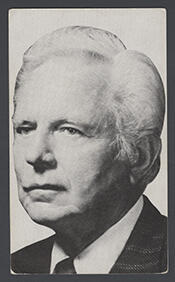
John Chaney was a member of the Democratic Party who represented the state of Ohio in the United States House of Representatives. Serving three terms in Congress, he contributed to the legislative process during a significant period in American history, participating in the democratic process and representing the interests of his constituents. His congressional service as a U.S. representative from Ohio placed him among the notable early nineteenth-century lawmakers who helped shape the young nation’s political and institutional development.
Born in 1790, John Chaney came of age in the early years of the American republic, a time when the political system and party structures were still evolving. Growing up in this formative era likely influenced his later alignment with the Democratic Party, which emerged as a dominant force in national politics during his lifetime. Although detailed records of his early life and formal education are limited, his subsequent public career suggests that he attained the level of learning and practical experience necessary to engage effectively in lawmaking and public affairs in Ohio and at the national level.
Before entering Congress, Chaney established himself within Ohio’s civic and political life. As the state developed rapidly in the first half of the nineteenth century, Ohio’s leaders were confronted with questions of infrastructure, settlement, and the balance between federal and state authority. Within this context, Chaney’s rise to national office reflected both his personal standing in his community and the confidence of voters who selected him to articulate their views in Washington. His affiliation with the Democratic Party placed him within a political tradition that generally emphasized states’ rights, limited federal government, and support for agrarian and frontier interests, positions that resonated with many Ohioans of his era.
John Chaney’s service in Congress encompassed three terms as a U.S. representative from Ohio, during which he took part in debates and votes on issues central to the nation’s growth and stability. Sitting in the House of Representatives, he was directly involved in the legislative process at a time when the country was grappling with territorial expansion, economic development, and sectional tensions that would continue to intensify in the decades ahead. As a Democratic representative, he worked within his party’s caucus while also addressing the specific needs and concerns of his Ohio constituents, ensuring that their interests were represented in federal policymaking.
During his tenure, Chaney’s responsibilities included consideration of bills, participation in committee work, and engagement in the broader deliberations that shaped national policy. The period of his service coincided with significant developments in transportation, commerce, and the evolving relationship between the federal government and the states. His role in these deliberations contributed to the legislative framework that governed Ohio’s integration into the national economy and political system. By serving three terms, he demonstrated sustained support from his district and an ongoing capacity to navigate the shifting alliances and debates that characterized Congress in the nineteenth century.
After concluding his service in the House of Representatives, Chaney remained part of the generation of early national lawmakers whose careers bridged the post-Revolutionary period and the emergence of a more expansive, regionally diverse United States. He lived long enough to witness profound changes in the nation he had helped to govern, including continued westward expansion and the mounting conflicts that would eventually culminate in the Civil War. John Chaney died in 1881, closing a life that spanned from the early days of the republic into the late nineteenth century. His three-term congressional career as a Democratic representative from Ohio stands as his principal public legacy, marking him as one of the state’s early contributors to the work of the United States Congress.
Congressional Record