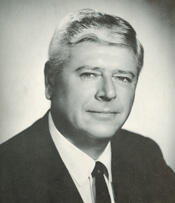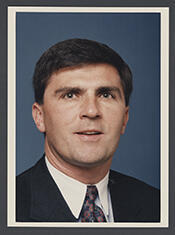
John M. S. Causin (1811 – January 30, 1861) was an American lawyer and Whig politician from Maryland who later practiced law in Illinois and served one term in the United States House of Representatives. He was born in St. Mary’s County, Maryland, in 1811, a region of the state with deep colonial roots and a longstanding tradition of agricultural and maritime commerce. Details of his early family life and schooling are not extensively documented, but his subsequent legal and political career indicates that he received a level of education sufficient to pursue professional training in the law.
Causin studied law in Maryland and was admitted to the bar in Prince George’s County, Maryland, about 1836. Following his admission, he returned to his native St. Mary’s County to commence the practice of law. In this period, Maryland’s legal profession was closely intertwined with local politics and landholding interests, and Causin’s decision to establish his practice in St. Mary’s County placed him within a network of influential planters, merchants, and public officials. His legal work helped to establish his reputation and laid the groundwork for his entry into elective office.
Causin’s political career began at the state level. He served as a member of the Maryland House of Delegates in 1837, representing his home county at a time when Maryland was grappling with issues of internal improvements, banking stability, and the balance of power between eastern and western parts of the state. After returning to private legal practice, he was again elected to the Maryland House of Delegates in 1843. His legislative service coincided with the ascendancy of the Whig Party in many parts of the country, and his affiliation with the Whigs reflected support for a program of economic development, a strong but constitutionally limited federal government, and legislative oversight of executive authority.
Causin advanced to national office when he was elected as a Whig to the Twenty-eighth Congress. He served in the U.S. House of Representatives from March 4, 1843, to March 3, 1845, representing a Maryland district during the administration of President John Tyler and the early stages of the debate over the annexation of Texas. During his single term in Congress, he participated in the legislative work of a body preoccupied with questions of territorial expansion, trade policy, and the ongoing sectional tensions between free and slave states. Although the detailed record of his committee assignments and floor activity is limited in surviving summaries, his service placed him among the generation of mid-Atlantic Whigs who sought to balance regional interests with national concerns.
After his tenure in Congress, Causin returned to state-level public life. He moved to Annapolis, Maryland, the state capital, where he continued his legal practice and took part in constitutional reform. He served as a delegate to a Maryland state constitutional convention, contributing to debates over the structure of state government, representation, and the distribution of political power within Maryland. His participation in the convention reflected both his legal expertise and his continued prominence in state political affairs during a period when many states were revising their constitutions to address changing democratic expectations and regional pressures.
Later in life, Causin shifted his professional base to the rapidly growing Midwest. In 1858 he moved to Chicago, Illinois, a city that was emerging as a major commercial and transportation hub on the eve of the Civil War. There he resumed the practice of law, bringing with him decades of experience in both state and federal public service. His relocation from Maryland to Illinois mirrored a broader pattern of east-to-west migration among professionals seeking new opportunities in expanding urban centers.
John M. S. Causin died in Cairo, Illinois, on January 30, 1861, just weeks after several Southern states had seceded from the Union and on the threshold of the Civil War. He was interred in the City Cemetery of Chicago, which was later transformed into Lincoln Park, and his remains rest in what became one of the city’s major public spaces. His career, spanning local, state, and national service in Maryland and concluding with legal practice in Illinois, reflects the mobility and political ferment of the antebellum United States.
Congressional Record