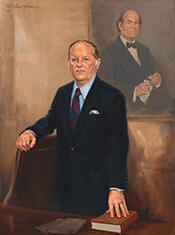
John Carter (full name John Carter) was an American politician who represented South Carolina in the United States House of Representatives in the early nineteenth century. Affiliated with the Jacksonian movement, often referred to at the time as the Jackson Party, he served four terms in Congress and participated actively in the legislative process during a significant and formative period in American political history. His career in national office coincided with the rise of Andrew Jackson and the consolidation of Jacksonian democracy, during which Carter worked to represent the interests of his South Carolina constituents in the federal government.
Born in 1792, John Carter came of age in the post-Revolutionary generation in the American South, a region undergoing rapid political and economic change. South Carolina in this era was marked by the expansion of plantation agriculture, debates over federal versus state authority, and the emergence of new political alignments that would eventually coalesce around figures such as Andrew Jackson. Although detailed records of Carter’s early life and family background are limited, his later prominence in public affairs suggests that he benefited from the educational and social networks available to aspiring political leaders in the state, likely including exposure to legal, commercial, or agricultural pursuits that were common among South Carolina’s political class.
Carter’s education and early professional development prepared him for a role in public life at a time when South Carolina’s leaders were deeply engaged in questions of national policy, including tariffs, internal improvements, and the balance of power between the federal government and the states. By the 1820s and 1830s, the state’s political culture was increasingly influenced by the populist and states’ rights currents that underpinned Jacksonian democracy. Within this environment, Carter aligned himself with the Jackson Party, reflecting support for Andrew Jackson’s broader political program, which emphasized expanded participation for white male voters, skepticism of concentrated financial power, and a robust conception of executive authority, while also accommodating strong regional and states’ rights sentiments prevalent in South Carolina.
John Carter’s congressional service as a member of the Jackson Party representing South Carolina spanned four terms in the U.S. House of Representatives. During these terms, he contributed to the legislative process at a time when Congress was grappling with issues such as the national bank, federal tariffs, internal improvements, and the evolving sectional tensions that would later culminate in the Civil War. As a Jacksonian, Carter participated in the democratic process by supporting policies associated with the Jackson administration and its successors, while also voicing and defending the particular concerns of his South Carolina constituents. His repeated reelection to Congress indicates that he maintained the confidence of his district over an extended period, suggesting an ability to navigate both national party priorities and local interests.
Carter’s tenure in Congress occurred during a transformative era in American political development, as the old first-party system gave way to new alignments centered on Jacksonian Democrats and their opponents. In this context, his role as a Jackson Party representative placed him among those legislators who helped shape the contours of the Second Party System. South Carolina’s political leaders were especially influential in national debates over federal authority and economic policy, and Carter’s service in the House positioned him to participate in these deliberations, whether in committee work, floor debates, or votes on key measures affecting the young republic’s trajectory.
After completing his four terms in the House of Representatives, John Carter returned to private life in South Carolina. Although the detailed record of his later activities is sparse, it is likely that he remained engaged in the civic and political affairs of his state, as was common for former members of Congress in that period. His experience in national office would have made him a respected figure in local and state circles, particularly as South Carolina continued to play an outsized role in national controversies over states’ rights and sectional interests in the decades leading up to the Civil War.
John Carter died in 1850, closing a life that had spanned from the early years of the American republic through the turbulent Jacksonian era. His four-term service in Congress as a Jackson Party representative from South Carolina placed him among the generation of lawmakers who helped define the nation’s political institutions and practices in the first half of the nineteenth century. Through his participation in the legislative process and his representation of South Carolina’s interests in Washington, he contributed to the evolving democratic experiment of the United States during a period of profound change and growing sectional tension.
Congressional Record