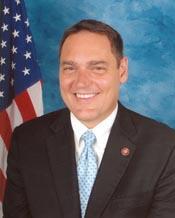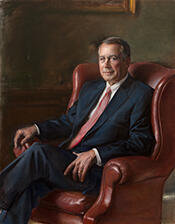
John Andrew Boehner (BAY-nər; born November 17, 1949) is an American former politician who served as the 53rd Speaker of the United States House of Representatives from January 5, 2011, to October 29, 2015. A member of the Republican Party, he represented Ohio’s 8th congressional district in the U.S. House of Representatives for 13 consecutive terms from January 3, 1991, to October 31, 2015. His district included several rural and suburban areas near Cincinnati and Dayton in southwest Ohio. Over the course of his congressional career, Boehner held a series of key leadership posts, including House Republican Conference chairman, House majority leader, and House minority leader, before ascending to the speakership.
Boehner was born in Reading, Ohio, the son of Mary Anne (née Hall; 1926–1998) and Earl Henry Boehner (1925–1990), and was the second of twelve children. Of German descent on his father’s side and German and Irish ancestry on his mother’s side, he grew up in modest circumstances in southwest Ohio. He spent his childhood in a two-bedroom house in Cincinnati, sharing a single bathroom with his eleven siblings. His grandfather, Andy Boehner, had founded a neighborhood bar in 1938, and John Boehner began working there at age eight, an experience he later cited as formative in shaping his views on work, small business, and personal responsibility. He has lived in southwest Ohio his entire life.
Boehner attended Moeller High School in Cincinnati, a Catholic boys’ school, where he played linebacker on the football team under coach Gerry Faust, who later became head coach at the University of Notre Dame. He graduated from Moeller in 1968, at the height of U.S. involvement in the Vietnam War. Following graduation, he enlisted in the United States Navy but was honorably discharged after eight weeks because of a bad back. Determined to pursue higher education, Boehner enrolled at Xavier University in Cincinnati, where he worked a series of jobs to finance his studies. In 1977 he earned a Bachelor of Arts degree in business administration, becoming the first member of his family to graduate from college after taking seven years to complete his degree while working.
Shortly after his graduation in 1977, Boehner accepted a position with Nucite Sales, a small sales company in the plastics industry. He advanced steadily through the firm’s ranks and eventually became its president. His experience in the private sector, particularly in sales and management, informed his later political emphasis on entrepreneurship, deregulation, and fiscal restraint. While building his business career, Boehner entered local public service. From 1981 to 1984, he served on the board of trustees of Union Township in Butler County, Ohio. He then won election to the Ohio House of Representatives, serving as a state legislator from 1985 to 1990. He resigned his position at Nucite Sales in 1990 upon his election to Congress, transitioning full time into federal public service.
In 1990, Boehner sought the Republican nomination for Ohio’s 8th congressional district against incumbent Representative Buz Lukens, who was embroiled in scandal over a sexual relationship with a minor. Initially little known and significantly outspent, Boehner entered a primary that also included former congressman Tom Kindness. Running on a reform-minded platform, he won the Republican primary with 49 percent of the vote and subsequently defeated Democrat Greg Jolivette in the November general election. He took office on January 3, 1991, and was re-elected 12 times, consistently by substantial margins. Among his closest contests were his 2006 race against Democratic Air Force veteran Mort Meier, which he won 64 percent to 36 percent; his 2008 race against Nicholas Von Stein, which he won 68 percent to 32 percent; and his 2010 four-way race, in which he received 66 percent of the vote against Democratic nominee Justin Coussoule, Constitution Party nominee Jim Condit, and Libertarian nominee David Harlow.
During his freshman term in Congress, Boehner became a member of the so‑called “Gang of Seven,” a group of Republican lawmakers who drew national attention to the House banking scandal and pressed for investigations into abuses at the Congressional Post Office, efforts that contributed to the indictment of Representative Dan Rostenkowski. He later emerged as one of the Republican architects of the 1994 “Contract with America,” working closely with then-Representative Newt Gingrich and others to craft the agenda that helped Republicans win control of the House for the first time in four decades. Following the Republican takeover, Boehner was elected House Republican Conference chairman, serving from 1995 to 1999 and becoming the fourth-ranking Republican in the House, behind Speaker Gingrich, Majority Leader Dick Armey, and Majority Whip Tom DeLay. In this role he championed the Freedom to Farm Act, which revised and simplified direct payment programs for crops and eliminated milk price supports through direct government purchases. His leadership tenure was marked by internal party tensions, including a failed 1997 effort by several Republicans, involving Boehner and leadership chairman Bill Paxon, to press Gingrich to step down as Speaker. After Republicans lost seats in the 1998 elections, the House Republican leadership was reorganized; Dennis Hastert replaced Gingrich as Speaker, and Boehner lost his position as conference chairman to J.C. Watts.
With the inauguration of President George W. Bush, Boehner returned to prominence as chairman of the House Committee on Education and the Workforce, serving from 2001 to 2006. In that capacity he played a central role in major education and pension legislation. He co-authored the No Child Left Behind Act of 2001 with Senator Edward M. Kennedy and others, a sweeping federal education reform law signed by President Bush in 2002 that Boehner later described as his “proudest achievement” in two decades of public service. He also helped craft the Pension Protection Act and advanced a school choice voucher program for low-income students in Washington, D.C. Boehner and Kennedy, both Catholics, developed a personal friendship and jointly chaired annual fundraisers to support financially struggling Catholic schools.
After Majority Leader Tom DeLay resigned from his leadership post in 2005, Boehner sought the position of House majority leader, running against House majority whip Roy Blunt of Missouri and Representative John Shadegg of Arizona. Presenting himself as a reform candidate committed to curbing earmarks and restraining federal spending, Boehner won the majority leader’s post in early 2006, defeating Blunt in a second ballot by 122 votes to 109; Blunt remained majority whip. When Republicans lost control of the House in the 2006 midterm elections, Boehner was chosen by the House Republican Conference as minority leader, making him the party’s top figure in the chamber. As minority leader from 2007 to 2011, he served as the Republican nominee for Speaker in 2006 and 2008, losing both times to Democratic leader Nancy Pelosi. A 2008 Congress.org power ranking listed him as the sixth most powerful member of the House and the most powerful Republican, and in this capacity he served ex officio on the House Permanent Select Committee on Intelligence.
The Republican Party’s sweeping gains in the 2010 midterm elections, in which it gained 63 House seats and recaptured the majority, positioned Boehner to become Speaker. On November 17, 2010, House Republicans unanimously selected him as their nominee for Speaker, virtually assuring his election when the 112th Congress convened. On January 5, 2011, he was formally elected Speaker and received the gavel from outgoing Speaker Nancy Pelosi, becoming the first Speaker from Ohio since Nicholas Longworth (1925–1931) and J. Warren Keifer (1881–1883). As Speaker, Boehner was the leader of the House Republicans but, in keeping with tradition, rarely participated in floor debate and did not serve on House committees. He was re-elected Speaker at the opening of the 113th Congress on January 3, 2013, receiving 220 votes, six more than the 214 needed for a majority.
Boehner’s speakership coincided with a period of intense partisan polarization and intra-party division. He played a central role in negotiations over federal spending, the debt ceiling, and implementation of the Affordable Care Act, often attempting to balance the demands of more conservative members of his conference with the practicalities of governing. In July 2014, he advanced a lawsuit against President Barack Obama over the administration’s implementation of the Affordable Care Act’s employer mandate, seeking to compel the executive branch to impose penalties on companies that failed to provide required health coverage after the administration had delayed enforcement. The suit was filed in November 2014 after several law firms were considered. Throughout his tenure, Boehner emphasized themes of “economic freedom, individual liberty, and personal responsibility,” values he frequently linked to his upbringing and early work experience and which were prominent in his emotional election-night remarks following the 2010 midterm victories.
On September 25, 2015, the day after Pope Francis addressed a joint meeting of Congress in what Boehner described as the highest point of his legislative career, he announced that he would step down as Speaker and resign from the House of Representatives at the end of October 2015. His decision came amid escalating internal Republican discord over government funding and efforts by some conservatives to block appropriations legislation that included funding for Planned Parenthood. Facing mounting challenges to his leadership as he sought to pass a continuing resolution to keep the federal government open, Boehner chose to relinquish the speakership. House majority leader Kevin McCarthy of California initially emerged as the leading candidate to succeed him but abruptly withdrew from the race on October 8, 2015, citing concerns about his ability to unify the conference. Boehner remained as Speaker until a successor was chosen and ultimately encouraged Representative Paul Ryan of Wisconsin, then chairman of the Ways and Means Committee and the 2012 Republican vice-presidential nominee, to run for the post. On October 29, 2015, Boehner presided over Ryan’s election as Speaker in his final act in the chair. His resignation from Congress became effective at 11:59 p.m. on October 31, 2015, concluding nearly a quarter-century of service in the House.
Following his departure from elective office, Boehner entered the private sector while remaining active in public affairs. In September 2016, the law and lobbying firm Squire Patton Boggs, one of the largest such firms in the United States, announced that Boehner would join as a senior strategic adviser, drawing on his legislative experience and relationships in Washington. At the same time, it was announced that he would join the board of directors of Reynolds American, a major tobacco company. In these roles, Boehner continued to participate in policy discussions and corporate governance, extending his influence beyond his years in elected office.
Congressional Record