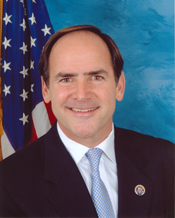
John Blair, commonly known as John Blair of Tennessee, was an American politician who served as a member of the United States House of Representatives from Tennessee in the early nineteenth century. Born in 1790, he emerged as a public figure during a formative period in the nation’s political development, aligning himself with the Jacksonian movement that reshaped American party politics in the decades following the War of 1812. His life and career unfolded against the backdrop of westward expansion, intensifying debates over federal power, and the rise of mass democratic participation.
Details of Blair’s early life and family background are sparse in the historical record, but his birth in 1790 placed him among the first generation to come of age after the ratification of the United States Constitution. Growing up in the early republic, he would have been shaped by the political and social transformations of the new nation, including the rapid settlement of Tennessee and the broader trans-Appalachian West. This environment fostered a political culture that emphasized local interests, suspicion of concentrated power, and a strong identification with agrarian values, all of which later characterized the Jacksonian political program with which Blair became associated.
Blair’s education and early professional formation are not extensively documented, but like many frontier and Southern politicians of his era, he likely combined practical experience in local affairs with self-directed study in law, public administration, or related fields. By the time he entered national politics, he had established himself sufficiently within his community and state to win election to Congress, indicating a record of local leadership and a reputation that resonated with Tennessee voters. His rise coincided with the broadening of the electorate and the decline of older, more elitist political structures, developments that helped propel Jacksonian candidates into office across the South and West.
As a member of the Jackson Party representing Tennessee, John Blair contributed to the legislative process during six terms in office in the United States House of Representatives. His service in Congress occurred during a significant period in American history, when the Jacksonian movement challenged the political dominance of earlier parties and promoted a more expansive vision of popular democracy for white male citizens. In this context, Blair participated in the democratic process and represented the interests of his constituents, taking part in debates over federal economic policy, internal improvements, Indian removal, and the balance of power between the federal government and the states. His repeated reelection over six terms reflected sustained support from his district and indicated that his positions were broadly aligned with the priorities of Tennessee’s electorate.
During his congressional tenure, Blair served as one of many Jacksonian allies who helped advance the broader agenda associated with President Andrew Jackson and his successors. While specific committee assignments and individual legislative initiatives attributed to Blair are not extensively preserved in the surviving record, his alignment with the Jackson Party placed him within the coalition that opposed a national bank, favored limited federal involvement in the economy relative to states’ rights, and supported territorial expansion. Representing a state deeply invested in issues such as land policy, infrastructure development, and the protection of slavery, Blair’s votes and advocacy would have been shaped by the economic and social interests of his region.
After completing his six terms in Congress, Blair left the national legislature and returned to private life in Tennessee. Like many former members of Congress of his era, he likely remained engaged in local and regional affairs, drawing on his experience in national politics and his connections within the Jacksonian and later Democratic Party networks. His post-congressional years unfolded amid the mounting sectional tensions that would eventually lead to the Civil War, a conflict that transformed the state and region he had represented in Washington.
John Blair died in 1863, during the midst of the Civil War, closing a life that had spanned from the early national period through the nation’s gravest internal crisis. His career as a six-term Jackson Party representative from Tennessee placed him among the cohort of antebellum legislators who helped shape the political institutions and partisan alignments of the United States in the first half of the nineteenth century. Through his repeated service in Congress, he played a role in representing Tennessee’s interests at the federal level during a period of profound change in American political and social life.
Congressional Record