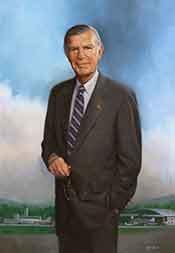
John Banks, also known as John Banks (American politician), was a nineteenth-century U.S. Representative from Pennsylvania and a member of the Anti-Masonic Party who served three terms in Congress. Born in 1793 in Pennsylvania, he came of age in the early years of the American republic, a period marked by rapid political realignment and the emergence of new parties and movements. Little is recorded in standard references about his parents or early family life, but his subsequent professional and political career indicates that he received sufficient early education to pursue the study of law and participate effectively in public affairs.
Banks pursued legal studies in Pennsylvania, reading law in the customary manner of the time rather than attending a formal law school, and was admitted to the bar. He established himself as an attorney in the state, building a professional reputation that enabled him to enter public life. His legal training and practice placed him in close contact with the political and economic issues facing Pennsylvanians in the first half of the nineteenth century, including questions of internal improvements, banking, and the evolving party system. This legal and civic engagement provided the foundation for his later election to national office.
Banks’s congressional career unfolded during a formative period in American politics, when the Anti-Masonic Party emerged as one of the first significant third parties in the United States. As a member of the Anti-Masonic Party representing Pennsylvania, John Banks contributed to the legislative process during three terms in office. He was elected to the U.S. House of Representatives as an Anti-Masonic candidate and served in the Twenty-Second, Twenty-Third, and Twenty-Fourth Congresses, participating in the democratic process and representing the interests of his constituents at a time when opposition to Freemasonry intersected with broader concerns about political corruption and elite influence. During his tenure, he took part in debates and votes on the major national issues of the Jacksonian era, including federal economic policy and the balance of power between the states and the federal government.
Banks’s service in Congress occurred during a significant period in American history, as the Second Party System was taking shape and the Anti-Masonic movement influenced the development of later political organizations, including the Whig Party. In representing Pennsylvania, he aligned with those who sought greater transparency and accountability in public life, reflecting the Anti-Masonic Party’s emphasis on resisting what its adherents viewed as secretive or undue influence in government. Through his three terms, he maintained the confidence of his district’s voters, who returned him to office as national politics grew increasingly contentious over banking, tariffs, and executive power.
After leaving Congress, Banks continued his professional life in Pennsylvania. Drawing on his legislative experience and legal background, he remained engaged in public and civic affairs within the state. His post-congressional career reflected the common pattern of nineteenth-century American politicians who moved between legal practice and public office, contributing to state and local governance as experienced statesmen. Although the Anti-Masonic Party declined as a distinct political force by the late 1830s, Banks’s congressional record remained part of the broader legacy of that movement in American political development.
John Banks lived through the Civil War era, witnessing the profound transformation of the nation he had served in Congress decades earlier. He died in 1864, closing a life that spanned from the early national period through the great crisis of the Union. Remembered in congressional and historical records as an Anti-Masonic Party representative from Pennsylvania, his three terms in the U.S. House of Representatives placed him among the notable figures who participated in the evolving democratic experiment of the United States during the Jacksonian age.
Congressional Record