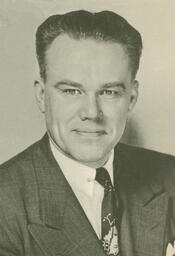
John Bancker Aycrigg (July 9, 1798 – November 8, 1856) was an American physician and politician who represented New Jersey in the United States House of Representatives in two non-consecutive terms from 1837 to 1839 and 1841 to 1843. A member of the Whig Party, he participated in the national legislative process during a formative period in the development of the Second Party System and the evolution of federal policy in the decades before the Civil War.
Born on July 9, 1798, Aycrigg came of age in the early years of the American republic, a time marked by rapid political, social, and territorial change. While detailed records of his family background and early youth are limited, his later professional and political achievements indicate that he received a level of education sufficient to pursue advanced study in medicine, a demanding field in the early nineteenth century. His early life unfolded against the backdrop of post-Revolutionary expansion and the emergence of new professional classes in the United States.
Aycrigg studied medicine and entered the medical profession at a time when formal medical education in the United States was still developing and physicians often combined academic training with apprenticeships. He established himself as a practicing physician, a role that would have placed him in close contact with a broad cross-section of his community and given him insight into public health, local conditions, and the everyday concerns of his neighbors. His medical career provided both the professional standing and the community ties that helped form the basis for his later entry into public life.
Transitioning from medicine to politics, Aycrigg became affiliated with the Whig Party, which coalesced in the 1830s in opposition to the policies of President Andrew Jackson and the Democrats. The Whigs generally supported a stronger role for Congress in national governance, internal improvements, and a more active federal role in economic development. Within this political context, Aycrigg emerged as a representative figure of Whig principles in New Jersey, bringing to his political work the perspective of a professional man grounded in local affairs and public service.
Aycrigg was elected as a Whig to the United States House of Representatives from New Jersey and served his first term in the Twenty-fifth Congress from 1837 to 1839. He returned to the House for a second, non-consecutive period of service in the Twenty-seventh Congress from 1841 to 1843. As a member of the Whig Party representing New Jersey, John Bancker Aycrigg contributed to the legislative process during 3 terms in office. His service in Congress occurred during a significant period in American history, encompassing debates over banking and currency, federal infrastructure projects, and the balance of power between the executive and legislative branches. In these years, he participated in the democratic process and represented the interests of his constituents at a time of intense partisan competition and shifting national priorities.
After leaving Congress, Aycrigg returned to private life, in keeping with the common nineteenth-century pattern of alternating between professional work and public office. He resumed his medical and community activities, remaining a figure identified with both the Whig cause and the professional class that helped shape civic life in his state. His later years were spent outside the national spotlight, but his earlier service reflected the engagement of educated professionals in the political institutions of the young republic.
John Bancker Aycrigg died on November 8, 1856. His life spanned from the early federal period through the turbulent political realignments of the 1850s, and his dual career as physician and legislator exemplified the close connection between professional service and public office in nineteenth-century America.
Congressional Record