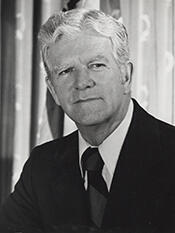
Joel Holleman (October 1, 1799 – August 5, 1844) was an American politician and lawyer from Virginia. A member of the Democratic Party, he served in the United States House of Representatives and held prominent positions in the Virginia General Assembly, including service as Speaker of the Virginia House of Delegates. His career unfolded during a significant period in American political history, as the young republic grappled with questions of party realignment, states’ rights, and the expansion of democratic participation.
Holleman pursued a legal career in Virginia, establishing himself as a practicing attorney before entering public life. Trained in the law at a time when formal legal education was often supplemented or replaced by apprenticeship and self-study, he gained admission to the bar and built a professional reputation that helped launch his political career. His legal background informed his legislative work and contributed to his standing among his contemporaries in both state and national politics.
Holleman first entered elective office in 1832, when he was elected to the Virginia House of Delegates. As a Democrat, he aligned himself with the dominant political currents in Virginia, which generally favored limited federal power and a strict construction of the Constitution. His service in the House of Delegates during the early 1830s placed him at the center of state-level debates over internal improvements, banking, and the evolving party system. His effectiveness and influence in the lower house led to further advancement within the state legislature.
In 1836, Holleman moved from the House of Delegates to the Senate of Virginia, continuing his legislative career at the state level. His tenure in the Senate coincided with the height of the Jacksonian era, when questions of executive power, economic policy, and party organization were vigorously contested. During this period, he also rose to a position of particular prominence in the Virginia House of Delegates, serving as Speaker. In that role, he presided over legislative proceedings, helped guide the flow of legislation, and played a key part in shaping the agenda of the Democratic majority in the state.
Holleman’s state-level experience and party loyalty led to his election to the United States House of Representatives. He was elected as a Democrat to the Twenty-sixth Congress and took office in 1839, representing a Virginia district in the national legislature. As a member of Congress, he participated in the legislative process during a consequential period marked by economic recovery efforts following the Panic of 1837 and by intensifying partisan competition between Democrats and Whigs. His service in Congress reflected his commitment to the principles of his party and to the interests of his Virginia constituents.
At the time of his election to Congress, Holleman made a notable public pledge that underscored both his political convictions and his sense of accountability to his district. He announced that he would resign his seat if the Whig Party carried his district in the 1840 presidential election. When Whig candidate William Henry Harrison won the presidency and carried Holleman’s district in that election, Holleman honored his commitment and resigned his seat in the House of Representatives. In doing so, he demonstrated an unusual willingness to tie his tenure in office directly to the expressed will of his constituents in a national contest.
Following his resignation from Congress, Holleman returned to Virginia and resumed his legal and political activities at the state and local levels. He remained identified with the Democratic Party and with the legislative traditions of Virginia, continuing to contribute to public life until his death. Joel Holleman died on August 5, 1844. His career, though relatively brief, was marked by significant service in both houses of the Virginia legislature, by his role as Speaker of the Virginia House of Delegates, and by his single term in the United States House of Representatives, during which he exemplified a strong sense of political principle and responsiveness to his constituents.
Congressional Record