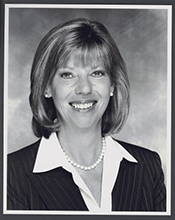
Jo Ann Emerson (née Hermann; born September 16, 1950) is an American politician who represented Missouri’s 8th congressional district in the United States House of Representatives from 1996 to 2013. A member of the Republican Party, she served nine terms in Congress and became known as one of the more moderate Republicans in the House, with a record of bipartisanship and independent judgment on key issues. The largely rural 8th District, which she represented for more than sixteen years, encompasses Southeast and South Central Missouri, including the Bootheel, the Lead Belt, and the Ozarks. With the defeat of Congressman Ike Skelton in 2010, Emerson became the dean of Missouri’s congressional delegation in 2011.
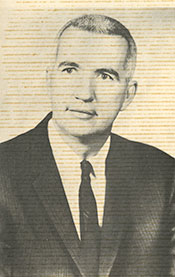
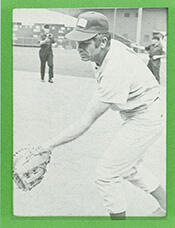
Emerson was born Jo Ann Hermann in Bethesda, Maryland, the daughter of Al Hermann, who played professional baseball for the Boston Braves from 1923 to 1924 and later served as executive director of the Republican National Committee. Raised in a household deeply involved in both sports and national politics, she was exposed early to public life and party affairs. She attended Ohio Wesleyan University, from which she graduated before embarking on a career that combined political engagement and public service, experience that would later inform her work in Congress.
On June 22, 1975, Hermann married Bill Emerson, a Republican from Cape Girardeau, Missouri, who would become a long-serving member of the U.S. House of Representatives. Bill Emerson was first elected to Congress in 1980 from Missouri’s 10th Congressional District and, following redistricting, was reelected in 1982 from the 8th District. The couple had two daughters, and Jo Ann also became stepmother to five stepdaughters and a stepson from Bill’s previous marriage. Bill Emerson served eight terms in Congress before dying of cancer on June 22, 1996, a few months before the end of his eighth term. In recognition of his efforts to secure federal funding for a major Mississippi River crossing, the Bill Emerson Memorial Bridge linking Missouri and Illinois was later dedicated in his honor.
Following her husband’s death in 1996, Jo Ann Emerson announced that she would run for his vacant seat in Congress. Missouri state law, however, prevented her from filing in the Republican primary for the general election, and she temporarily suspended her Republican Party membership in order to appear on the ballot. In November 1996, she ran in two elections held on the same day: as a Republican against Democrat Emily Firebaugh in a special election to complete the final two months of her late husband’s term, and as an independent against Firebaugh and Republican Richard Kline in the general election for a full two-year term. Emerson won both contests easily. She served the remainder of Bill Emerson’s term as a Republican, then entered the new Congress in January 1997 as an independent who caucused with the Republicans, before formally rejoining the Republican Party. She thus became the first Republican woman elected to the U.S. Congress from Missouri, the first independent elected to federal office in Missouri in 122 years, and the first, and so far only, woman to be elected and serve in Congress as an independent or third-party member. She was subsequently reelected seven more times without serious difficulty, consistently winning by margins larger than those of Republican presidential candidates George W. Bush and John McCain and Republican gubernatorial candidates Kenny Hulshof, Matt Blunt, and Jim Talent in her district.
During her congressional career, Emerson served on the powerful House Committee on Appropriations, where she played a significant role in shaping federal spending priorities. Within Appropriations, she served on the Subcommittee on Agriculture, Rural Development, Food and Drug Administration, and Related Agencies; the Subcommittee on the Legislative Branch, where she was vice chair; and the Subcommittee on Financial Services and General Government, where she rose to the position of chairwoman. Her committee assignments reflected the rural and small-town character of her district, and she was an advocate for agricultural interests, rural development, and federal support for infrastructure and public services in underserved areas. Beyond her committee work, she was active in international and bipartisan forums, serving as vice president of the NATO Parliamentary Assembly and vice chair of its Subcommittee on Democratic Governance. She was also vice chair of the Center Aisle Caucus, a bipartisan group aimed at fostering civility and cooperation in Congress, and a founding member of the Bipartisan Congressional Retreat. Emerson further contributed to public policy and civic life as co-chair of the board of directors of the Congressional Hunger Center and as an honorary and life trustee of Westminster College in Missouri.
Emerson’s voting record in Congress established her as a centrist and one of the more moderate Republicans in the House. She was a member of the Republican Main Street Partnership and the Tuesday Group, both coalitions of moderate Republicans. On May 24, 2005, she was one of 50 House Republicans to vote in favor of overturning President George W. Bush’s ban on federal funding for embryonic stem cell research; she cast her “yea” vote the day after her mother-in-law died from Alzheimer’s disease, an illness for which scientists hoped stem cell research could yield improved treatments. On July 12, 2007, she was one of only four House Republicans to vote to require the withdrawal of U.S. troops from Iraq by April 2008. On September 15, 2009, she was one of seven House Republicans who supported a Democratic-sponsored resolution formally condemning Representative Joe Wilson of South Carolina for shouting “You lie!” during President Barack Obama’s joint address to Congress on health care reform. These and other votes underscored her willingness to break with her party on issues of conscience and policy.
Jo Ann Emerson’s service in Congress spanned a significant period in recent American history, from the late 1990s through the aftermath of the September 11 attacks, the wars in Afghanistan and Iraq, and the financial crisis of 2008. Throughout her tenure, she participated fully in the legislative process, representing the interests of her largely rural constituency while engaging in national debates on budgetary, agricultural, defense, and social policy. In early December 2012, she announced her intention to retire from Congress in February 2013 to assume a leadership role in the cooperative utility sector. On January 22, 2013, she resigned her seat in the House of Representatives to become president and chief executive officer of the National Rural Electric Cooperative Association (NRECA), the national service organization for more than 900 consumer-owned, not-for-profit electric cooperatives. She served as CEO until August 2015, when she took a leave of absence for medical reasons; in November 2015 her former congressional chief of staff and NRECA chief operating officer, Jeffrey Connor, became interim CEO, effectively succeeding her. In June 2016, former U.S. Representative Jim Matheson was named to succeed Emerson permanently and assumed the post in July 2016. In March 2017, Emerson was honored with the Clyde T. Ellis Award, the highest distinction bestowed by America’s electric cooperatives, which was accepted on her behalf by her husband, Ron Gladney.
In her personal life after Bill Emerson’s death, Jo Ann Emerson remarried in 2000, wedding attorney Ron Gladney. Through this marriage she gained two additional stepdaughters and a stepson. In 2015, she suffered a stroke that left her paralyzed from the neck down, a life-altering medical event that led to her withdrawal from active professional leadership. By April 2020, while residing in a retirement community in Washington, D.C., she tested positive for COVID-19 during the global pandemic and subsequently recovered. Despite serious health challenges, her long tenure in Congress, her trailblazing status as the first Republican woman elected to Congress from Missouri, and her later leadership in the rural electric cooperative movement have left a lasting imprint on both her state and national public life.
Congressional Record