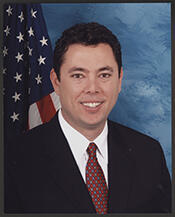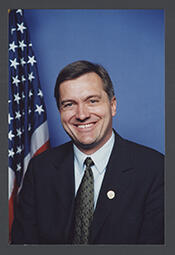
James David Matheson (born March 21, 1960) is an American politician and business executive who served as a United States Representative from Utah from January 3, 2001, to January 3, 2015. A member of the Democratic Party, he represented Utah’s 2nd Congressional District from 2001 to 2013 and its 4th Congressional District from 2013 to 2015. During his seven terms in office, Matheson was Utah’s only congressional Democrat, and the districts he represented were among the most Republican-leaning in the nation to be held by a Democrat. Throughout his tenure, he participated actively in the legislative process and represented the interests of his constituents during a significant period in recent American political history.
Matheson was born in Salt Lake City, Utah, into a prominent political family. His father, Scott M. Matheson, served as governor of Utah from 1977 to 1985, and his mother, Norma Matheson, was First Lady of Utah and a notable figure in the state’s Democratic Party. His brother, Scott Matheson Jr., later became the Democratic nominee for governor of Utah in 2004. Raised in the Church of Jesus Christ of Latter-day Saints, Matheson grew up in an environment that combined public service, civic engagement, and religious faith, influences that would shape his moderate political outlook and bipartisan approach in Congress.
Matheson pursued higher education on the East and West Coasts. He earned an A.B. degree from Harvard College, where he studied in a rigorous academic environment that exposed him to national politics and public policy debates. He then obtained an M.B.A. from the UCLA Anderson School of Management, gaining formal training in business, finance, and management. This educational background in both liberal arts and business administration provided the analytical and managerial skills that informed his later work in the energy sector and his pragmatic, data-driven approach to legislative issues.
Before entering elective office, Matheson built a career in the energy field. He worked for several companies involved in energy and environmental policy, focusing on issues such as power generation, resource management, and regulatory compliance. He also studied environmental policy and eventually founded his own energy consulting firm, advising clients on complex intersections of business, technology, and regulation. His professional experience in energy and environmental matters later influenced his committee assignments and policy priorities in Congress, particularly in areas related to energy, commerce, and public health.
Matheson was first elected to the U.S. House of Representatives in 2000 and took office on January 3, 2001, representing Utah’s 2nd District. As a moderate Democrat in a heavily Republican state, he cultivated a centrist reputation and emphasized constituent service, fiscal restraint, and a pragmatic approach to national issues. During his time in the House, he served on the influential Committee on Energy and Commerce, including the Subcommittee on Commerce, Manufacturing and Trade and the Subcommittee on Health. These assignments placed him at the center of legislative debates over energy policy, consumer protection, health care, and economic regulation. He joined efforts to increase compensation for individuals affected by radiation from Cold War-era atomic testing, an issue of personal significance given that radioactive fallout from nuclear tests caused the cancer that killed his father.
Matheson consistently demonstrated electoral strength in competitive and increasingly Republican districts. In one of his early reelection campaigns, he defeated State Representative LaVar Christensen by 22 points, underscoring his appeal across party lines. In the 2008 general election, he defeated Republican challenger Bill Dew by 28 percent, further solidifying his standing as a Democrat able to win decisively in conservative territory. In a subsequent race, he defeated Republican nominee Morgan Philpot. In May of that election cycle, he faced his first serious challenge from within his own party when Claudia Wright argued that Matheson was not sufficiently liberal; she secured 45 percent of the vote at the Utah Democratic State Convention, forcing a primary. After several weeks of campaigning, Matheson prevailed in the primary with 67.5 percent of the vote, reaffirming his support among Democratic voters while maintaining his broader bipartisan appeal.
Following redistricting, Matheson ran in and won the newly created 4th Congressional District in 2012, continuing his service as Utah’s sole Democratic member of Congress. His tenure from 2001 to 2015 spanned major national events, including the aftermath of the September 11 attacks, the wars in Afghanistan and Iraq, the Great Recession, and the passage and implementation of significant health care and financial regulatory legislation. Throughout, he maintained a reputation as a moderate Democrat, often emphasizing independence from party leadership and a focus on the specific needs and preferences of his Utah constituents.
On December 17, 2013, Matheson announced that he would not seek reelection in the 2014 elections, prompting widespread speculation about his political future. Commentators and party officials considered him a potential candidate for governor of Utah or for a U.S. Senate seat anticipated to open in 2016. Although these possibilities were discussed publicly, Matheson ultimately did not pursue either office. His decision marked the end of fourteen years of continuous congressional service, during which he had been a key figure in demonstrating that a Democrat could repeatedly win in one of the nation’s most Republican states.
After leaving Congress in January 2015, Matheson transitioned to the private sector while remaining engaged in public policy. In 2015, he joined the law and lobbying firm Squire Patton Boggs as a lobbyist, drawing on his legislative experience and expertise in energy, commerce, and health policy. On June 13, 2016, he was named chief executive officer of the National Rural Electric Cooperative Association (NRECA), a national trade organization representing rural electric cooperatives across the United States. He formally assumed the role on July 19, 2016, succeeding former Representative Jo Ann Emerson as CEO. In this capacity, Matheson has continued to work at the intersection of energy policy, rural development, and cooperative governance, extending his long-standing involvement in the energy sector beyond his years in elected office.
Matheson is married to Dr. Amy Matheson, a pediatrician, and they have two sons, William and Harris. His family life, professional background in energy and environmental policy, and experience as the son of a governor have all contributed to his public persona as a pragmatic, service-oriented leader. His career reflects a blend of state and national political heritage, technical expertise in energy issues, and a sustained record of electoral success in one of the most politically challenging environments for a Democrat in contemporary American politics.
Congressional Record