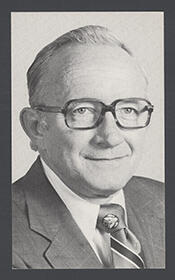
Jesse Johnson Yeates (May 29, 1829 – September 5, 1892) was a Democratic U.S. Congressman from North Carolina who served in the United States House of Representatives between 1875 and 1881. He was born in Hertford County, North Carolina, near Murfreesboro, where he spent his early years in a largely rural, agrarian community typical of eastern North Carolina in the antebellum period. Yeates attended private schools in the region before pursuing higher education at Emory and Henry College in Virginia, an institution that drew many young men from the Upper South in the mid-nineteenth century.
After completing his collegiate studies, Yeates read law and was admitted to the bar in 1855. He established a legal practice in Murfreesboro, quickly entering public service in the judicial system of his native county. That same year he became prosecuting attorney of Hertford County, a position he held from 1855 until 1860. His growing reputation as a lawyer and local leader led to his appointment in 1860 as solicitor of the first judicial district of North Carolina, extending his responsibilities beyond his home county and placing him in a prominent role within the state’s legal framework on the eve of the Civil War.
In addition to his legal and prosecutorial work, Yeates entered elective office in 1860 when he was chosen to serve in the North Carolina House of Commons. He served in the House for two years, participating in state legislative affairs during a period marked by secession and the outbreak of the Civil War. During the war, Yeates served in the Confederate Army with the rank of major, reflecting both his political alignment and his willingness to take an active role in the Southern war effort. He also served as a member of the council of Governor Jonathan Worth, contributing to the administration of North Carolina’s civil affairs in the later stages of the conflict and the early period of Reconstruction.
Following the war, Yeates continued to be involved in North Carolina’s political and legal reconstruction. In 1868, Governor William Woods Holden named him judge of the first judicial district of North Carolina, a significant judicial appointment that he ultimately declined. Despite turning down the judgeship, Yeates remained active in Democratic Party politics. He served as a delegate to the Democratic State Convention in 1871 and was also a delegate to the North Carolina Constitutional Convention that same year, participating in the reshaping of the state’s fundamental law during Reconstruction.
Yeates’s prominence in state politics led to his election to the United States House of Representatives in 1874 as a Democrat from North Carolina, taking his seat in the 44th Congress. He was re-elected in 1876, serving in the 45th Congress, and thus contributed to the legislative process during three terms in office, representing the interests of his constituents during a significant and contentious period in American history that included the end of Reconstruction and the reassertion of Democratic control in the South. In the 1878 election for the 46th Congress, Yeates again stood as the Democratic candidate but was initially defeated by Joseph John Martin. He contested Martin’s election, and after the House reviewed the matter, Yeates was declared entitled to the seat and served briefly from January 29 to March 3, 1881. He declined to run again in 1880, concluding his congressional career at the end of that short contested term.
After leaving Congress, Yeates moved to Washington, D.C., where he resumed the practice of law. His post-congressional years were spent in the nation’s capital, drawing on his legislative and legal experience to continue his professional career. He remained there until his death on September 5, 1892. Yeates died in Washington, D.C., and was interred in Glenwood Cemetery, one of the city’s notable burial grounds that contains the graves of many public figures.
Yeates maintained strong ties to Murfreesboro throughout his life, and his legacy in his home community is reflected in the preservation of his residences. His homes in Murfreesboro, the John Wheeler House and the Myrick–Yeates–Vaughan House, are listed on the National Register of Historic Places, underscoring both their architectural significance and their association with his life and career. Through his work as a lawyer, state legislator, Confederate officer, Reconstruction-era political figure, and three-term Democratic member of Congress, Jesse Johnson Yeates played a notable role in North Carolina and national public life during a transformative era in American history.
Congressional Record