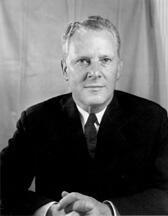
Jesse Wharton (July 29, 1782 – July 22, 1833) was an attorney who briefly represented Tennessee in each house of Congress. He was born in Covesville, Albemarle County, Virginia, where he spent his early years before pursuing formal education. He studied law at Dickinson College in Carlisle, Pennsylvania, preparing for a legal career at a time when the new republic was rapidly expanding westward. After completing his legal studies, he was admitted to the Virginia bar and began practicing law in Albemarle County, establishing himself professionally before relocating to the western frontier.
Wharton’s personal life was closely tied to Tennessee, where he would later build his political career. On April 20, 1804, he married Mary “Polly” Philips in Davidson County, Tennessee. She was born on September 6, 1786, the daughter of Joseph Philips Jr. and Milberry Horn. The couple had five children: John Overton, Joseph Philips, Rhoda Ann, Sarah Angelina, and Mary Philips. Mary “Polly” Wharton died at the age of twenty-six on April 11, 1813. Following her death, Wharton married his cousin, Elizabeth Auston Rice of Virginia, with whom he had five additional children, further cementing his family ties between Virginia and Tennessee.
After moving from Virginia to Tennessee, Wharton continued his legal practice and entered public life during the formative years of the state and the nation. As a member of the Republican Party—then commonly known as the Democratic-Republican Party—he became active in the political affairs of Tennessee, aligning with the dominant Jeffersonian political tradition of the era. His legal background and growing prominence in Tennessee society positioned him for election to national office.
Wharton was elected as a Democratic Republican to the Tenth Congress as a Representative in the United States House of Representatives from Tennessee, serving from March 4, 1807, to March 3, 1809. In this role he participated in the legislative process during a significant period in American history, as tensions with Great Britain and issues of trade and national sovereignty were intensifying in the years leading up to the War of 1812. Representing the interests of his Tennessee constituents, he contributed to debates and legislation as part of a congressional cohort that was grappling with the challenges of a young and expanding republic.
After his term in the House, Wharton returned to his legal practice in Tennessee but remained a figure of sufficient stature to be called again to national service. He was appointed to the United States Senate from Tennessee to fill the vacancy caused by the resignation of Senator George W. Campbell. Wharton served in the Senate from March 17, 1814, to October 10, 1815, during the closing phase of the War of 1812 and the immediate postwar period. His brief tenure in the upper chamber completed his unique distinction of having served Tennessee in both houses of Congress. When a successor was elected, he again resumed the practice of law, continuing his professional work in Tennessee.
In the later years of his life, Wharton remained engaged in public affairs. In 1832 he was named to the Board of Visitors of the United States Military Academy at West Point, reflecting continued confidence in his judgment and public service experience. This appointment placed him in a supervisory and advisory role over one of the nation’s key military educational institutions at a time when the United States was professionalizing its officer corps.
Jesse Wharton died in Nashville, Tennessee, on July 22, 1833, one week before his fifty-first birthday. He was interred at Mount Olivet Cemetery in Nashville, a burial place for many of the city’s prominent citizens. His family’s public service legacy continued into the next generation: his grandson, Wharton Jackson Green, later served as a U.S. Congressman from North Carolina, extending the Wharton family’s influence in American political life beyond Tennessee and into the mid-nineteenth century.
Congressional Record