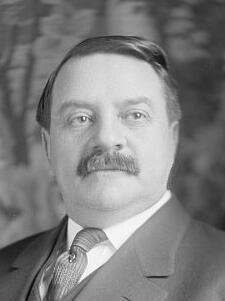
Jesse Lee Hartman (June 18, 1853 – February 17, 1930) was a Republican member of the U.S. House of Representatives from Pennsylvania who served one term in Congress from 1911 to 1913. His congressional service took place during a significant period in American history, when the nation was grappling with industrial expansion, political reform, and evolving party politics. As a member of the House of Representatives, Hartman participated in the legislative process and represented the interests of his Pennsylvania constituents.
Hartman was born on June 18, 1853, at Cottage, Pennsylvania. He attended public and private schools and later pursued further study at the Hollidaysburg Seminary in Hollidaysburg, Pennsylvania. His early education in both common and seminary schools provided the foundation for a career that combined business, local public office, and national political service.
Before entering public life, Hartman built a substantial career in business and industry. From 1872 to 1878, he was employed as a clerk in a general store in Hollidaysburg, gaining experience in commerce and local trade. In 1878 he became manager of a blast furnace at McKees Gap, Pennsylvania, a position he held until 1891. During these years he developed expertise in industrial operations that would later inform his work in mining-related enterprises. After his tenure at the blast furnace, he became extensively engaged in the quarrying and shipping of ganister, a hard, fine-grained sandstone used in the steel industry, further solidifying his role in the region’s industrial economy.
Hartman’s public career began at the county level. Returning to Hollidaysburg, he was elected prothonotary of Blair County, Pennsylvania, in 1891. He was reelected to that office in 1894 and again in 1897, reflecting sustained local confidence in his administrative abilities. In addition to his public office, he became a prominent figure in regional banking. He served as president of the Hollidaysburg Trust Company from 1898 until his death in 1930, overseeing the institution through a period of economic growth and change in central Pennsylvania.
Building on his local prominence and Republican Party involvement, Hartman was elected as a Republican to the Sixty-second Congress, serving from 1911 to 1913 as a Representative from Pennsylvania. During this single term in the U.S. House of Representatives, he contributed to the legislative process and participated in the democratic governance of the country at a time marked by debates over tariffs, regulation of industry, and political reform. Although he sought to continue his service, he was unsuccessful as a candidate for reelection in 1912 and again as a candidate for election in 1914.
After leaving Congress, Hartman resumed his former mining and banking pursuits in Hollidaysburg, maintaining his leadership role in the Hollidaysburg Trust Company and continuing his involvement in the ganister and related industries. He remained active in Republican Party affairs on the national stage, serving as a delegate to the Republican National Conventions in 1908, 1924, and 1928. Through these roles he helped shape party deliberations across several presidential election cycles.
Jesse Lee Hartman died in Hollidaysburg, Pennsylvania, on February 17, 1930. He was interred in Presbyterian Cemetery, leaving a legacy as a businessman, local official, national legislator, and party delegate whose career reflected the intertwined development of industry, finance, and politics in late nineteenth- and early twentieth-century Pennsylvania.
Congressional Record