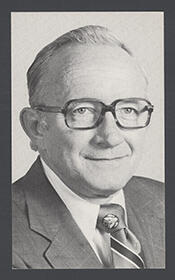
Jesse Atherton Bynum (May 23, 1797 – September 23, 1868) was a North Carolina landowner, lawyer, and United States Representative who served four consecutive terms in Congress during the Jacksonian and early Democratic eras. He was born in Halifax County, North Carolina, on May 23, 1797, into a family with deep roots in the state’s political and military history. He was the grandson of Colonel Jeptha Atherton, who served throughout the American Revolutionary War, a connection that situated Bynum within the tradition of Revolutionary-era public service and landholding elites in eastern North Carolina.
Bynum received his early education in Halifax County before pursuing higher studies outside the state. In 1817 and 1818 he attended the College of New Jersey (now Princeton University) at Princeton, New Jersey. Although records do not indicate that he completed a degree, his time at Princeton provided him with a classical education and exposure to national political ideas during the formative years of the early republic.
After leaving Princeton, Bynum returned to North Carolina and studied law. He was admitted to the bar and commenced legal practice in Halifax, North Carolina. Alongside his legal work, he was a landowner, a common combination of professions among the region’s political class in the early nineteenth century. His standing as a lawyer and landholder in Halifax County helped launch his political career in state government.
Bynum entered public office as a member of the North Carolina House of Commons, the lower house of the state legislature. He served in the House of Commons in 1822 and 1823, and again from 1826 to 1829. During these years he participated in state legislative affairs at a time when North Carolina was grappling with issues of internal improvements, representation, and the evolving party system that would soon crystallize around Andrew Jackson and his opponents.
In national politics, Bynum aligned with the Jacksonian movement. He was elected as a Jacksonian to the Twenty-second and Twenty-third Congresses and then, as the Jacksonian faction evolved into the Democratic Party, as a Democrat to the Twenty-fourth and Twenty-fifth Congresses. He served in the U.S. House of Representatives from March 4, 1833, to March 3, 1841, representing North Carolina in four consecutive terms. His service in the Twenty-second, Twenty-third, Twenty-fourth, and Twenty-fifth United States Congresses placed him in the midst of major national debates over banking, federal power, and territorial expansion during the presidencies of Andrew Jackson and Martin Van Buren.
After leaving Congress in 1841, Bynum did not return to state legislative office but instead shifted his activities farther south and west. He moved to Alexandria, Louisiana, where he engaged in agricultural pursuits. In Louisiana he continued the pattern, common among former Southern officeholders of his generation, of combining landownership and agriculture with a quieter life away from the national political stage.
Jesse Atherton Bynum died in Alexandria, Louisiana, on September 23, 1868. He was interred in Rapides Cemetery in Pineville, Louisiana, across the Red River from Alexandria. His life spanned from the early national period through the Civil War era, and his career reflected the trajectory of many Southern politicians who rose from local prominence as lawyers and landowners to positions in Congress during the formative decades of the American party system.
Congressional Record