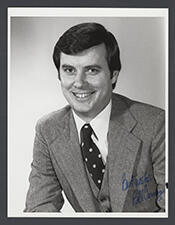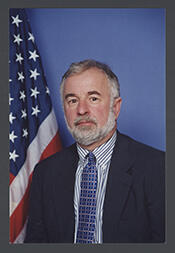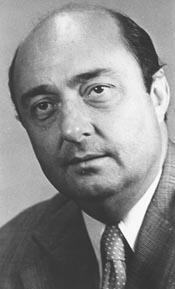
Jerome Anthony Ambro, Jr. (June 27, 1928 – March 4, 1993) was an American military veteran and Democratic politician who served three terms as a member of the United States House of Representatives from New York from 1975 to 1981. A member of the Democratic Party, he contributed to the legislative process during a significant period in American history, participating in the democratic process and representing the interests of his constituents in the House of Representatives.
Ambro was born in Brooklyn, New York, to Jerome G. Ambro, a member of the New York State Assembly. He attended Brooklyn public elementary schools and later Grover Cleveland High School in Queens, New York, from which he graduated in 1946. Growing up in a politically engaged family, he was exposed early to public affairs and the workings of state and local government, influences that would shape his later career in public service.
During the Korean War, Ambro served in the United States Army from 1951 to 1953 as a member of the Military Police, attaining the rank of sergeant. After completing his military service, he pursued higher education and earned a Bachelor of Arts degree from New York University in 1955. On June 11, 1955, he married Helen McCooey; the couple had three children: Cathleen Ambro DeRolf, David Ambro, and Richard Ambro. Following the end of that marriage, he later married his second wife, Antoinette Salatto.
Ambro began his career in local government in the Town of Huntington, Suffolk County, New York. From 1960 to 1967, he served the town as budget officer and purchasing and personnel director, gaining experience in municipal finance, administration, and public management. He then advanced to county and town leadership roles, serving on the Suffolk County Board of Supervisors from 1968 to 1969. From 1968 to 1974 he served four terms as Supervisor for the Town of Huntington. During this period he was simultaneously chairman of Huntington’s Urban Renewal Agency and president of the Freeholders and Commonalty of the Town of Huntington. Under his leadership, the Democratic Party achieved its first sweep of Huntington elections in 35 years, and the town became the first municipality to ban the use of the pesticide DDT, reflecting his early commitment to environmental protection. In 1970, he sought statewide office, challenging Basil Paterson for the Democratic nomination for Lieutenant Governor of New York, but was defeated in the primary election.
Elected as a Democrat to the 94th, 95th, and 96th Congresses, Ambro represented New York in the United States House of Representatives from January 3, 1975, to January 3, 1981. During his first term in the House, he was elected president of his 82-member freshman class, a mark of the confidence his colleagues placed in his leadership. He served on the Committee on Public Works and Transportation and was elected chairman of the House Science and Technology Committee’s Subcommittee on Natural Resources and the Environment. In these roles, he focused particularly on environmental and infrastructure issues affecting his Long Island district and the broader region.
Ambro played a major role in securing the preservation of wetlands in Massapequa, New York, and in having Brookhaven National Laboratory designated as the site of a high-energy reactor, underscoring his interest in both environmental conservation and scientific advancement. In 1980, he authored an amendment to the Marine Protection, Research, and Sanctuaries Act (Section 106(f)) requiring that the disposal of dredged material into Long Island Sound from any federal project, or from any non-federal project exceeding 25,000 cubic yards (19,000 m³), comply with the environmental criteria for ocean dumping under the Marine Protection, Research, and Sanctuaries Act, in addition to the requirements of Section 404 of the Clean Water Act. This measure strengthened environmental safeguards for Long Island Sound and reflected his broader legislative focus on protecting coastal and marine environments. He was defeated for re-election in 1980 by Republican Gregory W. Carman, concluding his three consecutive terms in Congress.
After leaving Congress, Ambro remained active in public affairs as a lobbyist and as a governmental and legislative consultant, drawing on his experience in local government and on Capitol Hill to advise clients on policy and regulatory matters. He continued to be associated with issues of environmental protection, infrastructure, and local governance that had defined much of his public career.
Jerome Anthony Ambro, Jr. died from complications of diabetes in a hospital in Falls Church, Virginia, on March 4, 1993, at the age of 64. He was interred at Arlington National Cemetery in Arlington, Virginia, in recognition of his military service and public career. His legacy has been commemorated in his former home region: in 1998, the East Northport, New York, post office building was renamed the Jerome Anthony Ambro, Jr. Post Office Building, and the Town of Huntington named the Jerome Ambro Memorial Wetlands Preserve in honor of his conservation efforts and his role in advancing environmental protection on Long Island.
Congressional Record