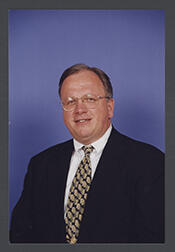
Jeremiah Halsey Pierson (September 13, 1766 – December 12, 1855) was an American lawyer, businessman, and politician from New York who served one term in the United States House of Representatives in the early nineteenth century. He was born on September 13, 1766, in Newark, in the Province of New Jersey, then part of British America. He was fifth in descent from Abraham Pierson, the first president of Yale University beginning in 1701. The first American member of the Pierson family, Abraham Pierson the Elder, emigrated from Yorkshire, England, to Boston in 1639 and was among the founders of Southampton, New York, Stamford, Connecticut, and Newark, New Jersey, establishing a long-standing family presence in the region that would shape Jeremiah Halsey Pierson’s New England and mid-Atlantic connections.
In 1772, Pierson moved with his parents to Richmond, Massachusetts. He attended the public schools in Richmond and nearby Stockbridge and completed preparatory studies there. After his early schooling, he pursued legal studies, was admitted to the bar, and began the practice of law in Massachusetts. His early legal career provided the foundation for his later work in both the judiciary and public affairs, and it reflected the broader pattern of legally trained professionals entering politics in the early Republic.
In 1795, Pierson relocated to Ramapo, in what would become Rockland County, New York. There he continued to practice law and also engaged in mercantile pursuits and manufacturing, integrating himself into the economic life of the growing community. He held several local judicial and administrative offices, serving as a justice of the peace from 1800 to 1811 and as an associate justice of the Rockland County Court in 1808. These positions placed him at the center of local governance and legal administration during a period of rapid development in the lower Hudson Valley.
Pierson entered national politics as a member of the Republican Party, then commonly known as the Democratic-Republican Party. He was elected as a Democratic-Republican to the Seventeenth Congress and represented New York in the United States House of Representatives from December 3, 1821, to March 3, 1823. During his single term in Congress, he participated in the legislative process at a significant moment in American history, contributing to the democratic process and representing the interests of his New York constituents in the post–War of 1812 era, when questions of internal improvements, economic policy, and national expansion were prominent.
After leaving Congress, Pierson resumed his former business and professional pursuits in Ramapo. He remained active in regional economic development and was regarded as being largely instrumental in securing the construction of the Erie Railroad, one of the major internal improvement projects of the nineteenth century that linked New York City with the interior of the state and the Great Lakes region. His continued engagement in public affairs was also reflected in his role as a delegate to the National Republican Convention held in Baltimore in 1831, aligning him with the National Republican movement that emerged in opposition to Andrew Jackson and in favor of a program of internal improvements and a stronger national government.
Pierson married Sarah Colt (1772–1820), the daughter of Jabez Colt and Sarah Elizabeth Mix Colt. Together they had several children: Elizabeth Pierson (1794–1833), who married the author and educator Eleazar Lord (1788–1871); Josiah Gilbert Pierson (1797–1845); Jeremiah Halsey Pierson Jr. (1800–1851); Theodore Pierson (1803–1816); Henry Pierson (1807–1807), who died in infancy; Henry Lewis Pierson (1807–1893); and Benjamin Franklin Pierson (1811–1836). Through these children, particularly Henry Lewis Pierson, Jeremiah Halsey Pierson became the progenitor of a family that remained prominent in military, social, and civic life well into the nineteenth and twentieth centuries.
Through his son Henry Lewis Pierson, he was the grandfather of John Frederick Pierson (1839–1932), who served as a brevet brigadier general in the United States Civil War and later became a notable society figure in New York and Newport during the Gilded Age. He was also the grandfather of Helen Maria Pierson, who married William Gaston Hamilton, the son of John Church Hamilton and grandson of Alexander Hamilton, the first U.S. Secretary of the Treasury. Through this line, Jeremiah Halsey Pierson was an ancestor of Helen Morgan Hamilton, Pierpont Morgan Hamilton, and Alexander Morgan Hamilton, linking his family to both the Hamilton lineage and the broader social and financial elite of later generations.
Jeremiah Halsey Pierson died on December 12, 1855, in Ramapo, New York. He was buried in Ramapo Cemetery. His long life spanned from the colonial era through the early years of the American Republic and into the period of antebellum expansion, and his career combined legal practice, local judicial service, national legislative office, and active participation in the economic and infrastructural development of New York State.
Congressional Record