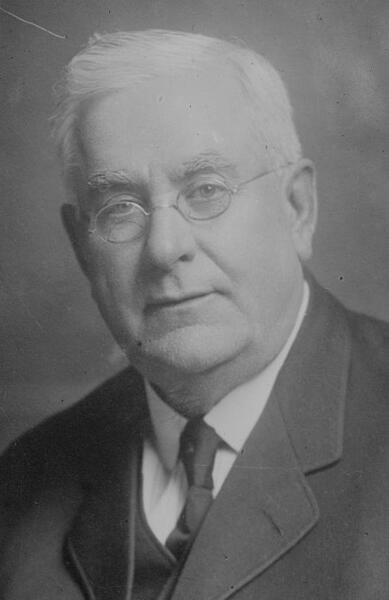
Jeremiah Dunham Botkin (April 24, 1849 – December 29, 1921) was a U.S. Representative from Kansas and a prominent figure in late nineteenth- and early twentieth-century Midwestern politics and religious life. Born near Atlanta, Logan County, Illinois, he was raised in a rural setting and attended local country schools, an upbringing that acquainted him early with the concerns of farmers and small communities that would later shape his political outlook. Seeking further education, he spent one year at De Pauw University in Greencastle, Indiana, then a Methodist-affiliated institution, before turning decisively toward a religious vocation.
Botkin pursued theological studies following his time at De Pauw and entered the Methodist ministry in 1870. As a Methodist clergyman, he developed a reputation as a forceful preacher and moral reform advocate, aligning himself with the era’s strong currents of temperance and social reform. His work in the pulpit and on the lecture platform brought him into contact with reform-minded constituencies across Kansas, where he eventually settled and became identified with both religious and political movements that sought to address the economic and social dislocations of the Gilded Age.
By the late 1880s, Botkin had moved from purely religious leadership into electoral politics, reflecting the broader fusion of reform, prohibition, and agrarian protest in Kansas. In 1888 he was an unsuccessful Prohibition Party candidate for Governor of Kansas, a campaign that underscored his commitment to temperance and moral legislation but did not yield electoral success. Continuing his political efforts, he ran unsuccessfully in 1894 for election to the Fifty-fourth Congress, an early attempt to secure national office at a time when the Populist and allied reform movements were gaining strength in the state.
Botkin’s political fortunes improved in the mid-1890s as the Populist Party became a major force in Kansas. In 1897 he served as chaplain of the Kansas Senate, a role that combined his ministerial background with his growing political prominence. That same year he was elected as a member of the Populist Party to the Fifty-fifth Congress, representing Kansas in the U.S. House of Representatives from March 4, 1897, to March 3, 1899. His single term in Congress occurred during a significant period in American history marked by debates over monetary policy, agrarian distress, and the aftermath of the Panic of 1893. As a member of the House of Representatives, Botkin participated in the legislative process and represented the interests of his Kansas constituents, contributing to the broader Populist effort to address economic inequality and the concerns of farmers and laborers. He was an unsuccessful candidate for reelection in 1898 to the Fifty-sixth Congress, ending his congressional service after one term.
After leaving Congress, Botkin resumed his ministerial duties, returning to the Methodist ministry that had anchored his public life. He remained active in Kansas politics and reform causes, and in 1908 he was again an unsuccessful candidate for governor, this time reflecting the continued, though waning, influence of Populist and reform currents in the state’s political landscape. His dual identity as clergyman and politician made him a familiar figure in Kansas public affairs, even when his campaigns did not result in electoral victory.
In addition to his religious and political work, Botkin held a significant administrative post in the state penal system. From 1913 to 1915 he served as warden of the Kansas State Penitentiary at Lansing, Kansas. In that capacity he oversaw the operation of the institution during a period when questions of prison reform, discipline, and rehabilitation were increasingly discussed in public policy circles. Following his tenure as warden, he again returned to his ministerial duties, continuing to preach and lecture.
In the final phase of his career, Botkin expanded his public speaking beyond the pulpit and political arena by becoming a Chautauqua lecturer in 1921. The Chautauqua movement, which brought educational and inspirational programs to communities across the country, provided a natural platform for his longstanding interests in moral reform, civic engagement, and religious instruction. His participation in this movement reflected his enduring commitment to public education and uplift.
Jeremiah Dunham Botkin died in Liberal, Kansas, on December 29, 1921. He was interred in Winfield Cemetery in Winfield, Kansas, marking his final resting place in the state where he had spent much of his professional and public life. In his personal life, Botkin was married three times: first to Mary Elizabeth Oliver in 1889, and subsequently to Laura Helen Waldo and to Carrie L. Kirkpatrick. His career as a Methodist minister, Populist congressman, gubernatorial candidate, prison warden, and Chautauqua lecturer illustrates the interweaving of religious conviction and political reform that characterized much of Kansas’s public life during his era.
Congressional Record