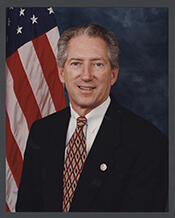
Jason Niles (December 19, 1814 – July 7, 1894) was a lawyer, newspaper editor, and Republican politician in the United States who became a prominent public figure in Mississippi during the Civil War and Reconstruction eras. He served as mayor of Kosciusko, Mississippi, and represented Mississippi for one term as a U.S. Representative from 1873 to 1875, participating in the legislative process during a significant period in American history and representing the interests of his constituents in the 43rd Congress.
Niles was born in Burlington, Vermont, on December 19, 1814, the son of Daniel Swift Niles and Alice Reed, both natives of New Hampshire. He attended local schools in Burlington and went on to the University of Vermont, where he received a bachelor’s degree in 1836. He later earned a master’s degree from the same institution in 1846. Beginning in the 1830s, Niles kept a personal journal and remained a diarist for nearly 30 years, a habit that would later provide insight into his life and times. After college, he taught school in several locations, including Quebec, Ohio, and Tennessee, before eventually moving south to Mississippi.
While engaged in teaching, Niles studied law and prepared for a legal career. He was admitted to the bar in 1851 and commenced the practice of law in Kosciusko, Attala County, Mississippi, which became his long-term home and the base of his professional and political activities. His opposition to secession and his adherence to Unionist principles emerged early in his Mississippi career. In 1851 he served as an anti-secession delegate to Mississippi’s constitutional convention, aligning himself with those who sought to keep the state within the Union in the tense decade preceding the Civil War.
During the American Civil War, Niles remained in Mississippi and continued to support the Union, a stance that required caution in a Confederate state. He worked to keep a low public profile and, despite his long-standing practice of diary-keeping, made no entries for the first two years of the war, apparently to avoid creating written evidence that might be used by local Confederates to accuse him of disloyalty. Opposed to serving in the Confederate military, he arranged for the son of a friend to serve in Mississippi’s state troops as his substitute. Seeking further protection from conscription, he ran for mayor of Kosciusko on the presumption that elected municipal officials would be exempt from military service. He was elected mayor in May 1864 and served one term in that office.
Niles continued to be active in public affairs during the Reconstruction period and maintained his pro-Union and Republican political orientation. He served as a delegate to Mississippi’s constitutional conventions in 1865 and 1868, helping to shape the state’s postwar legal and political framework. In 1870 he was elected to the Mississippi House of Representatives, where he participated in the reorganization of state government under Reconstruction. In 1871 he was appointed judge of Mississippi’s 13th judicial district, a position he held until 1872, further solidifying his reputation as a lawyer and public servant in the state.
In 1872, Niles was elected as a Republican to the 43rd Congress, representing Mississippi in the U.S. House of Representatives. He served one term, from March 4, 1873, to March 3, 1875. His congressional service took place during the closing years of Reconstruction, a period marked by intense political conflict over civil rights, federal authority, and the reintegration of the former Confederate states. As a member of the Republican Party representing Mississippi, Niles contributed to the legislative process and participated in the democratic governance of the reunited nation. With the end of Reconstruction and the resurgence of the Democratic Party in Mississippi, he was an unsuccessful candidate for reelection in 1874, as Democrats reasserted control over state politics.
After leaving Congress, Niles returned to Kosciusko and remained engaged in public discourse. From 1876 to 1880 he served as editor of the Kosciusko Chronicle, using the newspaper as a platform for commentary on local and national issues during a time of political realignment in the South. Following his tenure as editor, he resumed the practice of law in Kosciusko, continuing his professional work into his later years.
In his personal life, Niles married Harriet N. McRee in 1847 in Bedford County, Tennessee. She was the daughter of William Elliot McRee and Sarah McLean Houston. The couple had several children: Alice Redd Niles, born March 15, 1848; Henry Clay Niles, born June 4, 1840; Sallie Houston Niles, born December 31, 1852; Mary Niles, born December 30, 1855; Lucy Niles, born August 30, 1858; Jennie Niles, born August 13, 1861; and Lydia Niles, born June 19, 1866. Their son Henry Clay Niles later became a federal judge in Mississippi, extending the family’s involvement in public service into the next generation. Jason Niles was also a cousin of Thomas Brackett Reed of Maine, who would go on to serve as Speaker of the United States House of Representatives, linking Niles by family ties to one of the most influential congressional leaders of the late nineteenth century.
Jason Niles died in Kosciusko, Mississippi, on July 7, 1894. He was interred in the City Cemetery in Kosciusko, where he had lived and worked for much of his adult life. His career as a teacher, lawyer, judge, mayor, legislator, congressman, and newspaper editor reflected the complex political and social transformations of the United States from the antebellum era through Reconstruction and its aftermath.
Congressional Record