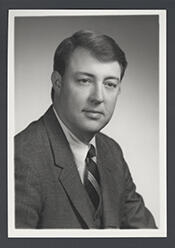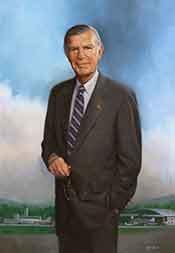
Jason Altmire (born March 7, 1968) is an American businessman, author, lobbyist, and politician who represented Pennsylvania’s 4th congressional district in the U.S. House of Representatives from January 3, 2007, to January 3, 2013. A member of the Democratic Party, he served three terms in Congress during a period of significant national political change and became known as one of the most centrist members of the House. Following his congressional service, he built a career in the health care and education sectors and emerged as a prominent commentator on political polarization.
Altmire was born in western Pennsylvania and raised as an only child in a single-parent household. A standout high school athlete, he set a school record in track and field and was recognized as an all-star wide receiver in football before a serious knee injury sidelined him for his senior year. In 1986, he enrolled at Florida State University in Tallahassee. After a lengthy rehabilitation of his knee injury, he successfully tried out for the Florida State Seminoles football team as a walk-on and frequently worked in practice against future Hall of Fame defensive back Deion Sanders. Altmire graduated from Florida State in 1990 with a Bachelor of Science degree in political science. He later pursued advanced study in health policy and administration, earning a Master’s in Health Administration from George Washington University in Washington, D.C., and in 2020 he completed a Doctorate in Business Administration from the University of Florida.
Altmire’s public service career began immediately after college. In 1990, he worked in the Tallahassee campaign office of Pete Peterson, then a Democratic candidate for Congress in Florida’s 2nd congressional district. After Peterson defeated incumbent Republican Representative Bill Grant in the general election, he hired Altmire to join his Capitol Hill staff. From 1991 to 1996, Altmire served as a legislative assistant during Peterson’s three terms in Congress, specializing in domestic policy issues. In 1993, he was appointed to a working group for President Bill Clinton’s Task Force on National Health Care Reform, gaining early and detailed exposure to federal health policy. When Peterson was named U.S. Ambassador to Vietnam in 1996, Altmire transitioned from congressional staff work to health care advocacy, becoming a lobbyist for the Federation of American Hospitals.
In 1998, Altmire returned to western Pennsylvania to continue his work in health care policy as a lobbyist for the University of Pittsburgh Medical Center (UPMC). Over the next several years, he advanced within the organization and by 2005 was serving as acting vice president for government relations and community health services. His work focused on government affairs, community health initiatives, and the intersection of health care delivery and public policy. During this period, he gained local recognition for his civic and professional contributions: in 2003, Pittsburgh Magazine named him one of the city’s “40 under 40,” and in 2005 he received the Arcadia Award from the Northern Allegheny Chamber of Commerce. Altmire left UPMC in June 2005 to pursue elective office, drawing on his experience as both a congressional aide and a health care industry lobbyist.
Altmire entered electoral politics by challenging three-term Republican Representative Melissa Hart in Pennsylvania’s 4th congressional district, a seat many observers considered safely Republican. In May 2006, he won the Democratic primary, defeating businesswoman Georgia Berner by a margin of 55 percent to 45 percent. In the 2006 general election, he ran an intensive campaign, raising more than $1 million and steadily closing an early polling gap with Hart. On November 7, 2006, he defeated Hart 52 percent to 48 percent. He was reelected in 2008, again defeating Hart in a rematch by 56 percent to 44 percent, even as Republican presidential nominee John McCain carried the district by nearly 11 points. In the 2010 midterm elections, a Republican wave year in which Democrats lost 63 House seats nationally, including five in Pennsylvania, Altmire narrowly secured a third term by defeating Republican attorney Keith Rothfus 51 percent to 49 percent.
During his tenure in Congress from 2007 to 2013, Altmire developed a reputation as a moderate Democrat with a strong focus on constituent service and fiscal stewardship. The nonpartisan National Journal ranked him as having one of the most centrist voting records in the House during his time in office. He did not miss a single vote in his first two terms and extended this streak into his sixth year in office, ultimately casting 4,734 consecutive votes—the longest voting streak in the House at that time—before it ended when he missed a vote to attend a White House ceremony at which President Barack Obama posthumously awarded the Medal of Honor to Leslie H. Sabo Jr., a former resident of his district. Over the course of his six years in office, Altmire returned more than $1 million in unspent office funds to the U.S. Treasury, emphasizing his desire to lead by example as a steward of taxpayer money.
Altmire served on several key House committees. He was a member of the Committee on Education and the Workforce, where he sat on the Subcommittee on Higher Education and Workforce Training and the Health, Employment, Labor, and Pensions Subcommittee. He also served on the Committee on Transportation and Infrastructure, including the Subcommittees on Highways and Transit; Railroads, Pipelines, and Hazardous Materials; and Water Resources and Environment. In addition, he was a member of the Committee on Small Business and from 2007 to 2010 chaired its Subcommittee on Oversight and Investigations. In that role, he led efforts to pass legislation to help small businesses obtain private capital investment and introduced legislation to assist small businesses affected by the deployment of employees serving in the National Guard. His Guard-related bill received broad bipartisan support and was signed into law by President George W. Bush in 2008.
Legislatively, Altmire focused on veterans’ issues, health care, and constituent-driven reforms. He successfully fought to guarantee enlistment bonuses for combat-wounded veterans and pressed for a 2007 policy change that allowed Vietnam-era Gold Star families to participate in White House tours after one of his constituents had been denied access. In 2011, he authored a bill to modernize the charter of the American Legion; the measure attracted 432 cosponsors, the most ever for any congressional bill. He also authored legislation that eliminated the late enrollment penalty for low-income seniors participating in the Medicare Part D prescription drug program. On foreign and defense policy, he made multiple trips to the Middle East, visiting U.S. troops and meeting with foreign leaders in Yemen, Iraq, Israel, and other countries, and he opposed the use of Chinese-made steel in the construction of the U.S.–Mexico border fence. Following the devastating 2010 earthquake in Haiti, he played a role in the rescue of two constituents and the 54 orphans under their care.
Altmire’s extensive background in health care policy shaped his role in the national debate over health reform during the Obama administration. Having worked on President Clinton’s failed health care initiative in the 1990s and later as a hospital executive, he was widely regarded as knowledgeable on the intricacies of health policy. Despite his Democratic affiliation, he voted against the Affordable Care Act (ACA) on March 21, 2010, and had opposed earlier versions of the legislation. His vote was heavily courted by President Obama and Democratic leaders; Obama personally appealed to him in the days before the final vote, urging him to consider how history would view the legislation. Washington Post health policy writer Ceci Connolly noted that “Altmire, more than most in Congress, understood the intricacies of health-care policy.” After leaving Congress, however, Altmire expressed support for the ACA and worked on its implementation in the private sector.
The 2010 census and subsequent redistricting in Pennsylvania significantly altered Altmire’s political landscape. The state lost one congressional seat, and the Republican-controlled legislature dismantled his district, merging most of its territory into the neighboring 12th district, represented by fellow Democrat Mark Critz. The two incumbents faced each other in the 2012 Democratic primary, a contest that drew national attention and outside involvement. During the 2008 presidential primary, both Barack Obama and Hillary Clinton had sought Altmire’s support as a superdelegate, but he remained neutral; some Clinton biographers later suggested that this neutrality contributed to former President Bill Clinton’s decision to campaign against him in the 2012 primary. On April 24, 2012, Critz narrowly defeated Altmire 51 percent to 49 percent. Critz subsequently lost the general election to Republican Keith Rothfus, Altmire’s 2010 opponent, marking the end of Altmire’s congressional career. His congressional and campaign websites were later selected by the Library of Congress for inclusion in its permanent historical collection on the U.S. Congress.
After leaving Congress in January 2013, Altmire entered the private sector in health care and public policy. In January 2013, he became a lobbyist and public relations executive for Florida Blue, the Blue Cross Blue Shield–affiliated health insurance company in Florida. In that role, he worked on the implementation of the Affordable Care Act in the state and engaged in corporate and public policy strategy. In 2015, he was appointed chairman of the Florida Blue Foundation, the company’s philanthropic arm. He left Florida Blue in August 2017 to promote his book, “Dead Center: How Political Polarization Divided America and What We Can Do About It,” published by Sunbury Press that same year. In February 2019, he was named a senior advisor to Avalere Health, a health care consulting firm, and in 2020 he became president of Career Education Colleges and Universities, the national trade association representing private career schools.
In addition to his corporate and trade association roles, Altmire has remained active in civic, academic, and policy reform efforts. He has served on several boards, including the U.S. Global Leadership Coalition, college football’s Outback Bowl, and the board of trustees at Jacksonville University. In 2014, Florida Governor Rick Scott appointed him to the state’s business and economic development board. He is a fellow of the European Institute for International Law and International Relations and an adjunct professor at the Texas Tech University Health Sciences Center. In 2019, he helped author a report for the Center for the Study of the Presidency and Congress recommending reforms to the American political system. He serves on the board of the political reform organization Unite America and is a member of the Issue One ReFormers Caucus, a group of former members of Congress dedicated to promoting civility and structural reform in American politics.
Altmire’s commitment to education and public service is also reflected in his philanthropic and archival activities. He and his wife, Kelly, endowed a permanent scholarship at Florida State University to support a health policy student “who demonstrates ambition and maturity through campus involvement and leadership, internships, employment, community service, faculty recommendations and/or overcoming significant challenges.” His papers and records from his time in public service are housed at the University of Pittsburgh, comprising nearly 36,000 files, including official government publications, administrative and travel files, constituent communications, correspondence, daily schedules, speeches, invitations, photographs, video, legislative documents, memorabilia, talking points, committee hearing testimony, campaign materials, and press clippings. These materials, together with the archived versions of his congressional and campaign websites at the Library of Congress, document his career as a centrist legislator, health policy expert, and advocate for political reform.
Congressional Record