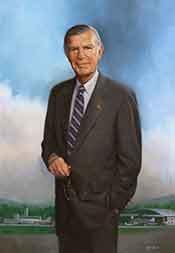
James M. Wallace (1750 – December 17, 1823) was an American politician and military officer who served as a Democratic-Republican member of the U.S. House of Representatives for Pennsylvania’s 3rd congressional district from 1815 to 1821. A member of the Republican (Democratic-Republican) Party representing Pennsylvania, he contributed to the legislative process during three terms in office, participating in the democratic process and representing the interests of his constituents during a significant period in the early national history of the United States.
Wallace was born in Hanover Township, Pennsylvania, in 1750. Little is recorded about his family background, but he pursued preparatory studies in Philadelphia, indicating that he received a level of formal education uncommon for many in the colonies at that time. This education likely prepared him for both his later military responsibilities during the Revolutionary era and his subsequent public service in state and national government.
During the American Revolutionary War, Wallace took an active role in the patriot cause. He served in military units commanded by Captain James Roger, Colonel Timothy Green, and Captain William Brown. In 1779, he commanded a company of rangers in defense of the Pennsylvania frontier, a critical assignment given the vulnerability of frontier settlements to British-allied Native American raids and other wartime threats. By the close of the war, he had risen to the rank of major of a battalion of Associators, a form of colonial militia, reflecting both his leadership and his sustained commitment to the Revolutionary effort.
In the years following the Revolution, Wallace continued his involvement in military and civic affairs. He was appointed major of the Dauphin County Militia in 1796, maintaining a leadership role in local defense and public order in central Pennsylvania. His prominence in the community led to his selection as one of the commissioners of Dauphin County, a position he held from 1799 to 1801. As a county commissioner, he would have been involved in overseeing local administration, finances, and public works during a period of growth and institutional development in the young Commonwealth.
Wallace advanced to state-level office as a member of the Pennsylvania House of Representatives, serving from 1806 to 1810. In the state legislature, he participated in shaping Pennsylvania’s laws and policies in the early decades of the republic, a time marked by debates over internal improvements, state finance, and the balance of power between state and federal authorities. His service in Harrisburg helped establish his reputation as a reliable Republican (Democratic-Republican) legislator and prepared him for national office.
Wallace entered the national legislature during the aftermath of the War of 1812. He was elected as a Republican to the Fourteenth Congress to fill the vacancy caused by the declination to serve of Amos Slaymaker, thereby beginning his service in the U.S. House of Representatives in 1815. Representing Pennsylvania’s 3rd congressional district, he was reelected to the Fifteenth and Sixteenth Congresses, serving continuously until 1821. During these three terms in Congress, he contributed to the legislative process at a time when the nation was addressing issues such as postwar economic adjustment, westward expansion, and the evolving role of the federal government. After his third term, Wallace declined to be a candidate for renomination and chose to retire from public life.
Following his retirement from Congress in 1821, Wallace returned to private life and retired to his farm in Pennsylvania. He lived there quietly during his final years, remaining part of the community he had long served in both military and civil capacities. James M. Wallace died near Hummelstown, Pennsylvania, on December 17, 1823. He was interred in the Old Derry Church Graveyard in Derry, Pennsylvania, a burial place associated with some of the region’s earliest settlers, reflecting his standing as a long-serving public figure in the history of Dauphin County and the Commonwealth of Pennsylvania.
Congressional Record