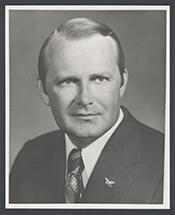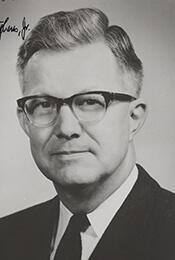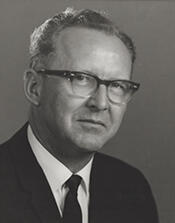
James Russell Tuten (July 23, 1911 – August 16, 1968) was an American politician and member of the Democratic Party who served as a U.S. Representative from Georgia for two terms from 1963 to 1967. During his tenure in the House of Representatives, he contributed to the legislative process at a time of significant social and political change in the United States, representing the interests of his Georgia constituents in the Eighty-eighth and Eighty-ninth Congresses.
Tuten was born on a farm in Appling County, Georgia, on July 23, 1911. He was raised in a rural setting and attended the county public schools, receiving his early education in the local school system. He went on to pursue higher education at South Georgia College in Douglas, Georgia, and later at Georgia Southern College in Statesboro, Georgia. His education provided the foundation for a varied early career that combined agriculture, education, and skilled trades.
Before entering public office, Tuten engaged in multiple occupations that reflected both his rural background and his practical skills. He worked as a farmer and teacher, gaining firsthand experience with the economic and educational concerns of his community. In addition, he became a bricklayer and later a building contractor, developing a business career in the construction field. This combination of farming, teaching, and contracting helped establish his reputation as a working professional closely connected to the everyday lives of his neighbors and constituents.
Tuten’s formal political career began at the local level in Brunswick, Georgia, where he became active in municipal government. He served as a city commissioner of Brunswick from 1956 to 1962, participating in the administration and oversight of local affairs during a period of growth and change for the coastal city. Concurrently, he held the office of mayor of Brunswick from 1958 to 1962, assuming executive responsibilities for city governance. His leadership in Brunswick underscored his commitment to public service and provided him with experience in managing public resources and addressing community needs. Beyond elective office, he also contributed to higher education in the state as chairman of the board of trustees of Brewton–Parker College in Mount Vernon, Georgia, reflecting his continuing interest in educational advancement.
Building on his local and regional prominence, Tuten was elected as a Democrat to the U.S. House of Representatives, winning a seat in the Eighty-eighth Congress and subsequently being reelected to the Eighty-ninth Congress. He served from January 3, 1963, to January 3, 1967. His service in Congress coincided with a pivotal era in American history marked by the civil rights movement, major federal legislative initiatives, and evolving national priorities. As a member of the House of Representatives, James Russell Tuten participated in the democratic process and represented the interests of his Georgia constituents, contributing to deliberations and votes on national policy during his two terms in office. In 1966, he sought renomination but was unsuccessful in his bid to continue in Congress.
After leaving the House of Representatives, Tuten remained involved in regional development efforts. In 1967, he was appointed cochairman of the Coastal Plains Regional Commission, a body focused on economic development and planning in the Coastal Plains area. In this role, he continued to apply his experience in public service, local government, and business to the broader task of promoting growth and improving conditions in the region.
James Russell Tuten died in Falls Church, Virginia, on August 16, 1968. He was interred in Palmetto Cemetery in Brunswick, Georgia, returning in death to the coastal community where he had built much of his public career.
Congressional Record