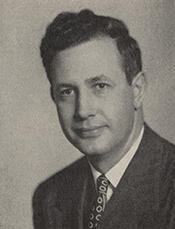
James Patrick Sutton (October 31, 1915 – February 3, 2005) was an American politician and a member of the United States Congress from Tennessee. A Democrat, he served as a Representative from Tennessee in the United States Congress from 1949 to 1955, contributing to the legislative process during three terms in office and representing the interests of his constituents during a significant period in American history.
Born on October 31, 1915, Sutton came of age in the early twentieth century, a time marked by the Great Depression and the lead-up to the Second World War. These formative years shaped his understanding of public service and national responsibility, experiences that would later inform his approach to politics and governance. Details of his early family life and upbringing are not extensively documented in public sources, but his later record of military and congressional service reflects a strong commitment to national duty.
Sutton pursued his education in Tennessee, where he developed the skills and civic awareness that would support his later career in public life. His education coincided with a period of major social and economic change in the United States, and he entered adulthood as the nation was preparing for and then engaged in global conflict. This environment helped direct him toward military and, subsequently, political service.
Before entering Congress, Sutton embarked on a career that combined public service and engagement with national affairs. His early professional life unfolded against the backdrop of World War II and the immediate postwar era, when questions of economic recovery, veterans’ readjustment, and international leadership dominated American public discourse. These issues would become central to the legislative agenda during his later tenure in the House of Representatives.
Sutton was elected as a Democrat to the United States House of Representatives from Tennessee and served three consecutive terms from 1949 to 1955. His service in Congress occurred during the administrations of Presidents Harry S. Truman and Dwight D. Eisenhower, a period marked by the early Cold War, the beginning of the Korean War, and significant domestic debates over economic policy, civil rights, and federal responsibility for social welfare. As a member of the House of Representatives, James Patrick Sutton participated in the democratic process, took part in the consideration of national legislation, and worked to represent the interests and concerns of his Tennessee constituents in the federal government.
During his six years in Congress, Sutton contributed to the legislative process at a time when the United States was defining its postwar role at home and abroad. While detailed records of his specific committee assignments and sponsored legislation are limited in the available sources, his tenure placed him at the center of discussions on defense, foreign policy, and domestic economic stability. His work in the House reflected the priorities of a Southern Democrat of his era, balancing regional interests with the broader national agenda emerging in the early Cold War years.
After leaving Congress in 1955, Sutton concluded his formal congressional service but remained part of the generation of mid-twentieth-century lawmakers whose careers bridged the New Deal, World War II, and the onset of the Cold War. In his later life, he lived away from the national political spotlight, carrying forward the legacy of a public official who had served during a transformative period in American history. James Patrick Sutton died on February 3, 2005, closing a life that spanned nearly ninety years and encompassed service to both his state of Tennessee and the United States Congress.
Congressional Record