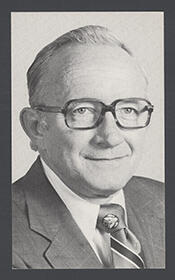
James Strudwick Smith (September 8, 1787 – December 7, 1852) was a physician and Congressional Representative from North Carolina. He was born near Hillsboro, Orange County, North Carolina, on September 8, 1787, in the closing years of the Revolutionary era, and grew up in the central Piedmont region of the state. His early life unfolded in a largely rural setting near Hillsboro, a community that served as an important political and commercial center in early North Carolina.
Smith received his early education at a private school near Hillsboro and later attended Hillsboro Academy, one of the more prominent local institutions of learning in the area. Pursuing professional training at a time when formal medical education was becoming more structured in the United States, he went on to study medicine in Philadelphia, Pennsylvania. He was graduated from Jefferson Medical College in 1818, joining the ranks of formally trained physicians at a relatively early stage in that institution’s history.
After completing his medical education, Smith returned to North Carolina and established a medical practice near Hillsboro. He later practiced medicine near Chapel Hill, North Carolina, serving communities in and around what would become an important academic center for the state. His medical career ran parallel to his emerging interest in public affairs, and he balanced professional responsibilities as a physician with increasing engagement in politics.
Smith entered national politics as a member of the Democratic-Republican Party, the dominant political organization in North Carolina and much of the nation during the early nineteenth century. He was elected as a Democratic-Republican to the Fifteenth and Sixteenth Congresses, serving in the United States House of Representatives from March 4, 1817, to March 3, 1821, representing North Carolina. During his two terms in Congress, he participated in the legislative process at a time marked by post–War of 1812 developments and the so‑called “Era of Good Feelings,” when issues of national expansion, finance, and internal improvements were prominent. In the Sixteenth Congress he served as chairman of the Committee on Accounts, overseeing matters related to the financial administration and expenditures of the House. His service reflected the interests of his North Carolina constituents within the broader framework of the Democratic-Republican program. He was an unsuccessful candidate for renomination at the close of his second term.
Following his departure from Congress in 1821, Smith resumed the practice of medicine in North Carolina, returning to his profession as a physician near Chapel Hill. He remained active in state and local politics, however, and that same year he was elected to the North Carolina House of Commons, the lower house of the state legislature. He served in the State house of commons in 1821 and 1822, participating in the formulation of state laws during a period when North Carolina was grappling with questions of internal development, representation, and constitutional reform.
Smith’s engagement with state constitutional issues culminated in his role as a delegate to the North Carolina constitutional convention of 1835. That convention produced significant changes to the state’s fundamental law, including adjustments to representation, suffrage provisions, and the structure of state government. His participation placed him among the group of leaders who helped reshape North Carolina’s political framework in the antebellum period, reflecting his continued influence beyond his years in national office.
In his later life, Smith continued to reside near Chapel Hill, where he maintained his farm and remained identified with the local community. He died near Chapel Hill, North Carolina, on December 7, 1852. He was interred in a private cemetery on his farm, a burial consistent with the practices of many landowning families of his era, and his life bridged the formative decades of the early republic, encompassing service as a physician, state legislator, constitutional delegate, and member of the United States Congress.
Congressional Record