United States Representative Directory

James Sloan

James Sloan served as a representative for New Jersey (1803-1809).

  • Republican
  • New Jersey
  • District -1
  • Former
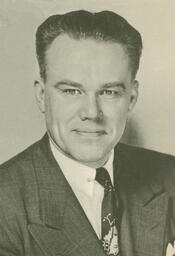
Portrait of James Sloan New Jersey
Role Representative

Current assignment referenced in the congressional directory.

State New Jersey

Representing constituents across the New Jersey delegation.

District District -1

District insights and legislative focus areas.

Service period 1803-1809

Years of public service formally recorded.

Font size

Biography

James Sloan was the name of several notable American public figures, including James Sloan, a co-founder of the Orange Institution in 1795; James F. Sloan (1947–2009), head of United States Coast Guard Intelligence; James Sloan (died 1811), a United States Congressman from New Jersey; James Sloan (1792–1886), an early Latter Day Saint and secretary to Joseph Smith Jr.; James Park Sloan (born 1945), an American writer and critic; James Blanding Sloan (1886–1975), an American etcher, printmaker, and theatrical designer; and James Sloan Kuykendall (1878–1928), an American lawyer and politician in the state of West Virginia. Among these, the James Sloan who served in the United States Congress from New Jersey is of particular relevance to congressional biography.

James Sloan, the New Jersey congressman, was active in public life in the early years of the American republic and died in 1811. Although details of his early life, including his exact date and place of birth, are not well documented in surviving records, he emerged from the political culture of the post-Revolutionary era in New Jersey, a state that was rapidly defining its role in the new federal Union. His background likely reflected the agrarian and commercial interests that shaped New Jersey politics at the turn of the nineteenth century, and he became identified with the Jeffersonian Republican movement that challenged Federalist dominance in national affairs.

By the late 1790s and early 1800s, Sloan had become sufficiently prominent in his community and state to be elected to national office. He was chosen as a Republican to represent New Jersey in the United States House of Representatives during the period when the young nation was grappling with issues such as the scope of federal power, relations with Britain and France, and the transition from Federalist to Republican control of the executive branch. Serving in Congress in the early nineteenth century, he participated in legislative debates that helped define the contours of the federal government and the rights of the states, aligning with the broader Jeffersonian emphasis on limited central authority and support for agrarian interests.

During his congressional service, Sloan would have been involved in the routine work of the House, including consideration of revenue measures, organization of the federal judiciary, and questions of military preparedness in an era marked by tensions on the Atlantic and along the nation’s frontiers. As a representative from New Jersey, he bore responsibility for balancing local concerns—such as commerce, transportation, and the interests of small farmers and emerging towns—with the broader national agenda of the Republican leadership in Washington, D.C. His tenure coincided with a period of institutional consolidation in Congress, as procedures, committee structures, and party alignments became more regularized.

After his service in the House of Representatives, Sloan returned to private life in New Jersey. Like many early members of Congress, he did not pursue a long national political career but instead resumed the occupations and local responsibilities that had first brought him to public attention. He died in 1811, closing a career that had placed him among the generation of legislators who helped stabilize the federal government in its formative decades. His life and service are part of a broader tapestry of individuals named James Sloan who contributed to political, religious, military, and cultural life in the United States and abroad, including the co-founder of the Orange Institution in 1795; James F. Sloan, who led U.S. Coast Guard Intelligence; the Latter Day Saint leader and secretary James Sloan; the writer and critic James Park Sloan; the artist James Blanding Sloan; and the West Virginia lawyer and politician James Sloan Kuykendall.

Congressional Record

Loading recent votes…

More Representatives from New Jersey