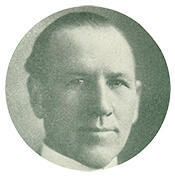
James Herbert Sinclair (October 9, 1871 – September 5, 1943) was an American farmer and politician affiliated with the Republican Party and the Nonpartisan League who served as a Representative from North Dakota in the United States Congress from 1919 to 1933, during which time he completed eight terms in office. His congressional service spanned a significant period in American history, encompassing the aftermath of World War I, the prosperity of the 1920s, and the onset of the Great Depression. Throughout his tenure in the House of Representatives, Sinclair participated actively in the legislative process and represented the interests of his North Dakota constituents.
Sinclair was born near St. Marys, Ontario, Canada, on October 9, 1871. In 1883, when he was still a boy, he moved with his family to the Dakota Territory, a region then undergoing rapid settlement and agricultural development. Growing up on the northern plains, he became closely acquainted with the challenges and opportunities of frontier and farm life, experiences that would later shape his political outlook and his advocacy for agricultural and rural issues.
Educated in the public schools of the Dakota Territory, Sinclair pursued farming as his principal occupation in his early adulthood. His work as a farmer gave him firsthand knowledge of the economic pressures facing agricultural producers, particularly in a region dependent on commodity prices, transportation access, and federal land and credit policies. This background helped align him with the agrarian reform currents of the early twentieth century and contributed to his association with the Nonpartisan League, a political movement that sought to advance the interests of farmers and rural communities within the broader framework of state and national politics.
Sinclair’s formal political career began at the state level. He was elected to the North Dakota House of Representatives, where he served from 1915 to 1919. In the state legislature, he participated in efforts to address the concerns of farmers and small communities, working within a period of significant political ferment in North Dakota, when the Nonpartisan League was exerting strong influence on state policy. His service in the state house helped establish his reputation as a representative of rural interests and prepared him for federal office.
In 1918, Sinclair was elected as a Republican to the United States House of Representatives from North Dakota, beginning his service in Congress on March 4, 1919. He went on to serve eight consecutive terms, remaining in office until March 3, 1933. During these years, he took part in the deliberations of Congress on issues ranging from postwar economic adjustment and agricultural policy to Prohibition, infrastructure, and the federal government’s evolving role in economic regulation. As a member of the House, he contributed to the democratic process by advocating for his district’s needs, particularly in relation to farming, transportation, and rural development, and by participating in the broader legislative responses to national challenges during the 1920s and early 1930s.
Sinclair’s congressional career concluded with the end of his eighth term in 1933, as the political landscape shifted in the early years of the New Deal. After leaving Congress, he returned to private life, drawing on his long experience in agriculture and public affairs. His later years were spent away from national office, but his earlier work in both the North Dakota legislature and the U.S. House of Representatives left a record of sustained engagement with the concerns of his state and region.
James Herbert Sinclair died on September 5, 1943. His life and career reflected the trajectory of many prairie politicians of his era: an immigrant youth on the northern plains who became a farmer, rose through state politics, and ultimately served in the national legislature during a transformative period in American history.
Congressional Record