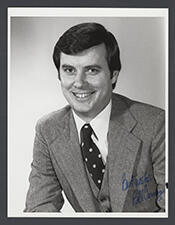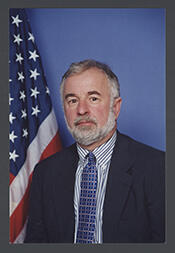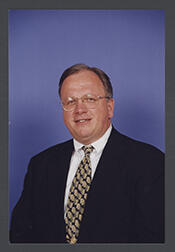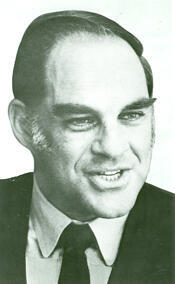
James Haas Scheuer (SHOY-er) (February 6, 1920 – August 30, 2005) was an American lawyer, military veteran, and long-serving Democratic member of the United States House of Representatives from New York, also affiliated with the Liberal Party of New York. Serving a total of 13 terms in Congress between 1965 and 1993, he represented several New York City districts over the course of a career that spanned major developments in American political and social life, including the civil rights movement, the Vietnam War, and the Cold War.
Scheuer was born and raised in New York City, New York, on February 6, 1920. He attended the Ethical Culture Fieldston School, a progressive private school in the city, before enrolling at Swarthmore College in Pennsylvania, where he received a bachelor’s degree in 1942. He went on to earn a master’s degree from Harvard Business School in 1943, reflecting an early interest in economics and public policy, and later completed a law degree at Columbia University Law School in 1948. He came from a prominent and civically engaged family: his brothers were Richard J. Scheuer, a scholar and philanthropist; Walter Scheuer, an investor and documentary filmmaker; and Steven H. Scheuer, a television and film critic. His sister, Amy Scheuer Cohen, resided in Larchmont, New York.
In 1948, Scheuer married Emily Malino (1925–2007), an interior designer, and the couple had four children. Shortly after their wedding, Scheuer contracted polio while on their honeymoon. He spent about a year recuperating at President Franklin D. Roosevelt’s Warm Springs rehabilitation facility in Georgia, a center renowned for its treatment of polio patients. The illness left him with lasting physical effects, and he walked with a cane for the rest of his life, an experience that informed his sensitivity to health and disability issues in his later public service.
During World War II, Scheuer served in the United States Army from 1943 until 1945. After his military service, he began his career in government and public administration. He was hired by the Foreign Economic Administration, an agency involved in wartime and postwar economic policy, and in 1951 he joined the Office of Price Stabilization, which was responsible for controlling inflation and prices during the Korean War era. These early positions gave him experience in federal economic policy and regulation that would later shape his legislative interests.
Scheuer first sought a seat in the United States House of Representatives in 1962 but was unsuccessful. He was elected to Congress in the 1964 elections and began his first period of service on January 3, 1965. He represented a Bronx-based district and served continuously until January 3, 1973. During these years, he emerged as a strong liberal voice in the House of Representatives. He was an early and outspoken opponent of the Vietnam War and opposed governmental interference in private matters such as contraception and abortion. He supported and helped advance legislation for the Head Start early education program, environmental protection, and automotive safety, reflecting his broader commitment to social welfare and consumer protection. He also headed the National Housing Conference, underscoring his interest in housing policy and urban issues.
Scheuer was a staunch supporter of Israel and an advocate for Soviet Jews seeking the right to emigrate. He introduced a bill (H.R. 10638) to provide for the establishment of the Negro History Museum Commission, demonstrating his engagement with civil rights and historical recognition. He was reported to be the first high-ranking American official to meet with Soviet “refuseniks,” Jews who were denied permission to emigrate, and in 1972 he was detained and then expelled from the Soviet Union for meeting with Jews who were trying to leave that country. Domestically, he also sought higher office, running for Mayor of New York City in 1969; he finished last in a field of five candidates in the Democratic primary.
Population loss in the Bronx and congressional redistricting in 1970 and again in 1972 repeatedly reshaped Scheuer’s political base and forced him into contests against fellow incumbents. In 1970 he defeated Representative Jacob H. Gilbert in a primary that merged their districts, but two years later, after another round of redistricting, he was defeated by Representative Jonathan Bingham, temporarily ending his service in Congress on January 3, 1973. Undeterred, Scheuer sought a return to the House. In 1974 he moved to Neponsit, in Queens, to run in a different New York City district to succeed retiring Democrat Frank J. Brasco, who represented parts of southern Queens and Brooklyn. He won election and began his second, longer period of congressional service on January 3, 1975.
Scheuer served in this second stint in the House of Representatives from January 3, 1975, until January 3, 1993, bringing his total congressional service to 13 terms. Once again, redistricting altered his constituency: following the 1980 Census, his district was eliminated, and he moved to run in an open seat based in Northeast Queens, which he successfully won. Throughout these years, he continued to participate actively in the legislative process, representing the interests of his New York constituents and maintaining his liberal positions on education, environmental protection, consumer safety, reproductive rights, and foreign policy issues related to Israel and Soviet Jewry. His long tenure in Congress coincided with a significant period in American history, and he played a consistent role in debates over social policy, urban affairs, and international human rights.
After retiring from Congress in 1993, Scheuer remained involved in public affairs. From 1994 until 1996 he served as the United States Director of the European Bank for Reconstruction and Development, an international financial institution created to assist former communist countries in Eastern Europe and the former Soviet Union in their transition to market economies and democratic governance. In this role he drew on his legislative experience and his long-standing interest in economic development and international affairs.
James Haas Scheuer died of heart and kidney failure on August 30, 2005, at the age of 85. His life encompassed military service, recovery from serious illness, and nearly three decades in the House of Representatives, during which he was a prominent liberal advocate on domestic and international issues and a notable figure among Jewish members of the United States Congress.
Congressional Record