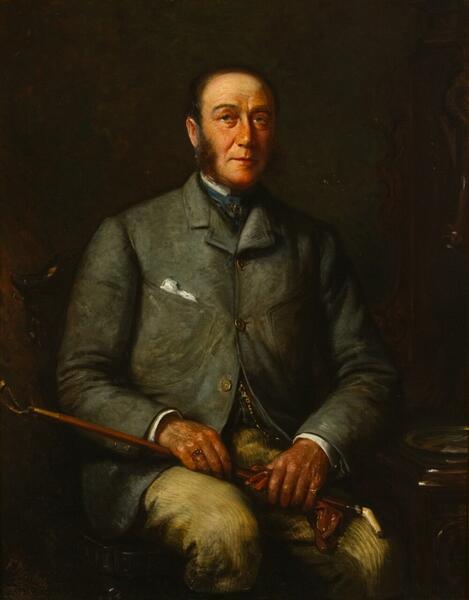
James John Roosevelt, known as James I. Roosevelt (December 14, 1795 – April 5, 1875), was an American politician, jurist, businessman, and member of the Roosevelt family who served one term in the United States House of Representatives from 1841 to 1843. Born in New York City, he was a descendant of the early New York Roosevelt line and part of the wider family that would later produce President Theodore Roosevelt and President Franklin D. Roosevelt. Raised in a prominent mercantile and professional milieu, he grew up in an environment that combined commercial activity, public service, and civic engagement, which helped shape his later career in law, politics, and business.
Roosevelt received a formal education appropriate to his family’s standing and the expectations of public service in early nineteenth-century New York. He pursued legal studies and was admitted to the bar, establishing himself as an attorney in New York City. His legal training and growing reputation in the city’s professional circles laid the groundwork for his later judicial responsibilities and his entry into elective office. As a member of a well-connected family in a rapidly expanding commercial metropolis, he was positioned to participate in both the legal and business development of New York during a period of significant urban and economic growth.
Alongside his legal work, Roosevelt engaged in business enterprises that reflected the increasing complexity of New York’s financial and commercial life. As a businessman, he was involved in managing and investing family and personal assets, contributing to the accumulation of a substantial estate over the course of his lifetime. His activities in law and business reinforced one another, enhancing his stature in New York society and giving him both the means and the influence to pursue a public career. Over time, his success in these fields would be reflected in the considerable value of his estate, which was worth in excess of US$2,000,000 at the time of his death (equivalent to $57,266,667 in 2024).
Roosevelt’s public career included service as a jurist and as a legislator. Trained as a lawyer and recognized for his professional competence, he held judicial responsibilities in New York, applying his legal expertise to the administration of justice. His work as a jurist complemented his broader public profile and reinforced his reputation for legal acumen and public service. This judicial experience, combined with his party affiliation and family prominence, helped propel him into national politics at a time when New York played a central role in the Democratic Party and in the political life of the United States.
As a member of the Democratic Party representing New York, Roosevelt was elected to the U.S. House of Representatives and served one term in the Twenty-seventh Congress from 1841 to 1843. His service in Congress occurred during a significant period in American history, marked by debates over economic policy, federal power, and the evolving party system in the wake of the Jacksonian era. In Washington, he contributed to the legislative process, participating in the democratic governance of the nation and representing the interests of his New York constituents. Although he served only a single term, his tenure placed him among the national lawmakers of a transformative generation in American politics.
Roosevelt’s personal life was closely intertwined with other prominent American families. He married Cornelia Roosevelt, and together they had a large family. Their children included Mary Roosevelt (1832–1841), who died young; Cornelia Roosevelt (1833–1838), who died young; James Nicholas Roosevelt (1836–1856); John Van Ness Roosevelt (1838–1841), who died young; William Ouseley Roosevelt (1839–1841), who died young; Augustus Jay Roosevelt (1841–1842), who died young; Van Ness Roosevelt (1843–1872); Charles Yates Roosevelt (1846–1883); Marcia Ouseley Roosevelt (1847–1906); Frederick Roosevelt (1850–1916); and Matilda Roosevelt (1851–1854), who died young. Several of these children and their descendants forged notable alliances, further extending the family’s social and political connections.
Through his children, Roosevelt’s family became linked to other distinguished American lineages. His son Charles Yates Roosevelt (1846–1883) married Cornelia (née Livingston) Talbot, a granddaughter of Robert Livingston, the 3rd Lord of Livingston Manor, and the widow of James S. Talbot, thereby uniting the Roosevelt and Livingston families, both of which had deep roots in New York’s colonial and early national history. His daughter Marcia Ouseley Roosevelt (1847–1906) married Edward Brooks Scovel, an opera singer, in 1877. They were the parents of Frederick Roosevelt Scovel, who married Vivien May Sartoris (1879–1933), a granddaughter of U.S. President Ulysses S. Grant, linking Roosevelt’s descendants to the family of a Civil War general and eighteenth President of the United States. His son Frederick Roosevelt (1850–1916) married Mary Loney (1850–1936), continuing the family line into the late nineteenth and early twentieth centuries.
In his later years, Roosevelt continued to reside in New York City, where he remained a figure of wealth and standing. His long career in law, business, and public life had secured him a prominent place in the city’s professional and social circles. On April 5, 1875, he died at his home at 836–838 Broadway in New York City, following complications sustained after he broke his thigh bone in a fall. He was buried in Green-Wood Cemetery in Brooklyn, New York, a resting place for many of the city’s leading nineteenth-century figures. At the time of his death, his estate was valued at more than US$2,000,000, and he left funds for his family and for the family of his wife, reflecting both his financial success and his concern for the welfare of his descendants. Cornelia Roosevelt died in Paris on February 14, 1876, less than a year after her husband, closing a chapter in the history of a branch of the Roosevelt family that had played a notable role in the legal, political, and social life of New York and the nation.
Congressional Record