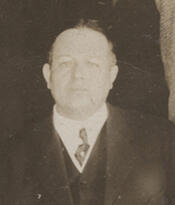
James Willard Ragsdale (December 14, 1872 – July 23, 1919) was a Democratic U.S. Representative from South Carolina who served in the United States Congress from 1913 until his death in 1919. Born in Timmonsville, Florence County, South Carolina, he spent his early years in the public schools of his native state, receiving a basic education that prepared him for both professional and public life. His upbringing in a small but growing railroad and agricultural community exposed him early to the economic and social issues that would later shape his legal and political career.
After completing his public schooling, Ragsdale was employed for several years in a railroad office in Wilmington, North Carolina. This early work experience in the transportation sector provided him with practical knowledge of commerce, logistics, and regional trade at a time when railroads were central to the economic development of the South. Seeking to advance his education and professional prospects, he later attended the University of South Carolina at Columbia, where he pursued legal studies. He studied law formally and was admitted to the bar in 1898, marking the beginning of his career as an attorney.
Upon his admission to the bar, Ragsdale commenced the practice of law in Florence, South Carolina, a growing commercial center in the Pee Dee region. In addition to his legal practice, he engaged in agricultural pursuits and banking, reflecting the diversified economic interests of many Southern professionals of his era. His involvement in agriculture connected him directly to the concerns of rural constituents, while his banking activities gave him insight into finance and local economic development. He also served as a trustee of the South Carolina Industrial School, a role that indicated his interest in public institutions and reform-oriented education for youth.
Ragsdale’s public career began at the state level. He was elected to the South Carolina House of Representatives, serving from 1899 to 1900, where he participated in the legislative process during a period of post-Reconstruction adjustment and economic change in the state. Building on this experience, he was elected to the South Carolina Senate, serving from 1902 to 1904. In these roles in the General Assembly, he contributed to state policymaking and gained a reputation as an active Democratic legislator. His service in both chambers of the state legislature provided him with a thorough understanding of South Carolina’s political landscape and legislative procedures.
Ambitious for higher office, Ragsdale sought statewide and national positions in the years that followed. He was an unsuccessful candidate for attorney general of South Carolina, demonstrating his interest in legal and executive responsibilities at the state level. He also ran unsuccessfully in 1910 for election to the Sixty-second Congress, an early bid to enter the national legislature that nonetheless helped establish his profile among Democratic voters and party leaders. These defeats did not end his political aspirations but instead set the stage for his subsequent success.
Ragsdale was elected as a Democrat to the Sixty-third Congress and to the three succeeding Congresses, serving four consecutive terms in the U.S. House of Representatives from March 4, 1913, until his death on July 23, 1919. Representing South Carolina during a significant period in American history that included the Progressive Era and World War I, he participated in the legislative process at a time of major national reforms and international conflict. As a member of the House of Representatives, he contributed to the work of the Democratic majority under Presidents Woodrow Wilson and others, and he represented the interests of his South Carolina constituents in matters affecting agriculture, commerce, and national policy.
Ragsdale’s congressional service was cut short by his death in Washington, D.C., on July 23, 1919, while still in office. His passing ended a career that had spanned local, state, and national public service. He was interred in Mount Hope Cemetery in Florence, South Carolina, returning to the community where he had established his legal practice and built much of his professional and political life.
Congressional Record