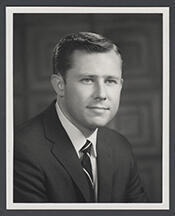
James Timothy Pratt (December 14, 1802 – April 11, 1887) was a U.S. Representative from Connecticut and a long-serving figure in that state’s political and military life. He was born in Cromwell, Connecticut, on December 14, 1802, and attended the common schools of his native community. Little is recorded about his family background or early childhood, but his education in local schools prepared him for a career that combined business, military service, and public office.
As a young man, Pratt moved into commercial and agricultural endeavors, engaging in mercantile and agricultural pursuits in Hartford, Connecticut. His early adult years were marked by growing involvement in the local militia. He enlisted in the “Horse Guard” in 1820, beginning a long association with the state’s military establishment. Alongside his business activities, he developed a reputation as a capable officer and leader, which would underpin his later public service.
Pratt’s military career advanced steadily over the next two decades. He was elected major of the First Regiment of Cavalry in 1834, promoted to colonel in 1836, and then to brigadier general from 1837 to 1839. He subsequently attained the rank of major general, serving in that capacity from 1839 to 1846. In 1846 he was appointed adjutant general of Connecticut, the senior administrative officer of the state militia. That same year he retired from mercantile pursuits and settled in Rocky Hill, Connecticut, turning his attention more fully to public life and agricultural interests.
In addition to his military responsibilities, Pratt became active in state and local government. He served as mayor from 1826 to 1829, reflecting his early prominence in civic affairs, although the specific municipality is not detailed in surviving summaries. He entered the Connecticut General Assembly as a member of the Connecticut House of Representatives in 1847, 1848, and 1850. In 1852 he was elected to the Connecticut Senate, where he rose to the position of president pro tempore, underscoring his influence within the state legislature. He returned to the Connecticut House of Representatives again in 1857 and 1862, and later in 1870 and 1871, demonstrating a long and recurring role in state legislative service.
Pratt’s state-level prominence led to his election to national office. A Democrat, he was elected to the Thirty-third Congress and served as a U.S. Representative from Connecticut from March 4, 1853, to March 3, 1855. During his single term in Congress, he represented his state in the tense decade preceding the Civil War, although specific committee assignments and legislative initiatives are not detailed in brief biographical accounts. He was an unsuccessful candidate for reelection in 1854 to the Thirty-fourth Congress, ending his service in the U.S. House of Representatives after one term.
After leaving Congress, Pratt remained an important figure in Connecticut politics. He was an unsuccessful candidate for election as governor in 1858 and again in 1859, campaigns that reflected his standing within the Democratic Party even though they did not result in statewide executive office. In 1861 he served as a member of the peace convention held in Washington, D.C., an extraordinary gathering of delegates from various states convened in an effort to devise means to prevent the impending Civil War. During the war itself, Pratt was identified as a War Democrat, supporting the Union war effort while remaining aligned with the Democratic Party.
In his later years, Pratt continued to reside in Connecticut and engaged in agricultural pursuits, consistent with his long-standing interest in farming and rural life. He remained a respected elder statesman, having held military rank from major to major general and adjutant general, served repeatedly in both houses of the Connecticut legislature, and represented his state in the U.S. Congress. James Timothy Pratt died in Wethersfield, Connecticut, on April 11, 1887. He was interred in Indian Hill Cemetery in Middletown, Connecticut, closing a life that spanned much of the nineteenth century and reflected sustained service in military, legislative, and civic roles.
Congressional Record