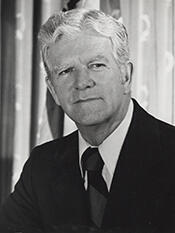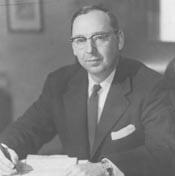
James Perry Platt (March 31, 1851 – January 26, 1913) was a United States district judge of the United States District Court for the District of Connecticut. He was born in Towanda, Pennsylvania, on March 31, 1851, the son of United States Senator Orville H. Platt of Connecticut, a prominent Republican lawmaker. Raised in a politically engaged family, he was exposed early to public affairs and the legal profession, influences that helped shape his later career in law and public service.
Platt pursued higher education at Yale University in New Haven, Connecticut, where he received an Artium Baccalaureus degree in 1873. He continued his studies at Yale Law School, earning a Bachelor of Laws degree in 1875. His Yale education placed him within an influential network of legal and political figures in Connecticut and provided the professional foundation for his subsequent work as an attorney and judge.
After his admission to the bar, Platt entered private practice in Meriden, Connecticut, in 1875. He maintained this practice for more than a quarter of a century, from 1875 to 1902, becoming a well-established member of the local bar. Alongside his private practice, he quickly became involved in public legal work and local governance, reflecting both his professional expertise and his family’s tradition of public service.
Platt’s formal political career began at the state level. A member of the Republican Party, he was elected to the Connecticut House of Representatives, serving from 1878 to 1879. In that role, he contributed to the legislative process during a significant period in American history, participating in the democratic process and representing the interests of his constituents. His legislative service coincided with the post–Civil War and Reconstruction-era realignments in national politics, during which Republicans were deeply involved in questions of economic development, civil rights, and the evolving role of the federal and state governments.
In addition to his legislative work, Platt held several important local legal offices in Meriden. He served as city attorney of Meriden from 1879 to 1893, providing legal counsel to the municipal government and representing the city in legal matters. His long tenure in that position underscored the confidence local officials placed in his judgment and legal skill. From 1893 to 1902, he served as a judge of the Meriden City Court, presiding over a range of municipal and lower-level judicial proceedings. This experience on the city court bench further developed his reputation as a fair and capable jurist and prepared him for higher judicial responsibilities.
Platt’s federal judicial career began when President Theodore Roosevelt nominated him on February 18, 1902, to a seat on the United States District Court for the District of Connecticut, vacated by Judge William Kneeland Townsend. The United States Senate confirmed his nomination on February 28, 1902, and he received his commission the same day. As a United States district judge, Platt sat on a court of original jurisdiction that handled federal civil and criminal matters arising within Connecticut, including issues of interstate commerce, federal statutes, and admiralty, as well as cases involving federal agencies and constitutional questions.
James Perry Platt served on the United States District Court for the District of Connecticut from his commission on February 28, 1902, until his death on January 26, 1913. His more than a decade of service on the federal bench capped a career that spanned private practice, state legislation, municipal legal work, and judicial office at both the local and federal levels. He died in office on January 26, 1913, leaving a record of long-standing service within Connecticut’s legal and political life and continuing a family legacy of Republican public service that extended from the state legislature to the United States Senate and the federal judiciary.
Congressional Record