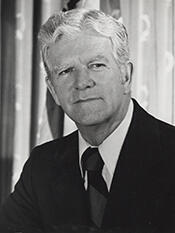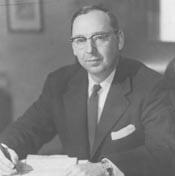
James Pindall (c. 1783 – November 22, 1825) was a U.S. Representative from Virginia and a prominent early nineteenth-century lawyer and legislator in what is now West Virginia. He was born in Monongalia County, Virginia (now part of West Virginia), around 1783, at a time when the region was still largely rural and frontier in character. Details of his family background and early childhood are sparse, but he was raised in an environment shaped by the political and social changes of the post-Revolutionary era.
Pindall attended the common schools of his native county, receiving the basic formal education that was available locally. He then pursued the study of law, a common path for ambitious young men seeking advancement in public life in the early republic. After completing his legal studies, he was admitted to the bar in 1803. He began the practice of law in Morgantown, in Monongalia County, where he established himself as a member of the local bar and entered into professional life at a relatively young age.
Seeking broader opportunities, Pindall later moved from Morgantown to Clarksburg, then in Harrison County, Virginia (now West Virginia). In Clarksburg he continued the practice of his profession and became increasingly involved in public affairs. His legal career and growing local prominence led to his service in the Virginia Senate, where he represented his region from 1808 to 1812. During this period he also held a military role as a colonel of militia, reflecting both the importance of local defense and the close connection between civic and military leadership in the early nineteenth century.
Pindall’s state-level service and Federalist political affiliation positioned him for national office. He was elected as a Federalist to the Fifteenth and Sixteenth Congresses, representing Virginia in the U.S. House of Representatives. He served in Congress from March 4, 1817, until his resignation on July 26, 1820. His tenure in the House coincided with the post–War of 1812 period and the early years of the so‑called Era of Good Feelings, when Federalist influence was waning nationally but still present in parts of Virginia. While specific details of his committee assignments and legislative initiatives are not extensively documented, his service placed him among the small number of Federalists still active in national politics during that time.
After resigning from Congress in 1820, Pindall returned to Clarksburg and resumed his legal practice. He remained a figure of local importance, drawing on his experience as a state senator, militia officer, and former member of Congress. He continued to live and work in Clarksburg until his death.
James Pindall died in Clarksburg, Virginia (now Clarksburg, West Virginia), on November 22, 1825. He was interred in what was known as the Daniel Davisson burial ground in Clarksburg. His career, spanning local legal practice, service in the Virginia Senate, militia leadership, and two terms in the U.S. House of Representatives, reflected the pathways of public service available to early nineteenth-century lawyers in the trans-Appalachian regions of Virginia.
Congressional Record