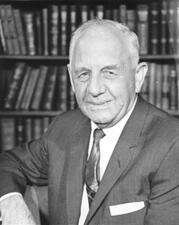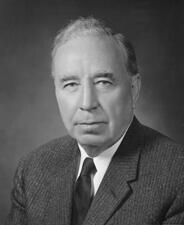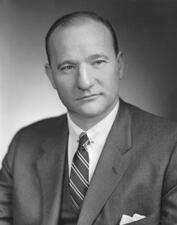
James Blackwood Pearson (May 7, 1920 – January 13, 2009) was an American politician from Kansas who served as a Republican member of the United States Senate from January 31, 1962, until his resignation on December 23, 1978. Over the course of three terms in office, he contributed to the legislative process during a significant period in American history, representing the interests of his Kansas constituents while emerging as a leading moderate voice within his party.
Pearson was born on May 7, 1920, in Nashville, Tennessee, the son of a Methodist minister. In 1934 his family moved to Virginia, where he attended public schools. He later enrolled at Duke University in Durham, North Carolina. During the Second World War he interrupted his college education to serve in the United States Navy’s air transport service. From 1943 to 1946 he flew DC-3 aircraft across the country, and he was discharged with the rank of lieutenant. While stationed at the Olathe Naval Air Station in Kansas during his wartime service, he met and married Martha Mitchell, a connection that helped root his postwar life and career in Kansas.
After the war, Pearson pursued legal studies and graduated from the University of Virginia School of Law in Charlottesville in 1950. That same year he was admitted to the bar and commenced the practice of law in Mission, Johnson County, Kansas, a suburban community in the Kansas City metropolitan area that would remain his home. He quickly entered public service, serving as Assistant County Attorney of Johnson County from 1952 to 1954 and as County Probate Judge from 1954 to 1956. In 1956 he was elected to the Kansas State Senate, where he served until 1960. Choosing not to seek reelection, he returned to private law practice but remained active in Republican politics. In 1960 he campaigned with Kansas Attorney General John Anderson in Anderson’s successful race for governor, after which Pearson became chairman of the Kansas Republican Party.
Pearson’s elevation to the United States Senate came through appointment and subsequent election. Following the death of Senator Andrew F. Schoeppel, Governor John Anderson appointed Pearson on January 31, 1962, to fill the vacancy. Pearson was then elected on November 6, 1962, in a special election for the term ending January 3, 1967, and subsequently won reelection in 1966 and again in 1972 to full six-year terms. He served continuously from January 31, 1962, until his resignation on December 23, 1978, choosing not to be a candidate for reelection that year. During his Senate career he participated actively in the democratic process at a time marked by the civil rights movement, the Great Society, the Vietnam War, and the unfolding of the Cold War.
In his early years in the Senate, Pearson generally supported the leadership of his party and opposed many of President Lyndon B. Johnson’s Great Society initiatives. Over time, however, he became known as a moderate and often independent Republican. He was a member of the informal “Wednesday Club,” a group of moderate and liberal Republican senators who met regularly to discuss policy. Pearson voted in favor of the Civil Rights Act of 1964, the Voting Rights Act of 1965, the Civil Rights Act of 1968, the 24th Amendment to the U.S. Constitution abolishing the poll tax in federal elections, and the confirmation of Thurgood Marshall to the Supreme Court. When a bipartisan group of senators led by Walter Mondale of Minnesota sought to reform the filibuster rule that had been used to block civil rights legislation, they enlisted Pearson’s support; together they succeeded in reducing the number of votes required to invoke cloture and end debate from 67 to 60. Following the Kent State shootings in 1970, Pearson shifted his stance on the Vietnam War and opposed the bombing of Laos and Cambodia. By the 1970s his voting record earned him 20 percent ratings from the conservative Americans for Constitutional Action, reflecting his increasingly moderate positions.
Pearson’s legislative work was particularly influential in the areas of aviation, energy, rural development, and campaign reform. As a member of the Senate Commerce Committee and ranking minority member of its aviation subcommittee, he played a key role in creating the Airport and Airway Trust Fund, which financed the expansion of the nation’s airports and air traffic control system. He also helped secure the deregulation of “new” natural gas, encouraging increased production of that fuel. In these efforts he collaborated with colleagues such as Senator Howard Cannon of Nevada on aviation issues and Senators Russell B. Long of Louisiana and Lloyd Bentsen of Texas on energy legislation. Pearson co-sponsored, with Senator Fred R. Harris of Oklahoma, the first major federal legislation offering economic incentives for rural development, and with Senator Philip Hart of Michigan he introduced the first major campaign reform legislation following World War II. He was also an early supporter of consumer protection measures. Among his notable legislative achievements was the National Weather Modification Policy Act, signed into law on October 13, 1976, which authorized a cabinet-level official to negotiate international agreements concerning the peaceful uses of weather modification.
Within his party and in his home state, Pearson sometimes faced criticism from conservatives who regarded him as not “Republican enough,” particularly because of his moderate voting record and willingness to work with Democrats. He responded by maintaining strong constituent service and by championing Kansas’s key economic interests, especially in the aviation, oil and gas, and cattle industries. His independence was also evident in foreign and defense policy: he opposed President Richard Nixon on several Cold War issues, though he supported the administration’s Safeguard anti-ballistic missile program, which narrowly passed the Senate and later became a bargaining chip in arms control negotiations with the Soviet Union. Pearson’s bipartisan instincts were on display when he introduced his University of Virginia Law School classmate, Senator Robert F. Kennedy, at events at the University of Kansas and Kansas State University shortly after Kennedy announced his presidential candidacy in 1968; from the podium Pearson, smiling, wished Kennedy a long and successful career in the Senate.
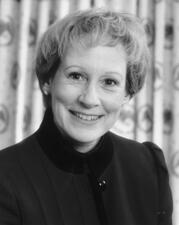
Following his reelection in 1972, Pearson’s expertise and stature were recognized with international assignments. President Nixon appointed him as a delegate to the United Nations General Assembly, and after Pearson retired from the Senate in 1978 he was again named by the Senate to serve on the U.S. delegation to the U.N. He was succeeded in the Senate by Nancy Landon Kassebaum (later Kassebaum Baker). In his post-congressional career, Pearson was associated with the Washington, D.C., office of the law firm LeBoeuf, Lamb, Leiby & MacRae. He and his second wife, Margaret Lynch, traveled frequently to Japan and Southeast Asia, reflecting his continuing interest in international affairs. From 1983 to 1991 he served on the Board of Governors of the East–West Center in Honolulu, Hawaii, an institution devoted to promoting understanding between the United States and the Asia-Pacific region. He also co-chaired, with former Senator Abraham Ribicoff, a Senate-commissioned study group on the structure and procedures of the Senate.
Pearson’s legacy included several fellowship programs and honors bearing his name. A James B. Pearson fellowship program in the federal government enables Foreign Service officers to work temporarily in other branches and at state and local levels to gain broader experience in domestic politics. In Kansas, a Pearson Fellowship supports graduates of public universities in pursuing study abroad. In 2004 the U.S. Post Office in Prairie Village, Kansas—Pearson’s longtime hometown—was named the James B. Pearson Post Office in his honor. His family life included three sons, James, William, and Thomas, and a daughter, Laura. Pearson died at his home in Gloucester, Massachusetts, on January 13, 2009, at the age of 88. As of 2025, he remains the last U.S. Senator from Kansas to have come from the Kansas City metropolitan area, despite Johnson County’s status as the most populous county in the state.
Congressional Record