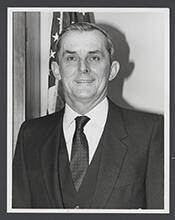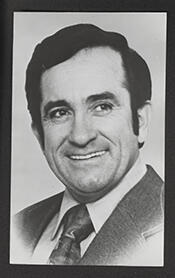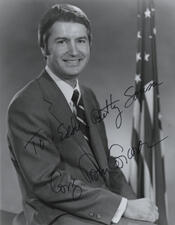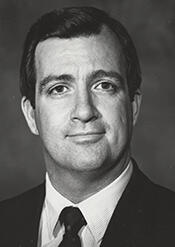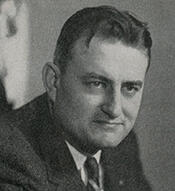
James Cunningham Murray (May 16, 1917 – October 19, 1999) was a Democratic U.S. Representative from Illinois, serving one term in the United States Congress from 1955 to 1957. Born in Chicago, Illinois, he came of age in the city he would later represent in multiple public offices, and his career reflected a long engagement with Chicago’s legal and political institutions as well as with state and federal government.
Murray pursued legal studies in his native city and graduated from De Paul University Law School in 1940. Following his admission to the bar, he began practicing law, establishing the professional foundation that would underpin his later work as a legislator and judge. His early legal career was soon interrupted by World War II, during which he entered military service.
During the Second World War, Murray served in the United States Army Air Forces from 1942 to 1945. His wartime service coincided with the major global conflict that shaped the mid-twentieth century, and like many of his generation, he returned from military duty to resume civilian life and professional work. After the war, he continued to practice law in Chicago, building his reputation in the legal community and positioning himself for entry into elective office.
Murray was elected as a Democrat to the U.S. House of Representatives and served as a Representative from Illinois from January 3, 1955, to January 3, 1957. His single term in Congress took place during a significant period in American history marked by the early stages of the civil rights movement and the intensification of Cold War tensions. As a member of the House of Representatives, he participated in the legislative process and represented the interests of his Illinois constituents, contributing to the work of the 84th Congress. After completing his term, he returned to his legal and political activities in Chicago.
In 1959, Murray was elected to the Chicago City Council as the alderman for the 18th Ward, beginning a new phase of his public service at the municipal level. He served eight years on the council, during which he held influential leadership roles as vice chair of the finance committee and president pro tempore of the council. In this capacity, he played a prominent role in shaping city policy. Notably, he sponsored Chicago’s first fair housing law, a landmark measure aimed at addressing discrimination in housing; the ordinance passed by a narrow margin of four votes, underscoring both its controversy and his effectiveness in advancing it.
Murray’s advocacy for fair housing and civil rights, however, also generated political opposition. His support for such measures contributed to his defeat in a 1966 judicial election, reflecting the contentious climate surrounding civil rights reforms in mid-1960s Chicago. Despite this setback, he remained active in public life and the legal profession, and his judicial ambitions were soon realized.
In 1970, Murray became a judge of the Circuit Court of Cook County, beginning a lengthy judicial career. As a circuit judge, he presided over a wide range of cases in one of the nation’s largest trial court systems. His judicial work brought him into the center of some of Chicago’s most notable political and legal disputes. In 1983, during the period known as the “Council Wars,” when Mayor Harold Washington faced an opposition bloc of 29 aldermen led by Edward Vrdolyak, it was Judge Murray who issued a key ruling. He held that the “Vrdolyak 29” had acted legally and that Mayor Washington’s motion to adjourn a contentious council meeting was improper, a decision that had significant implications for the balance of power in Chicago’s city government.
Murray’s judicial career advanced further when he was elevated to the Illinois Appellate Court in 1986. He served on the Appellate Court until his retirement in 1994, participating in the review of trial court decisions and contributing to the development of Illinois jurisprudence. Beyond his formal judicial duties, he was active in important rulemaking and advisory bodies. He served as a member of the Illinois Supreme Court Committee to Recommend Rules of Evidence, the Judicial Conference Committee on Evidence, and the Committee on Complex Litigation, roles that allowed him to shape procedural and evidentiary standards in the state’s courts.
James Cunningham Murray died on October 19, 1999. Over the course of his life, he served as a lawyer, wartime officer in the United States Army Air Forces, member of the U.S. House of Representatives, Chicago alderman, and judge on both the Circuit Court of Cook County and the Illinois Appellate Court. His career reflected sustained engagement with public service at the federal, municipal, and judicial levels, and included notable contributions to fair housing legislation and the administration of justice in Illinois.
Congressional Record