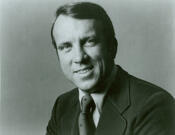
James Mullins is a name shared by several notable public figures in North American political and military history, including James Mullins (1807–1873), a member of the United States House of Representatives; James Patrick Mullins (1874–1965), a member of the Canadian Parliament; and James P. Mullins (born 1928), an American military general. Each of these individuals pursued distinct careers in public service, contributing to the political and defense institutions of their respective countries.
James Mullins, the American politician born in 1807, emerged in the early nineteenth century as a participant in the evolving democratic institutions of the United States. Coming of age in the decades following the founding of the republic, he would have been shaped by the intense political realignments of the Jacksonian era and the expansion of the federal government’s role in national life. His early life and education took place against a backdrop of rapid territorial growth, increasing sectional tensions, and the maturation of American party politics, all of which framed the issues he would later confront in public office.
By the time he entered national politics, James Mullins had established himself sufficiently in public affairs to be elected to the American House of Representatives. As a member of the House, he served in the legislative branch of the federal government during a period marked by debates over states’ rights, economic development, and, increasingly, the sectional conflict that would culminate in the Civil War. His tenure in Congress placed him among the lawmakers responsible for shaping federal policy in the mid-nineteenth century, and his service contributed to the institutional continuity of the House during a turbulent era. He remained active in public life until his death in 1873, closing a career that spanned some of the most consequential decades in United States history.
James Patrick Mullins, born in 1874, belonged to a later generation and pursued his public career in Canada. Growing up in the late nineteenth century, he witnessed the consolidation of the Canadian Confederation and the gradual assertion of a distinct Canadian political identity within the British Empire. His education and early professional life unfolded as Canada expanded westward and developed its own parliamentary traditions, providing the context for his eventual entry into federal politics.
As a member of the Canadian Parliament, James Patrick Mullins served in the House of Commons, participating in the legislative process at the national level. His parliamentary career took place during a period when Canada was grappling with questions of national development, regional representation, and its evolving relationship with the United Kingdom and, later, the United States. In this role, he contributed to debates over domestic policy and the governance of a growing and diversifying country. He remained a figure in Canadian public life into the mid-twentieth century and lived until 1965, spanning an era that included both World Wars and significant constitutional and social change in Canada.
James P. Mullins, born in 1928, represents a different form of public service as an American military general. His early life and education occurred during the Great Depression and the Second World War, formative years that influenced many of his generation to pursue careers in the armed forces. Coming of age as the United States emerged as a global power, he entered military service in a period when professionalization and technological advancement were reshaping the American military establishment.
Over the course of his career, James P. Mullins rose through the ranks to become a general in the United States military, reflecting a record of leadership, command responsibility, and specialized training. His service likely spanned key phases of the Cold War, when the U.S. armed forces were engaged in deterrence, alliance-building, and, at times, active combat operations around the world. As a general officer, he would have been involved in high-level planning, organizational leadership, and the management of personnel and resources, contributing to the readiness and strategic posture of the American military. Born in 1928, his lifetime bridges the era from World War II through the late twentieth century, marking him as part of the generation that oversaw the United States’ transition into and through the Cold War as a leading global military power.
Congressional Record