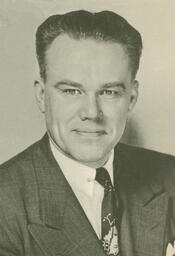
James Mott (June 20, 1788 – January 26, 1868) was a Quaker leader, teacher, merchant, anti-slavery activist, and Republican member of Congress from New Jersey. He was married to the prominent suffragist leader Lucretia Coffin Mott, with whom he shared a lifelong commitment to abolition and women’s rights. Over the course of his life, he helped found anti-slavery organizations, participated in the “free-produce movement,” operated an Underground Railroad depot, chaired the landmark Seneca Falls Convention in 1848, and later devoted several years to the establishment of Swarthmore College. As a member of the Republican Party representing New Jersey, Mott served two terms in Congress, contributing to the legislative process during a significant period in American history and representing the interests of his constituents.
Mott was born on June 20, 1788, in Cow Neck (now North Hempstead) on Long Island, New York, into a Quaker family whose roots in the Society of Friends dated back to the seventeenth century. His parents, Anne (née Mott) and Adam Mott, were distant cousins and descendants of English Quakers who had immigrated to the Thirteen Colonies. His father Adam worked as a miller and farmer and also served as superintendent of the Quaker Nine Partners School in Poughkeepsie, Dutchess County, New York. The family’s long-standing Quaker heritage, including paternal grandparents Mary Underhill and James Mott and Underhill great-grandparents, instilled in him early principles of simplicity, equality, and opposition to slavery. These older generations had already assisted Black people escaping slavery, helping those who arrived at Hempstead Harbor on Long Island and arranging transportation to New Rochelle, New York, even before the Underground Railroad was formally organized.
Educated within the Quaker system, Mott became a teacher at the Nine Partners Boarding School in New York, where he met Lucretia Coffin, then a student. After her graduation, Lucretia also became a teacher at the school, and their shared religious convictions and reformist outlook deepened their relationship. When the Coffin family moved to Philadelphia, Mott and Lucretia followed in 1810, joining the city’s active Quaker community. On April 10, 1811, they were married at Pine Street Meeting in Philadelphia. The couple had six children, five of whom survived to adulthood, and they were active members of the Philadelphia Yearly Meeting. Their marriage became a partnership in both domestic life and public reform, as they jointly pursued abolitionist and women’s rights causes and later helped to found Swarthmore College.
After his early years in teaching, Mott turned to commerce in Philadelphia. He initially worked as a merchant in partnership with Lucretia’s father in the nail business, and he endured the economic disruptions of the War of 1812 and the Panic of 1819. In 1822 he became a textile merchant, at first dealing in cotton. As he and many other Friends became associated with the Hicksite branch of Quakerism, his moral opposition to slavery deepened, and he grew increasingly troubled that cotton was produced by enslaved labor. Responding to the call to support only “free produce,” he began selling cotton raised without slave labor by 1829 and, by 1830, shifted his business entirely to wool, which could be obtained without reliance on slavery. Along with Lucretia, he helped organize a free-produce society that sought to make slavery economically untenable by boycotting goods produced by enslaved people, including cotton, molasses, rice, tobacco, and other commodities.
Mott emerged as an important figure in the abolitionist movement during the 1830s and 1840s. He was one of the earliest supporters of William Lloyd Garrison and, in 1833, became a member of the newly formed American Anti-Slavery Society. That same year he was among the founders of the Philadelphia Anti-Slavery Society, where Lucretia attended as a guest. Together they helped establish the Pennsylvania Anti-Slavery Society, with James serving as its president for several years. His extended family was also deeply involved in anti-slavery work: his sister, Abigail Lydia Mott, and brother-in-law, Lindley Murray Moore, were instrumental in founding the Rochester Anti-Slavery Society in 1838, while his brother Richard Mott later served in the U.S. House of Representatives as an Opposition Party member in the Thirty-fourth Congress and as a Republican in the Thirty-fifth Congress (March 4, 1855 – March 3, 1859). In 1840, James and Lucretia traveled to London as delegates to the World’s Anti-Slavery Convention, where organizers refused to seat women delegates. Mott joined in the agitation to admit women, and in 1841 he published “Three Months in Great Britain,” an account of their journey and the convention.
Mott’s abolitionism extended beyond formal organizations into direct assistance to freedom seekers. At their home at 338 Arch Street in Philadelphia, he and his family operated an Underground Railroad depot, continuing a family tradition of aiding fugitives from slavery. The Motts worked with fellow abolitionists such as Isaac Hopper and Hannah Cox to shelter and guide those escaping bondage. Among the most famous cases was that of Henry “Box” Brown, who in 1849 had himself shipped in a wooden crate from Richmond, Virginia, to Philadelphia; after his arrival, the Motts concealed him for his safety. Mott also played a role in the 1855 case of Jane Johnson, an enslaved woman who secured her freedom with the assistance of attorney Passmore Williamson. When Williamson was tried in Philadelphia on August 29, 1855, Mott, Reverend James Miller McKim, and an agent escorted Johnson to the courtroom so she could testify. His activism sometimes placed him in physical danger: in 1842, when Frederick Douglass spoke at an anti-slavery meeting at the First Baptist Church in Norristown, Pennsylvania, pro-slavery rioters hurled stones into the sanctuary and threatened Mott until freedmen and abolitionists regained control of the situation.
Mott also became a prominent advocate of women’s rights. On July 19–20, 1848, he chaired the Seneca Falls Convention in Seneca Falls, New York, the first women’s rights convention in the United States, at which his wife Lucretia was the principal speaker. He was the only man ever to chair a women’s rights convention, underscoring his unusual public support for women’s equality at a time when such advocacy was rare among male reformers. His commitment to equality and justice also brought him into the orbit of major legal and political controversies over slavery. After the Christiana Riot of September 11, 1851, in which Maryland slaveholder Edward Gorsuch was killed while attempting to recapture fugitives in Pennsylvania, a high-profile trial took place in November 1851 at Independence Hall in Philadelphia. During the proceedings, Supreme Court Justice Robert C. Grier declared that the guilt for the “foul murder” extended beyond the immediate participants to those who had promoted doctrines “subversive of all morality and all government,” a statement widely understood to implicate James Mott and defense attorney Thaddeus Stevens. Lucretia attended the trial, knitting in red, white, and blue yarn, a quiet but pointed display of abolitionist sentiment.
In addition to his reform work, Mott entered electoral politics as a member of the Republican Party representing New Jersey in the United States Congress. Serving two terms, he participated in the legislative process during a turbulent era in American history, when debates over slavery, sectional conflict, and the future of the Union dominated national politics. In Congress he took part in the democratic process on behalf of his constituents, bringing to his legislative service the same principles of Quaker conscience, anti-slavery conviction, and concern for human rights that had guided his earlier career in education, commerce, and activism.
In the final phase of his life, Mott devoted substantial energy to higher education. From 1865 to 1869, he worked to help found Swarthmore College in Pennsylvania, one of the first coeducational colleges in the United States and an institution rooted in Quaker values of equality and intellectual rigor. He spent four years supporting its establishment, reflecting his long-standing belief in education as a vehicle for moral and social improvement. James Mott died of pneumonia on January 26, 1868, in Brooklyn, New York, while he and Lucretia were visiting their daughter and son-in-law, George W. Lord. His obituary in the Harrisburg Telegraph described him as an “inveterate enemy of American slavery,” a characterization that captured the central commitment of his long life of public service, religious leadership, and reform.
Congressional Record