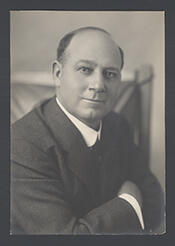
James Henry Mays (June 29, 1868 – April 19, 1926) was an American lawyer, businessman, and Democratic politician who served three terms as a U.S. Representative from Utah from 1915 to 1921. His congressional service took place during a significant period in American history, encompassing World War I and its aftermath, during which he participated in the legislative process and represented the interests of his Utah constituents in the U.S. House of Representatives.
Mays was born on June 29, 1868, in Morristown, Tennessee, where he attended local district schools in his early years. In 1883 he moved with his parents to Kansas, where the family settled in Galena. As a young man he worked in the mines and as a lumberman, gaining early experience in labor-intensive industries that were central to the regional economy. He pursued further education at the Kansas State Normal School, reflecting an early commitment to professional advancement and formal study.
In the 1890s Mays began building a career that combined business and law. From 1893 to 1902 he was employed in the life insurance business in several Midwestern and Western cities, including Chicago, Illinois; Dubuque, Iowa; and Salt Lake City, Utah. While engaged in business, he also pursued legal training and graduated from the law department of the University of Michigan at Ann Arbor in 1895. That same year he was admitted to the bar and commenced the practice of law in Ann Arbor, Michigan, marking the formal start of his legal career.
Mays’s professional life was geographically wide-ranging. In 1896 he moved from Michigan to Indianapolis, Indiana, where he continued his legal and business activities. In 1902 he relocated to Utah, a move that would ultimately shape his political future. In Utah he organized several industrial organizations, reflecting his ongoing involvement in business and economic development. His combined experience in law, insurance, and industry helped establish his reputation as a businessman-lawyer and provided a foundation for his later public service.
Entering national politics as a member of the Democratic Party, Mays was elected to the U.S. House of Representatives from Utah as a Democrat to the Sixty-fourth, Sixty-fifth, and Sixty-sixth Congresses, serving from March 4, 1915, to March 3, 1921. During these three consecutive terms he contributed to the legislative process at a time when Congress addressed issues related to World War I, economic mobilization, and postwar adjustment. As a member of the House of Representatives, he participated in the democratic process and worked to represent the interests and concerns of his Utah constituents. He chose not to be a candidate for reelection in 1920, thereby concluding his congressional service at the end of his third term.
After leaving Congress, Mays retired from active political life and turned his attention to agricultural and ranching pursuits. He retired to his stock ranch near Wendell, Idaho, where he continued to live and work in a more private capacity. In 1920 he had a residence constructed near Wendell that later became known as the James Henry and Ida Owen Mays House. This home, associated with his later years and with his wife, Ida Owen Mays, was recognized for its historical significance and was listed on the National Register of Historic Places in 1993.
James Henry Mays died on April 19, 1926, at his stock ranch near Wendell, Idaho. He was interred in Gooding Cemetery in Gooding, Idaho. His career as a lawyer, businessman, and three-term Democratic Representative from Utah, together with his role in organizing industrial enterprises and his later life as a rancher in Idaho, reflected the mobility, economic development, and political change characteristic of the United States in the late nineteenth and early twentieth centuries.
Congressional Record