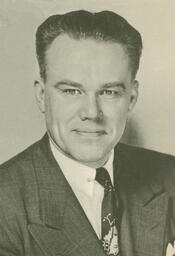
James Matlack (January 11, 1775 – January 16, 1840) was an American politician and jurist from Woodbury, Gloucester County, New Jersey, who served as a Representative from New Jersey in the early nineteenth century. Born in Woodbury on January 11, 1775, he came of age in the post-Revolutionary era in a community that was then a small but growing county seat in southern New Jersey. He attended the common schools, receiving the basic education typical of the period, and from a young age became interested in various business enterprises. Like many landowners and men of property in New Jersey at the time, he owned slaves, a fact that reflected both his social position and the legal toleration of slavery in the state during his lifetime.
Matlack’s early adulthood was marked by increasing involvement in local affairs and the administration of justice in Gloucester County. He first entered public service as a justice of the peace in 1803, a position he would hold repeatedly in later years, again serving in 1808, 1813, 1816, and 1820. His responsibilities in this role included handling minor civil and criminal matters, overseeing local order, and performing various administrative functions. In 1806 he was appointed judge of the court of common pleas of Gloucester County, a significant judicial office in the county’s legal system, and he served on that court from 1806 to 1817. During this period he also acted as surrogate of Gloucester County in 1815, dealing with probate matters and the administration of estates, further consolidating his reputation as a key legal and civic figure in the region.
Alongside his judicial duties, Matlack was active in township and county governance. He served as chairman of the township committee, the principal governing body of the local municipality, where he would have overseen local ordinances, finances, and public works. He was a member of the Gloucester County board of freeholders—then the county’s governing board—from 1812 to 1815, again from 1819 to 1821, and in 1828. In these roles he participated in decisions concerning county infrastructure, taxation, and public institutions. His growing prominence in county affairs led to his election to the New Jersey Legislative Council, the upper house of the state legislature (later known as the Senate), where he served as a member in 1817 and 1818, representing Gloucester County at the state level.
Matlack’s state and local experience prepared him for national office, and he was elected as a Democratic-Republican to the Seventeenth Congress. He took his seat in the United States House of Representatives on March 4, 1821. As national politics began to realign in the wake of the Era of Good Feelings, he was reelected as an Adams-Clay Democratic-Republican to the Eighteenth Congress, serving continuously until March 3, 1825. During his tenure in Congress, he represented New Jersey at a time when issues such as internal improvements, tariffs, and the evolving balance between federal and state authority were at the forefront of national debate. Although specific details of his committee assignments and legislative initiatives are not extensively documented, his alignment with the Adams-Clay wing of the Democratic-Republican Party placed him among those favoring a more active federal role in economic development.
Matlack chose not to be a candidate for renomination in 1824, thereby concluding his congressional service at the end of the Eighteenth Congress. As the Second Party System emerged in the late 1820s and early 1830s, he affiliated with the Whig Party when it was formed, reflecting his continued sympathy with the policies associated with John Quincy Adams and Henry Clay, including support for internal improvements and a cautious view of executive power. After leaving Congress, he resumed his various business interests in and around Woodbury, returning to the local economic pursuits that had characterized his early career while maintaining his standing as a respected figure in Gloucester County public life.
James Matlack spent the remainder of his life in his native Woodbury. He died there on January 16, 1840, five days after his sixty-fifth birthday. He was interred in Eglington Cemetery in Clarksboro, New Jersey, a burial ground that became the resting place for many prominent local citizens. His career, spanning local judicial service, county and state office, and two terms in the United States House of Representatives, reflected the trajectory of an early nineteenth-century New Jersey public man whose influence was rooted in his community and extended to the national legislature during a formative period in the nation’s political development.
Congressional Record