United States Representative Directory

James Stewart Martin

James Stewart Martin served as a representative for Illinois (1873-1875).

  • Republican
  • Illinois
  • District 16
  • Former
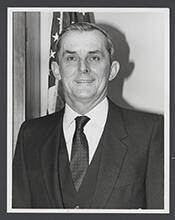
Portrait of James Stewart Martin Illinois
Role Representative

Current assignment referenced in the congressional directory.

State Illinois

Representing constituents across the Illinois delegation.

District District 16

District insights and legislative focus areas.

Service period 1873-1875

Years of public service formally recorded.

Font size

Biography

James Stewart Martin was the name of several notable American figures active in public life, literature, religion, and science across the nineteenth and twentieth centuries. The earliest of these, James Stewart Martin (1826–1907), was a U.S. Representative from Illinois who participated in the political life of the post–Civil War era. Another James Stewart Martin became known as an author associated with Germany, writing about economic and political conditions in that country in the aftermath of the Second World War. A third, James S. Martin, was an evangelical minister recognized for his outspoken anti-Mormon preaching during a period of intense religious controversy in the United States. In the realm of science and engineering, James Slattin Martin Jr. (1920–2002) emerged as a key figure in the American space program, serving as project manager for NASA’s Viking program, which achieved the first successful U.S. landings on Mars.

James Stewart Martin, the congressman from Illinois, was born in 1826 and came of age in a nation rapidly expanding westward. His early life unfolded against the backdrop of growing sectional tensions that would culminate in the Civil War. Although specific details of his family background and early education are sparse in the surviving record, his later political career indicates that he attained sufficient education and professional standing to enter public service in Illinois, a state that was itself transitioning from frontier conditions to a more settled and politically influential role in the Union.

By the time he entered Congress, James Stewart Martin had established himself in Illinois public life. He was elected as a U.S. Representative from Illinois, serving in the House of Representatives during the later nineteenth century, a period marked by Reconstruction, industrial expansion, and significant debates over civil rights, economic policy, and the role of the federal government. As a member of Congress, he participated in the legislative work of this transformative era, representing the interests of his Illinois constituents while the nation grappled with the legacies of the Civil War and the challenges of reunification and modernization. His congressional service placed him among those lawmakers who helped shape federal policy in the decades following the conflict.

After his tenure in Congress, Martin remained part of the generation of postwar political leaders who witnessed the United States’ transition into an industrial power. He lived until 1907, spanning a lifetime from the Jacksonian era through the Gilded Age and into the early Progressive period. His death in 1907 closed the career of a nineteenth-century public servant whose work in the House of Representatives reflected the concerns and priorities of Illinois and the broader Union in a time of reconstruction and change.

Another figure bearing the same name, James Stewart Martin, became known in the twentieth century as an author associated with Germany. His work focused on the political and economic structures of Germany, particularly in the context of the Second World War and its aftermath. Drawing on experience and observation in Germany, he wrote about the influence of industrial and financial interests on German policy, contributing to public understanding of how economic power intersected with authoritarian politics. His writings formed part of a broader postwar literature that sought to explain the roots of German militarism and the conditions that had enabled the rise of the Nazi regime.

Contemporaneous with this author, but in a very different field, James S. Martin emerged as an evangelical minister noted for his anti-Mormon preaching. Active in an era when new religious movements and established denominations often clashed in public forums, he devoted much of his ministry to critiquing the doctrines and practices of the Church of Jesus Christ of Latter-day Saints. His sermons and writings reflected a strand of Protestant polemics that viewed Mormonism as a theological and social challenge, and he participated in debates that helped shape public perceptions of Mormonism in the United States. Through his ministry, he became one of the recognizable religious voices in the ongoing contest over religious authority and orthodoxy in American life.

In the field of science and engineering, James Slattin Martin Jr. (1920–2002) represented a later generation of Americans named James S. or James Stewart Martin who attained national prominence. Born in 1920, he was educated in an era when aeronautics and rocketry were rapidly advancing, and he pursued a career that placed him at the center of the U.S. space program. As project manager for NASA’s Viking program, he oversaw one of the most ambitious planetary exploration efforts of the twentieth century. Under his leadership, the Viking 1 and Viking 2 missions successfully entered orbit around Mars and delivered landers to the Martian surface in 1976, conducting experiments on the planet’s soil, atmosphere, and potential for life. His work required the coordination of large technical teams, complex spacecraft systems, and international scientific collaboration, and it contributed significantly to humanity’s first detailed understanding of Mars. Martin continued to be associated with space exploration and engineering management until his death in 2002, leaving a legacy closely tied to one of NASA’s landmark achievements.

Congressional Record

Loading recent votes…

More Representatives from Illinois