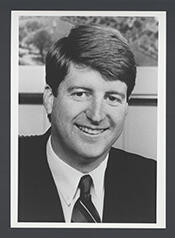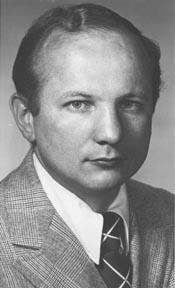
James R. Langevin (pronounced LANN-jə-vinn; born April 22, 1964) is an American politician who served as the U.S. representative for Rhode Island’s 2nd congressional district from January 3, 2001, to January 3, 2023. A member of the Democratic Party, he represented his district for 11 consecutive terms and became the first quadriplegic to serve in the United States Congress. In 2019 he was appointed to be the first quadriplegic speaker pro tempore of the U.S. House of Representatives. Langevin did not seek reelection in 2022, concluding more than two decades of service in the House of Representatives.
Langevin was born in Providence, Rhode Island, to Richard and Judy (Barrett) Langevin, and is of French-Canadian descent. He grew up in Rhode Island and attended Bishop Hendricken High School in Warwick. In 1980, at age 16, while participating in the Boy Scout Explorer program at the Warwick Police Department, he was seriously injured when a firearm was accidentally discharged, leaving him paralyzed and resulting in his use of a wheelchair. He later received $2.2 million in a settlement with the city of Warwick. Despite this life-altering injury, Langevin pursued higher education and public service, emerging as a prominent advocate for people with disabilities.
Langevin attended Rhode Island College, where he earned his undergraduate degree and served as president of Student Community Government, Inc., gaining early experience in leadership and campus governance. He went on to receive a Master of Public Administration from the John F. Kennedy School of Government at Harvard University, further preparing for a career in public office and policy-making. His early engagement in civic life and education laid the foundation for his later emphasis on government accountability, ethics, and social policy.
Langevin’s first formal entry into politics came in 1986, when he was elected a delegate to Rhode Island’s constitutional convention and was chosen as its secretary. This early role introduced him to statewide political issues and legislative processes. In 1988 he was elected to the Rhode Island General Assembly as a state representative, a position he held until 1994. During his campaigns he sometimes used the slogan “I’ll stand up for you,” underscoring his commitment to representation despite his physical disability. In November 1994 he was elected Secretary of State of Rhode Island, defeating Republican incumbent Barbara Leonard. As secretary of state, Langevin earned a reputation for “weeding out” corruption in state government, focusing on transparency, ethics, and reform of public institutions.
In 2000, Langevin was elected to the U.S. House of Representatives from Rhode Island’s 2nd congressional district and took office on January 3, 2001. His service in Congress occurred during a significant period in American history, encompassing the September 11, 2001, terrorist attacks, the wars in Iraq and Afghanistan, the Great Recession, the enactment of the Affordable Care Act, and major developments in cybersecurity and homeland security policy. As a member of the House of Representatives, he participated actively in the legislative process and represented the interests of his constituents in western and southern Rhode Island. Over his 11 terms in office, he became particularly known for his work on national security, cybersecurity, health care, disability rights, and scientific research policy.
Langevin served on the House Committee on Armed Services, where he worked on issues related to national defense and military readiness. Within that committee, he served on the Subcommittee on Seapower and Projection Forces, the Subcommittee on Strategic Forces, and the Subcommittee on Intelligence, Emerging Threats and Capabilities, chairing the latter. In these roles he regularly supported additional resources for U.S. armed forces in Iraq and Afghanistan, while also voting for measures establishing a timeline for the withdrawal of U.S. forces from Iraq and for a ban on any permanent U.S. bases there. He also served on the Committee on Homeland Security, including the Subcommittee on Cybersecurity and Infrastructure Protection and the Subcommittee on Emergency Preparedness, Response, and Communications, reflecting his long-standing concern with protecting critical infrastructure and improving the nation’s readiness for emergencies and cyber threats.
A central focus of Langevin’s congressional career was cybersecurity. He helped found the House Cybersecurity Caucus, which he co-chaired, and worked to raise awareness of the national security challenges posed by vulnerabilities in digital infrastructure. He appeared on the television program 60 Minutes to discuss the emerging cybersecurity threats facing the United States and advocated strong penalties for internet crimes alongside robust privacy protections. Langevin supported cybersecurity measures that strengthened defenses without, in his view, imposing unnecessary regulations on business. In May 2012 he proposed an amendment to the National Defense Authorization Act to ensure that cyber risks were fully accounted for in national security planning, warning that without such measures the nation was “ignoring key aspects of what is fast becoming the biggest threat to our security.” He strongly backed Rhode Island’s statewide cybersecurity plan adopted in October 2012. Following the 2015 data breach at the U.S. Office of Personnel Management affecting more than 18 million Americans, he called for the resignation of OPM director Katherine Archuleta, arguing that she had failed to demonstrate adequate understanding of cyber governance responsibilities. Cybersecurity contractors such as General Dynamics and Raytheon were among his leading campaign contributors in the 2010 election cycle.
Health care and disability rights were also defining themes of Langevin’s tenure. As a quadriplegic, he became a prominent advocate for people with disabilities and for universal health care. In May 2009 he introduced the American Health Benefits Program Act of 2009, intended to amend the Social Security Act and the Internal Revenue Code to assure comprehensive, affordable health insurance coverage for all Americans through an American Health Benefits Program. He described his goal as achieving “a system of portable and continuous coverage based on quality, affordability and choice that promotes investment in long-term prevention and drives down the cost of care over time.” He received substantial campaign support from health professionals and consistently backed health care reform efforts. On July 27, 2004, he addressed the Democratic National Convention, speaking largely on the subject of stem cell research. One of his top priorities in Congress was expanding federal funding for embryonic stem cell research, motivated in part by his own paralysis and the potential of such research to advance treatments for spinal cord injuries. He joined other House members in introducing the Stem Cell Research Enhancement Act of 2005 to expand the limited federal funding regime established in 2001.
Langevin’s legislative work on disability and medical research extended beyond stem cells. In March 2007 he co-sponsored the Christopher and Dana Reeve Paralysis Act, designed to enhance and further research into paralysis and improve rehabilitation and quality of life for people living with paralysis and other physical disabilities. Although the bill initially passed the House but not the Senate, its provisions were later incorporated into the Omnibus Public Land Management Act of 2009, which Langevin also co-sponsored and which was signed into law by President Barack Obama. In 2008 he announced his support for Hillary Clinton’s presidential campaign and served as a special adviser to her on issues including stem cell research and disability policy. On July 26, 2010, Langevin became the first member of Congress to preside over the House of Representatives while using a wheelchair, following the installation of a wheelchair lift to the Speaker’s rostrum; in 2019 he further broke new ground when he was appointed the first quadriplegic speaker pro tempore of the House.
On social policy, Langevin developed a complex and sometimes evolving record, particularly on abortion. He has described himself as personally opposed to abortion and has sought to reduce the number of abortions in the country, while supporting its legality in cases of rape, incest, or when the life of the mother is endangered. His voting record includes both efforts to restrict and to protect access to abortion services. He voted against banning abortion coverage in the Affordable Care Act but supported the Abortion Pain Bill, which sought to ensure that women seeking an abortion were fully informed regarding fetal pain. He strongly promoted contraceptive availability, and in a 2007 statement he argued against efforts by some colleagues to block distribution of contraception to poor populations abroad, stating that while he respected their opposition to abortion, he disagreed with preventing access to contraception for “some of the most poor and needy people and nations in the world.” Reflecting this nuanced stance, his ratings from advocacy organizations varied widely over time: NARAL Pro-Choice America rated him 0% in 2006 and 100% in 2007, while the National Right to Life Committee gave him zero points in 2007.
Langevin’s economic and labor positions aligned with mainstream Democratic priorities. Serving on the Congressional Committee on the Budget, he supported tax cuts for low- and middle-income citizens while opposing tax cuts for the wealthiest Americans. In the Political Courage Test he indicated that he wished to “greatly decrease” taxes for families earning less than $75,000 a year and favored temporary incentives for businesses to invest in job creation. He supported regulation of business and maintained a strong pro-labor voting record, earning a 100% rating from the AFL-CIO. During the 117th Congress, according to an analysis by FiveThirtyEight, Langevin voted with President Joe Biden’s stated position 100% of the time, underscoring his alignment with the administration’s legislative agenda on issues ranging from economic recovery to infrastructure and social policy.
Over the course of his 22 years in the House of Representatives, James R. Langevin became widely recognized for his advocacy on cybersecurity, health care, disability rights, and scientific research, as well as for his role in major national security and budget deliberations. His historic status as the first quadriplegic member of Congress and the first quadriplegic to serve as speaker pro tempore of the House marked significant milestones in the representation of people with disabilities in American public life. After choosing not to seek reelection in 2022, he left Congress at the end of his eleventh term in January 2023, concluding a career that spanned state and federal office and a period of substantial change in American domestic and foreign policy.
Congressional Record