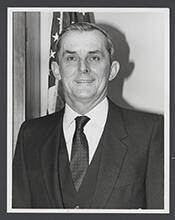
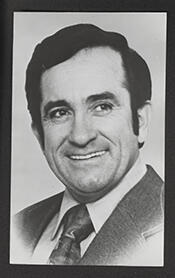
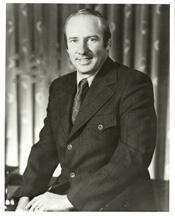
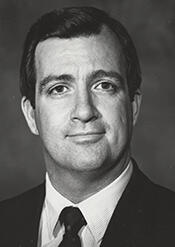
James Thomas Igoe (October 23, 1883 – December 2, 1971) was a United States Representative from Illinois and a prominent Democratic politician and businessman in Chicago during the first half of the twentieth century. He was born on October 21, 1883, in Chicago, Illinois, into a community shaped by rapid urban growth and a strong local political culture. Raised in the city he would later represent, Igoe came of age as Chicago was emerging as a major industrial and commercial center, conditions that would influence both his business pursuits and his public career.
Igoe received his early education in Chicago and attended St. Ignatius College, an institution that later became Loyola University Chicago. His studies at this Jesuit college provided him with a grounding in the liberal arts and the civic traditions of the city’s Catholic community. After completing his education, he entered the private sector, becoming engaged in the printing and publishing business in 1907. This work placed him in close contact with Chicago’s commercial life and public discourse, and it helped establish his standing in local business and political circles.
Building on his business experience and growing involvement in Democratic Party affairs, Igoe moved into public office during the World War I era. He was elected city clerk of Chicago and served in that position from 1917 to 1923, a period marked by wartime mobilization, postwar adjustment, and significant municipal challenges. As city clerk, he held one of the key administrative posts in Chicago government, overseeing official records and contributing to the management of the city’s legislative processes. His tenure in this office enhanced his visibility within the Democratic Party and prepared him for higher elective office.
Igoe’s prominence in party politics was reflected in his repeated selection as a delegate to the Democratic National Conventions. He served as a delegate in 1920, 1928, and 1936, participating in the nomination processes that shaped the national Democratic ticket during a transformative era that included the rise of Franklin D. Roosevelt and the New Deal coalition. His role at these conventions underscored his status as an influential figure within Illinois Democratic politics and connected him to broader national political currents.
In 1926, Igoe was elected as a Democrat to the Seventieth Congress and subsequently reelected to the Seventy-first and Seventy-second Congresses, serving from March 4, 1927, to March 3, 1933. Representing an Illinois district anchored in Chicago, he served in the House of Representatives during the late 1920s and the onset of the Great Depression. During these three consecutive terms, he participated in the legislative work of a Congress grappling first with the prosperity of the Roaring Twenties and then with the severe economic dislocation that followed the stock market crash of 1929. In 1932, amid shifting political alignments and intraparty competition, he was an unsuccessful candidate for renomination to the Seventy-third Congress, bringing his period of congressional service to a close.
Parallel to his political career, Igoe expanded his interests in business and finance. In 1931, while still serving in Congress, he became president of a building corporation, reflecting his growing engagement with construction and development in and around Chicago. After leaving Congress, he continued to be active in public and civic affairs. He served as chairman of the Illinois delegation to the Golden Gate International Exposition in San Francisco in 1939 and 1940, representing his state at a major world’s fair that showcased American industry, culture, and regional development on the eve of World War II.
In the 1940s, Igoe shifted more fully into private enterprise. He entered the real estate business in 1942, capitalizing on wartime and postwar growth in the Chicago metropolitan area. His business activities eventually extended into banking, and from 1955 to 1961 he served as a director and later as chairman of the executive committee of the Mercantile National Bank of Chicago. In these roles, he remained a significant figure in the city’s economic life, applying his long experience in public service and business to the financial sector.
James Thomas Igoe spent his later years in the Chicago area, maintaining his ties to the region where he had lived, worked, and served throughout his life. He died in Evanston, Illinois, on December 2, 1971. He was buried at All Saints Cemetery in Des Plaines, Illinois, closing a career that spanned municipal office, national legislative service, and leadership in business and banking in one of the nation’s largest cities.
Congressional Record