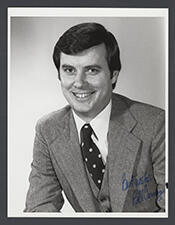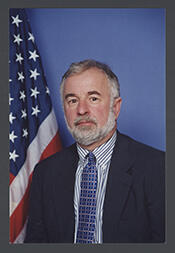
James Hawkes was the name of several notable public figures active in North America and abroad from the late eighteenth through the twentieth century, including James Hawkes (congressman) (1776–1865), an American politician from New York; James B. Hawkes (1857–1936), a Canadian politician; Jim Hawkes (born 1934), a Canadian politician; James S. Hawkes (1856–1918), an Australian accountant and civil engineer; and James Hawkes (1853–1932), a missionary in Persia. Although they shared the same name, each pursued a distinct career in public life, professional service, or religious work, and they were active in different countries and historical periods.
The earliest of these figures, James Hawkes (congressman), was born in 1776 and became an American politician from New York. Coming of age in the early years of the United States, his life spanned from the Revolutionary era through the Civil War period, ending in 1865. He represented New York in the political sphere, participating in the development of state and national institutions during a formative time in American history. His congressional service placed him among the generation of early nineteenth‑century legislators who helped shape the legal and political framework of the young republic.
In the British Empire’s expanding dominions, James S. Hawkes (1856–1918) emerged as a notable Australian accountant and civil engineer. Born in 1856, he was professionally active during a period of rapid urbanization and infrastructure development in Australia. As an accountant, he contributed to the financial management and oversight of public and private enterprises, while his work as a civil engineer connected him to the planning and construction of essential works that supported economic growth and modernization in the late nineteenth and early twentieth centuries. His career extended into the years of World War I, concluding with his death in 1918.
Religious and cultural engagement abroad was represented by James Hawkes (missionary) (1853–1932), who served as a missionary in Persia. Born in 1853, he undertook his vocation at a time when Western missionary societies were expanding their activities in the Middle East and Central Asia. His work in Persia placed him at the intersection of religious outreach, education, and cross‑cultural contact, contributing to the broader missionary movement of the nineteenth and early twentieth centuries. He remained active into the interwar period, dying in 1932 after a long career devoted to religious service.
In Canada, James B. Hawkes (1857–1936) was a Canadian politician whose life and career unfolded in the decades following Confederation. Born in 1857, he entered public life as Canada was consolidating its federal institutions and expanding westward. As a politician, he participated in the governance of a young and growing nation, engaging with issues of regional development, representation, and public policy in the late nineteenth and early twentieth centuries. His career extended into the era between the two World Wars, and he died in 1936, having witnessed and contributed to significant phases of Canadian political evolution.
Another prominent Canadian public figure sharing the name was Jim Hawkes (born 1934), a Canadian politician whose career belongs to the post–World War II and late twentieth‑century era. Born in 1934, he entered politics in a period marked by economic growth, the expansion of social programs, and evolving debates over national identity and federal‑provincial relations. His service as a Canadian politician placed him within the modern parliamentary framework, where he represented his constituents and participated in legislative deliberations during a time of substantial social and political change in Canada.
Taken together, these individuals named James Hawkes illustrate the wide range of public roles—legislative, professional, and religious—occupied by people of the same name across different continents and centuries. From an American congressman in New York in the early republic, to a Canadian politician in the decades after Confederation, to a modern Canadian parliamentarian, an Australian accountant and civil engineer, and a missionary in Persia, each James Hawkes contributed in distinct ways to the civic, professional, or spiritual life of his respective society.
Congressional Record