United States Representative Directory

James Harper

James Harper served as a representative for Pennsylvania (1833-1837).

  • Whig
  • Pennsylvania
  • District 2
  • Former
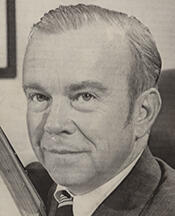
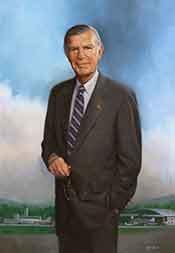
Portrait of James Harper Pennsylvania
Role Representative

Current assignment referenced in the congressional directory.

State Pennsylvania

Representing constituents across the Pennsylvania delegation.

District District 2

District insights and legislative focus areas.

Service period 1833-1837

Years of public service formally recorded.

Font size

Biography

James Harper was the name of several notable Americans who were active in public life and related fields during the late eighteenth, nineteenth, and twentieth centuries, including a United States Representative from Pennsylvania, a United States Representative from North Carolina, a prominent New York City publisher who became mayor of that city, an American actor, a U.S. Navy diver, and a lawyer. Although they shared the same name, each James Harper pursued a distinct career path and contributed to different spheres of public, cultural, or professional life.

James Harper, the Pennsylvania congressman, was born in 1780 and became a member of the United States House of Representatives from Pennsylvania. Serving in the early decades of the nineteenth century, he participated in the national legislature during a period marked by the young republic’s institutional consolidation and expanding political party system. His congressional service placed him among the generation of lawmakers who helped shape federal policy in the years following the founding era. Harper lived a long life that extended well beyond his time in office, dying in 1873 after witnessing profound changes in the nation, including its territorial expansion and the upheavals leading up to and following the Civil War.

James C. Harper, born in 1819, represented North Carolina in the United States Congress. Coming of age in the antebellum South, he entered national politics in a region deeply affected by debates over states’ rights, slavery, and the balance of power between North and South. As a congressman from North Carolina, he served during a period when the federal legislature grappled with sectional tensions and the reconstruction of the Union. His career reflected the complex political realignments of the nineteenth century, and he remained a figure of regional significance until his death in 1890, by which time the South was undergoing economic and social transformation in the post-Reconstruction era.

Another prominent bearer of the name, James Harper the publisher, was born in 1795 and became a leading figure in American publishing before entering municipal politics. As a partner in the firm that evolved into Harper & Brothers, he helped pioneer large-scale commercial book publishing in the United States, contributing to the wider availability of literature, educational texts, and periodicals in the early and mid-nineteenth century. His success in business and prominence in civic affairs led to his election as mayor of New York City, a position he held during a time when the city was rapidly expanding in population, commerce, and infrastructure. Harper’s dual legacy as a publisher and as mayor linked him both to the growth of American print culture and to the governance of one of the nation’s most important urban centers. He died in 1869, leaving behind a name closely associated with both literature and public service.

In the twentieth century, the name continued to appear in public and professional life. James Harper McDonald, born in 1900, served as a U.S. Navy diver. His career unfolded during an era when naval technology, undersea operations, and military preparedness were becoming increasingly sophisticated, particularly around the time of the World Wars and the early Cold War. As a diver, he would have been involved in demanding and often hazardous work that supported naval engineering, salvage, and operational readiness. McDonald’s service exemplified the specialized technical roles that underpinned modern naval power. He died in 1973, having lived through and contributed to a century defined by global conflict and rapid technological change.

James Harper Prowse, born in 1913, pursued a career in law. Trained as a lawyer, he entered a profession that was central to the administration of justice, the interpretation of statutes, and the functioning of democratic institutions. His legal work would have placed him at the intersection of public policy, private rights, and the evolving legal frameworks of the mid-twentieth century. Prowse’s career spanned decades marked by significant legal developments, including changes in civil rights, regulatory law, and the role of the judiciary in modern governance. He died in 1976, leaving a record of professional engagement in the legal field.

The name James Harper also became associated with the performing arts. James Harper, the American actor born in 1948, built a career in film, television, and voice work. Active in the later twentieth century and beyond, he contributed to the entertainment industry during a period of expanding media platforms and global distribution of American screen productions. His work as an actor placed him in a very different public role from his namesakes in politics and law, yet similarly made his name recognizable to a wide audience through his appearances and performances.

Across these varied lives, individuals named James Harper occupied roles in Congress, municipal government, publishing, the military, the law, and the arts. Spanning from 1780 to the late twentieth century, their careers collectively illustrate the diverse ways in which Americans bearing this name participated in public service, professional advancement, and cultural production.

Congressional Record

Loading recent votes…

More Representatives from Pennsylvania