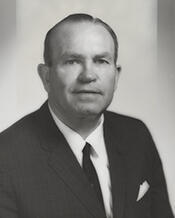
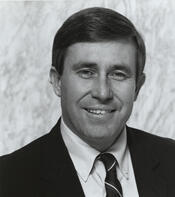
James Butler Hare (September 4, 1918 – July 16, 1966) was an American lawyer, naval officer, and Democratic politician who represented South Carolina’s 3rd congressional district in the U.S. House of Representatives for one term from 1949 to 1951. His service in Congress occurred during a significant period in American history in the early Cold War era, during which he participated in the legislative process and represented the interests of his constituents in upstate South Carolina.
Hare was born in Saluda, Saluda County, South Carolina, on September 4, 1918. He was the son of Butler B. Hare, a prominent South Carolina politician who had also represented the 3rd congressional district in the U.S. House of Representatives from 1939 to 1947. Growing up in a politically active family, he was educated in the public schools of Saluda before pursuing higher education in the state’s small liberal arts institutions.
He graduated from Newberry College in Newberry, South Carolina, in 1939. Following his undergraduate studies, Hare undertook postgraduate work at Erskine College in Due West, South Carolina. As global tensions escalated on the eve of the United States’ entry into World War II, he entered military service, putting his academic pursuits on hold in order to join the armed forces.
In August 1940, Hare enlisted in the United States Navy. During World War II he served for thirty-two months in the Pacific Theater, a major arena of combat against Japanese forces. Over the course of his wartime service he rose to the rank of lieutenant commander. In January 1946 he was released to inactive duty in the Naval Reserve as a lieutenant commander, returning to civilian life with significant military experience that would later inform both his legal and political careers.
After the war, Hare resumed his education in preparation for a career in law. He enrolled in the law school of the University of South Carolina and graduated in 1947. That same year he was admitted to the bar and commenced the practice of law in his hometown of Saluda, South Carolina. In addition to his legal work, he remained engaged in educational affairs and later served as a member of the board of trustees of the University of South Carolina, reflecting his ongoing commitment to higher education in the state.
Hare entered national politics in the late 1940s, following in the footsteps of his father. Running as a member of the Democratic Party, which then dominated South Carolina politics, he was elected to the Eighty-first Congress to represent South Carolina’s 3rd congressional district. His term in the U.S. House of Representatives began on January 3, 1949, and concluded on January 3, 1951. During this single term in office, he contributed to the legislative process at a time marked by postwar reconstruction, the beginning of the Cold War, and the early stages of domestic debates over defense, foreign policy, and economic adjustment.
While serving in Congress, Hare’s military background remained central to his public service. On January 1, 1950, during his congressional tenure, he was recalled to active duty in the United States Navy. He served as a law specialist, applying his legal training within the military justice and administrative systems. He continued in this capacity until May 1952, when he was released again to inactive duty, this time with the rank of commander. Politically, he sought to continue his legislative career but was an unsuccessful candidate for renomination in 1950, ending his service in the House after one term.
Following his release from active naval duty in 1952, Hare returned to Saluda and resumed the private practice of law. He remained a figure of professional and civic standing in his community, combining his experience as an attorney, veteran, and former congressman. In addition to his local legal practice, his role on the University of South Carolina’s board of trustees underscored his continued influence in state educational and public affairs.
James Butler Hare died in Columbia, South Carolina, on July 16, 1966, at the age of forty-seven. He was interred in Travis Park Cemetery in Saluda, South Carolina, returning in death to the community where he had been born, practiced law, and maintained his political and personal roots.
Congressional Record