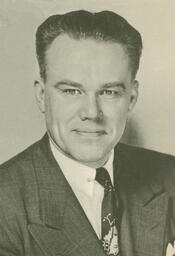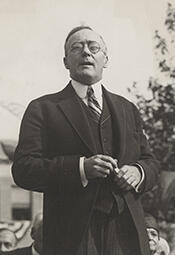
James Alphonsus Hamill (March 30, 1877 – December 15, 1941) was an American attorney and Democratic Party politician who served as a United States Representative from New Jersey from 1907 to 1921. Over the course of seven consecutive terms in Congress, he represented New Jersey’s 10th congressional district from 1907 to 1913 and the 12th congressional district from 1913 to 1921, participating actively in the legislative process during a transformative period in American history that encompassed the Progressive Era and the First World War.
Hamill was born in Jersey City, New Jersey, on March 30, 1877. He received his early education locally and went on to attend Saint Peter’s College, also in Jersey City, from which he received his bachelor’s degree in 1897. He then pursued legal studies at New York Law School, graduating in 1899. Following his legal education, he was admitted to the bar of the State of New Jersey in 1900 and commenced the practice of law, establishing himself professionally in his native Jersey City.
Hamill entered public life early in the new century. He was elected to the New Jersey General Assembly, where he served for four years from 1902 to 1905. During his tenure in the state legislature, he rose to a position of leadership, serving two of those years as Minority Leader. His work in the Assembly helped to build his reputation as a capable legislator and advocate, laying the groundwork for his subsequent election to national office.
In 1906, Hamill was elected as a Democrat to the United States House of Representatives, taking his seat in March 1907. He served continuously in the House for seven terms, from 1907 to 1921, first representing New Jersey’s 10th congressional district and, after reapportionment, the 12th district from 1913 onward. As a member of the House of Representatives, he represented the interests of his New Jersey constituents and took part in the national legislative debates of the era, including those surrounding progressive reforms and American involvement in World War I. He was regarded as one of the best linguists in Congress, with command of Greek, Latin, Russian, German, and French, a skill that enhanced his influence in matters involving foreign affairs and international relations.
Hamill’s linguistic abilities and international interests were particularly evident during the Paris Peace Conference of 1919, convened at the end of World War I. At that conference he served as counsel to the unrecognized Ukrainian delegation, providing legal and diplomatic assistance as they sought representation in the postwar settlement. His broader engagement with international and nationalist issues also extended to Irish affairs. During Éamon de Valera’s visit to the United States in 1919, Hamill introduced a resolution in the House of Representatives calling on President Woodrow Wilson to refuse to receive Sir Auckland Geddes as ambassador of both Great Britain and Ireland, and instead to receive Dr. Patrick McCartan, who had been sent by the provisional government of Ireland as the Irish ambassador. In recognition of his work in French literature and his cultural contributions, he was decorated as a Chevalier of the French Legion of Honor.
After leaving Congress in 1921, Hamill returned to the practice of law and remained a prominent figure in Jersey City’s legal and political life. He became Corporation Counsel of Jersey City, a position he held for 14 years by the time of his death, advising the municipal government on legal matters and representing the city in significant litigation. Among his notable cases, he represented Mayor Frank Hague in a major free speech case instituted in July 1938 by the Congress of Industrial Organizations (CIO) and the American Civil Liberties Union, a controversy that drew national attention to civil liberties and municipal authority. He also led Jersey City’s efforts to recover approximately $14,000,000 in taxes from the railroads, reflecting his continued involvement in complex and consequential legal disputes on behalf of the city.
In his personal life, Hamill was married to Mary Josephine Mylotte. The couple had six children, and he maintained strong ties to his native Jersey City throughout his life. James Alphonsus Hamill died on December 15, 1941. At the time of his death, he was still serving as Corporation Counsel of Jersey City. He was interred in Holy Name Cemetery in Jersey City, New Jersey, closing a life spent largely in service to his city, his state, and the nation.
Congressional Record