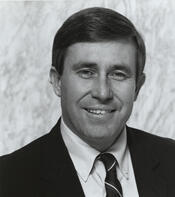
James Hamilton Goss (August 9, 1820 – October 31, 1886) was a U.S. Representative from South Carolina during the Reconstruction era. He was born in Union, Union District, South Carolina, where he spent virtually his entire life. Goss attended the local common schools and continued his education at the Union Male Academy, an institution that provided classical and practical instruction for young men in the region. After completing his schooling, he entered into mercantile pursuits, establishing himself in business in Union and becoming a figure in the commercial life of his community.
Prior to the Civil War, Goss’s work in commerce tied him closely to the economic affairs of Union and the surrounding area. With the outbreak of the Civil War, he served with the South Carolina Militia, aligning with the state’s military forces during the conflict. His militia service reflected the involvement of many local leaders in the war effort, although he did not emerge as a prominent battlefield commander. After the war, as South Carolina transitioned from Confederate rule to federal Reconstruction, Goss became active in the state’s political reorganization.
In 1867, Goss served as a delegate to the South Carolina state constitutional convention, which was convened under the Reconstruction Acts to draft a new constitution as a condition for readmission to representation in Congress. Participating in this convention placed him among the group of leaders responsible for reshaping the state’s political and legal framework in the immediate postwar period. His role there helped establish his credentials within the emerging Republican Party in South Carolina, which drew support from Unionists, formerly enslaved African Americans, and some white residents willing to work within the Reconstruction program.
Upon the readmission of the State of South Carolina to representation in the federal government, Goss was elected as a Republican to the Fortieth Congress. He was elected to fill the at-large seat representing South Carolina and served from July 18, 1868, to March 3, 1869. His tenure in Congress coincided with a critical phase of Reconstruction, during which federal lawmakers addressed issues of readmission of former Confederate states, civil rights, and the political status of freedpeople. Although his service was relatively brief, it placed him among the first group of South Carolina representatives to return to the U.S. House of Representatives after the Civil War. Goss was not a candidate for renomination in 1868 and thus served only the remainder of that congressional term.
After leaving Congress, Goss remained active in local public affairs in Union County. He served as a member of the board of commissioners of Union County from 1871 to 1874, participating in county governance during the later years of Reconstruction and the beginning of the period that would see the gradual restoration of Democratic control in South Carolina. In this role, he was involved in the administration of county matters, including local infrastructure, finance, and public services, at a time of political transition and economic recovery.
Goss continued his public service in the federal civil sphere when he was appointed postmaster of Union, South Carolina, on August 12, 1875. He held this position for nearly a decade, serving until September 23, 1884. As postmaster, he oversaw the local operations of the United States postal system, a key institution for communication and commerce in a small but growing Southern town. His long tenure in this federal appointment reflected both his standing in the community and the continued presence of Republican officeholders in certain local posts even as state politics shifted.
James Hamilton Goss spent his later years in Union, where he had been born and where he had built his career in business and public life. He died in Union, South Carolina, on October 31, 1886. He was interred in the Presbyterian Cemetery in Union, underscoring his lifelong connection to the town and county he represented and served in various capacities throughout the mid-nineteenth century and the Reconstruction era.
Congressional Record