United States Representative Directory

James Gamble

James Gamble served as a representative for Pennsylvania (1851-1855).

  • Democratic
  • Pennsylvania
  • District 15
  • Former
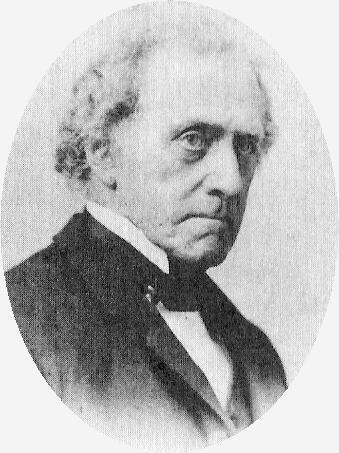
Portrait of James Gamble Pennsylvania
Role Representative

Current assignment referenced in the congressional directory.

State Pennsylvania

Representing constituents across the Pennsylvania delegation.

District District 15

District insights and legislative focus areas.

Service period 1851-1855

Years of public service formally recorded.

Font size

Biography

James Gamble was the name of several notable figures active in the nineteenth and twentieth centuries in industry, politics, science, and technology, as well as in more recent criminal history. The name most prominently refers to James Gamble (1803–1891), a U.S.-based Irish soapmaker and industrialist who was the co-founder of the Procter & Gamble Company; James Gamble (1809–1883), a U.S. Representative from Pennsylvania; James Gamble (1826–1905), a Piedmont resident and builder of the first telegraph in California; James Sykes Gamble (1847–1925), an English botanist; James Fulton Gamble, a Northern Irish politician; and James Gamble (1995–2015), a Canadian co-conspirator responsible for the Halifax mass shooting plot.

James Gamble, the industrialist and co-founder of Procter & Gamble, was born in 1803 in Ireland and later emigrated to the United States, where he established himself as a soapmaker. Trained in the traditional craft of soapmaking, he settled in the Cincinnati, Ohio, area, which was emerging as a commercial and manufacturing center in the early nineteenth century. In 1837 he entered into partnership with his brother-in-law, William Procter, a candlemaker, forming the Procter & Gamble Company. The firm began as a modest operation producing soap and candles but grew steadily, aided by the expanding population of the American Midwest and government contracts, including those during the American Civil War. Under Gamble’s leadership as an industrialist, the company developed a reputation for consistent quality and innovation in household products, laying the foundation for what would become one of the largest consumer goods corporations in the world. He remained associated with the enterprise for the rest of his life, overseeing its expansion until his death in 1891.

James Gamble, the congressman, was born in 1809 and became a prominent political figure in Pennsylvania. He pursued a legal education, was admitted to the bar, and established a law practice before entering public life. Active in state and local affairs, he gained recognition that led to his election as a U.S. Representative from Pennsylvania. Serving in the United States House of Representatives in the mid-nineteenth century, he participated in national legislative debates during a period marked by sectional tensions and the approach of the Civil War. His congressional service reflected the concerns of his Pennsylvania constituents, including issues of infrastructure, commerce, and the evolving national controversy over slavery and states’ rights. After leaving Congress, he returned to legal and civic work in Pennsylvania, remaining engaged in public affairs until his death in 1883.

Another notable bearer of the name, James Gamble, born in 1826, became associated with the early development of communications technology on the American West Coast. A resident of Piedmont, California, he is credited as the builder of the first telegraph in California. Working during a period when telegraphy was transforming long-distance communication, he contributed to the extension of telegraph lines that linked California more closely with the rest of the United States. His efforts helped facilitate faster commercial, governmental, and personal communication in a region that had previously relied on much slower overland and maritime routes. Gamble’s work in telegraph construction formed part of the broader technological infrastructure that supported California’s rapid growth in the latter half of the nineteenth century. He lived to see the telegraph become a standard feature of modern communication before his death in 1905.

James Sykes Gamble, born in 1847 in England, was an English botanist whose career was closely associated with the study and classification of plants, particularly those of South and Southeast Asia. Trained in botany during a period of intense scientific interest in the flora of the British Empire, he worked extensively in India, where he conducted field research and collected plant specimens. Gamble became known for his taxonomic work and for his contributions to major botanical references, including detailed descriptions of trees and other plant groups. His publications and collections advanced scientific understanding of tropical and subtropical botany and were used by researchers and foresters alike. Over the course of his career, he was associated with leading botanical institutions and contributed to the organization and cataloging of important herbaria. He continued his scholarly work into the early twentieth century and died in 1925, leaving a substantial legacy in systematic botany.

James Fulton Gamble was a Northern Irish politician who participated in the political life of Northern Ireland during the twentieth century. Active in a context shaped by questions of governance, identity, and the relationship between Northern Ireland and the rest of the United Kingdom, he held public office and engaged in party politics. His career reflected the contested and evolving nature of Northern Irish political institutions, and he took part in debates over representation, security, and social policy. Through his service, he contributed to the legislative and administrative processes that affected his constituents and the broader region, helping to shape public policy during a period of significant political tension and change.

A later and very different figure bearing the same name, James Gamble, born in 1995 in Canada, became known in connection with a criminal conspiracy rather than public service or scientific achievement. In 2015 he was identified as a co-conspirator responsible for the Halifax mass shooting plot, an intended attack that drew national and international attention. The plot, which was ultimately foiled by law enforcement, highlighted concerns about violent extremism and public safety in Canada. Gamble died in 2015 in the course of the investigation, and his involvement in the planned attack has been cited in discussions of radicalization, online subcultures, and the prevention of mass violence.

Congressional Record

Loading recent votes…

More Representatives from Pennsylvania