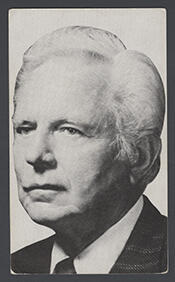
James Findlay was an American politician and public servant who served as mayor of Cincinnati and as a member of the United States Congress. As a member of the Jackson Party representing Ohio, he contributed to the legislative process during four terms in office. His service in Congress occurred during a significant period in American history, when the young republic was expanding westward and the democratic process was evolving, and he played a role in representing the interests of his constituents in this changing political landscape.
Born in 1770, James Findlay emerged as a prominent figure in early Ohio and frontier politics as the Northwest Territory developed and new communities took shape along the Ohio River. Cincinnati, where he would later become mayor, was an important commercial and strategic center in the early nineteenth century, and Findlay’s rise in local affairs reflected both his personal influence and the city’s growing importance in the region.
Findlay’s early public career was closely tied to the civic and economic development of Cincinnati. As the settlement grew from a frontier town into a significant urban center, he became involved in local governance and public affairs, eventually serving as mayor of Cincinnati. In this role, he was responsible for overseeing municipal administration during a formative period in the city’s history, helping to guide its growth, infrastructure, and public order at a time when Ohio was transitioning from frontier status to statehood and integration into the national economy.
Building on his local prominence, Findlay advanced to national office as a representative from Ohio in the United States Congress. As a member of the Jackson Party, associated with the political movement that coalesced around Andrew Jackson and the principles of greater democratic participation and frontier advocacy, he served four terms in Congress. During these terms, he participated in debates and legislation that reflected the concerns of a rapidly expanding nation, including issues of western settlement, economic development, and the balance of power between federal and state authorities. His work in Congress placed him among the cohort of early Ohio leaders who helped integrate the western states into the federal political system.
Findlay’s congressional service coincided with a significant period in American history, marked by the maturation of party politics and the growing influence of western states in national affairs. Representing Ohio, he was part of the broader Jacksonian movement that sought to broaden political participation and give greater voice to frontier and agrarian interests. Through his votes and committee work, he contributed to the legislative process and to shaping policies that affected both his constituents and the wider nation.
After completing his terms in Congress, Findlay remained a notable figure in Ohio’s public life, his career reflecting the trajectory of many early American leaders who moved between local and national roles. His experience as both mayor of Cincinnati and a member of Congress underscored the interconnected nature of municipal and federal governance in the early republic, particularly in rapidly growing western communities.
James Findlay died in 1835, closing a career that spanned the transformation of the Ohio Valley from a frontier region into an integral part of the United States. Remembered as both a mayor of Cincinnati and a Jackson Party representative from Ohio who served four terms in Congress, he exemplified the generation of early nineteenth-century leaders who helped shape the political and civic institutions of the expanding nation.
Congressional Record