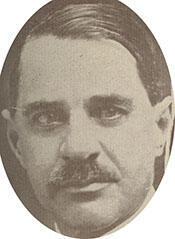
James Elliot (often spelled Elliott) (August 18, 1775 – November 10, 1839) was an American soldier, writer, lawyer, and politician who served as a United States Representative from Vermont in the early nineteenth century. Active in public life during the formative decades of the republic, he combined military service in the Revolutionary era’s aftermath with a legal and literary career that culminated in a term in Congress representing Vermont’s interests at the national level.
Elliot was born on August 18, 1775, in Beverly, in the Province of Massachusetts Bay, during the closing months of the colonial period. He came of age amid the American Revolution and the early years of the new nation, experiences that shaped his later military and political commitments. Details of his early schooling are sparse, but like many New Englanders of his generation he received a basic education sufficient to support later work in both the military and the law. As a young man he moved northward into the territory that would become Vermont, aligning his fortunes with a region that was rapidly transitioning from frontier settlements to organized statehood.
In his early adulthood, Elliot entered military service, reflecting the lingering security concerns of the post-Revolutionary period. He served as a lieutenant in the United States Army, a role that placed him within the small regular force maintained by the federal government in the 1790s and early 1800s. His time as an officer coincided with the young republic’s efforts to secure its borders and assert federal authority in the interior. After leaving active military service, he turned to the study of law, a common path for former officers seeking to build civilian careers. He was admitted to the bar and established himself as an attorney, practicing law in Vermont and gaining familiarity with the legal and political issues affecting the new state.
Alongside his legal work, Elliot developed a reputation as a writer and editor. He contributed to and helped produce newspapers and periodicals, using the press as a vehicle for political commentary and public discourse. In an era when print culture was central to political mobilization, his editorial activities enhanced his visibility and influence. His literary output included essays and other writings that reflected Federalist and later shifting political currents in New England and Vermont. This combination of legal practice and public writing positioned him as a figure of some prominence in his community and laid the groundwork for his entry into elective office.
Elliot’s most notable public role came through his service in the United States House of Representatives as a congressman from Vermont. He was elected as a Federalist to the Tenth Congress and served from March 4, 1807, to March 3, 1809. During this term, he represented Vermont at a time marked by rising tensions between the United States and European powers, particularly Great Britain and France, and by domestic controversy over trade restrictions and the Embargo Act. As a member of Congress, he participated in debates over national policy in the run-up to the War of 1812, giving voice to the concerns of his largely rural, northern constituency. Though he served only a single term, his tenure placed him among the early generation of Vermont’s federal legislators.
After leaving Congress in 1809, Elliot resumed his legal and literary pursuits. He continued to practice law and remained engaged in public affairs at the state and local levels, drawing on his experience in national politics. His work as an attorney and writer sustained his influence in Vermont’s civic life even without further extended federal officeholding. He lived through a period of significant change, witnessing the expansion of the United States westward, the War of 1812, and the political realignments that followed the decline of the Federalist Party.
James Elliot died on November 10, 1839, in Brattleboro, Vermont. He was buried in that community, which had been a center of his professional and public life. Remembered as a Vermont congressman, lawyer, soldier, and man of letters, he belonged to the generation that bridged the revolutionary founding of the United States and its early decades as a consolidated republic, contributing to both the political institutions and the public discourse of his time.
Congressional Record