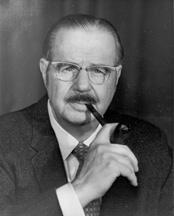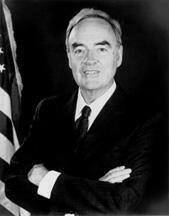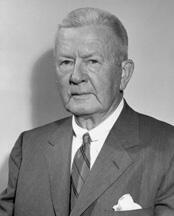
James Henderson Duff (January 21, 1883 – December 20, 1969) was an American lawyer and Republican politician who served as United States Senator from Pennsylvania from 1951 to 1957 and as the 34th governor of Pennsylvania from 1947 to 1951. Over the course of a long public career, he contributed to the legislative and executive processes of state and national government, representing Pennsylvania during a significant period in mid-twentieth-century American history.
Duff was born on January 21, 1883, in Mansfield, a suburb of Pittsburgh, Pennsylvania that was later renamed Carnegie. He was the oldest of four children of Rev. Joseph Miller Duff, a Presbyterian minister for forty years, and Margaret (née Morgan) Duff. His family background was steeped in education and public service: his paternal grandfather was reputedly the first college-educated doctor in western Pennsylvania, and two of his great-grandfathers served on the Provincial Council of Pennsylvania between 1683 and 1717. This heritage of civic engagement and professional accomplishment helped shape Duff’s early ambitions and outlook.
After graduating at the top of his class at Carnegie High School, Duff attended Princeton University in New Jersey, where he received a Bachelor of Arts degree in 1904. He initially intended to study medicine, but his success in public speaking at Princeton—where he won two medals in oratory—prompted him to turn toward the law. He enrolled at the University of Pennsylvania Law School in Philadelphia, later transferring in 1906 to the University of Pittsburgh Law School to be closer to home. He received his law degree in 1907 and was admitted to the bar that same year. In 1909 he married Jean Kerr Taylor; the couple’s only child died in infancy, and they later raised a nephew after the boy’s father died.
Duff practiced law in Pittsburgh for thirty-six years, becoming a prominent member of the local bar and establishing the firm of Duff, Scott and Smith. He served as solicitor for the borough of Carnegie and entered national politics early as a presidential elector for Theodore Roosevelt in the 1912 election. In parallel with his legal career, Duff was active in the oil and gas industry. He began by purchasing an oil driller’s rig and leasing property about five miles from his home, where he successfully struck oil. He subsequently expanded into ventures in other parts of western Pennsylvania and in Mexico, and served as president of the Criterion Oil Company and the Westmoreland Natural Gas Company. The stock market crash of 1929 wiped out much of his fortune, and it took him several years to recover financially. He remained active in Republican politics, serving as a delegate to the Republican National Conventions in 1932, 1936, and 1940.
Duff’s formal entry into high state office came in 1943, when Governor Edward Martin appointed him Attorney General of Pennsylvania. He held that post until 1947. As attorney general, he became particularly known for his efforts in environmental and public health regulation, working to strengthen the state’s stream pollution laws despite strong opposition from the coal and mining industries. He promoted legislation to prevent the discharge of mine silt into the Schuylkill River, and under his tenure the Desilting Act and the Clean Streams Act (also known as the Brunner Act) were enacted in 1945, marking significant advances in Pennsylvania’s environmental policy.
In 1946, when Lieutenant Governor John Bell—who had briefly ascended to the governorship following Governor Martin’s resignation to enter the U.S. Senate—declined to run for a full term, Duff sought and won the Republican nomination for governor. He campaigned on themes of conservation, public health, and education, reflecting both his environmental initiatives as attorney general and a broader reform agenda. In the general election he decisively defeated Democrat John Rice, former president pro tempore of the Pennsylvania State Senate, by more than 557,000 votes. As the 34th governor of Pennsylvania, serving from 1947 to 1951, Duff oversaw the state’s post–World War II transition, addressing issues of economic development, infrastructure, and public services while continuing to emphasize conservation and improved health and educational systems.
Building on his gubernatorial record, Duff ran for the United States Senate in 1950. He was elected as a Republican from Pennsylvania, narrowly unseating incumbent Democratic Senator Francis J. Myers. He took office in January 1951 and served one term, from 1951 to 1957. During his tenure in the Senate, he participated in the legislative process at a time marked by the early Cold War, the Korean War, and the beginnings of the modern civil rights era, representing the interests of his Pennsylvania constituents within the broader national debates of the period. A member of the Republican Party throughout his career, he contributed to the work of the Senate during these consequential years. In the 1956 election he was defeated for reelection by Democrat Joseph S. “Joe” Clark Jr. in one of the closest Senate contests in Pennsylvania history, ending his congressional service after a single term.
After leaving the Senate in January 1957, Duff retired from elective politics but remained professionally active in Washington, D.C. He became a partner in the law firm of Davies, Richberg, Tydings, Landa & Duff, continuing to practice law and to draw on his long experience in government and public affairs. James Henderson Duff died in Washington, D.C., on December 20, 1969. He was buried in his hometown of Carnegie, Pennsylvania, closing a life that had spanned from the late nineteenth century through the transformative decades of mid-twentieth-century American political history.
Congressional Record